
Dispute Resolution: What to Do When You Have a Problem with an Online Casino


A pending payout, an unexpectedly frozen account, or a sudden rule shift, many online casino players know this script all too well. The UK Gambling Commission’s research reveals that around 8% of online gamblers have filed a complaint in the past 12 months, while another 4% wanted to but never followed through with the Gambling Commission. That means more than one in twelve players face issues so vexing they consider escalating, yet quit before seeking redress.
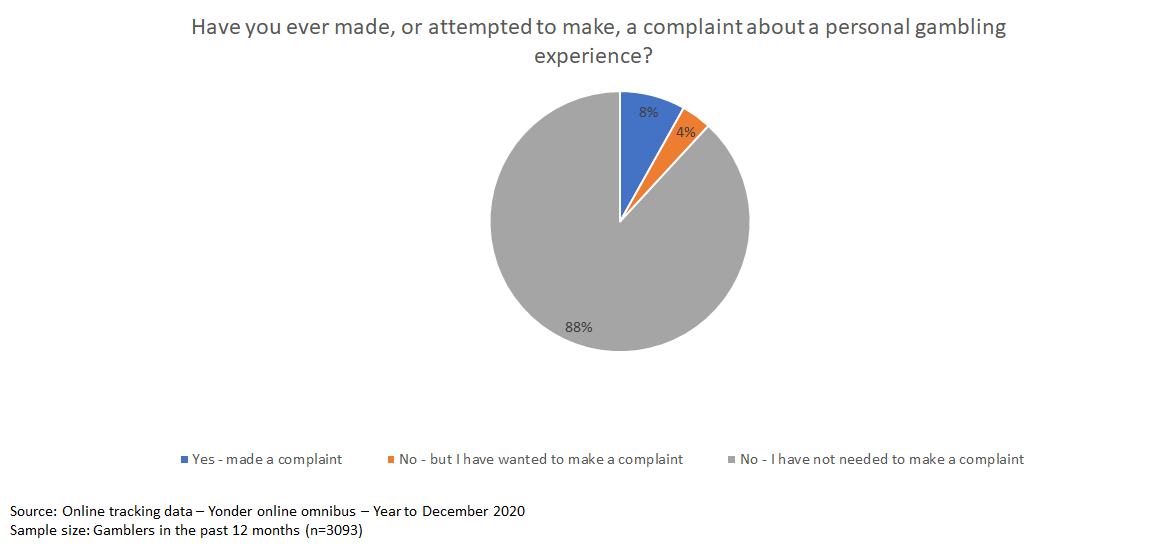
Source: Gambling Commission
That hesitation can cost real money. Winning a dispute isn’t just about funds; it’s about restoring fairness. Knowing how to escalate effectively, when to involve third parties, and how to pressure recalcitrant operators can make all the difference.
The full dispute-resolution journey is covered, from the initial complaint lodged directly with the casino to escalating matters to watchdogs, arbitration services, and regulators.
Step 1: Begin with the Casino’s Internal Complaints Process
Every licensed online casino is required to maintain a fair, transparent complaints policy. The UK Gambling Commission advises starting by reviewing their Terms and Conditions, to determine whether the issue actually falls under a contractual breach. If it does, submit your claim through official channels such as email or their support ticket system, keeping a written record and gathering evidence: dates, identity of interlocutors, amounts owed, screenshots.
In their guidance, the Gambling Commission emphasizes:
“Tell the gambling business all the information about your complaint… Share any evidence you have… Make sure you keep a copy of everything you tell them.”
Including this quote demonstrates the value of being thorough and transparent.
Under UK regulations, casinos generally must respond within eight weeks, and if they don’t resolve the matter satisfactorily, customers can request escalation, often branded internally as the “Customer Champion” tier. Be patient, professional, and factual: aggressive behavior or repeated nagging may weaken your case.
If the operator truly reaches its internal limit, they should issue a deadlock letter, a sign that you’re free to pursue independent review.
Step 2: Escalate to Independent Dispute Resolution
If internal escalation fails, you can turn to Alternative Dispute Resolution (ADR) services. In the UK and EU, licensed operators must provide access to a certified ADR body if resolution isn’t achieved internally.
Two key providers are:
-
Independent Betting Adjudication Service (IBAS), a long-standing adjudicator for gambling disputes across sectors, including online casinos. Recent data shows that for the year ending September 2024, IBAS upheld just 2.9% of customer complaints (94 out of 3,223).
-
eCOGRA, respected for certification and testing, also handles disputes, most often on issues like deposits and withdrawals.
ADR decisions are typically non-binding, but major licensed operators comply to avoid regulatory consequences. Industry data shows that in 2019–20, IBAS and eCOGRA received 5,617 disputes, resolving 3,118 while 2,499 were refused, often due to premature referral or incomplete complaint handling.

Step 3: Notify Regulators if ADR Fails
If ADR hasn’t resolved your case, or their recommendation is ignored, the next step is notifying your regulator. In the UK, Malta, or Gibraltar, regulatory authorities like the UK Gambling Commission, Malta Gaming Authority (MGA), or Gibraltar Regulatory Authority can investigate patterns of non-compliance or issue sanctions. Meanwhile, the MGA’s Player Support Unit handles and mediates player complaints in serious cases.
While the UK Commission doesn’t resolve disputes, it logs complaints, helping it monitor licensee behavior. That makes providing a detailed history, including your escalation trail and evidence, vital.
However, in less-regulated jurisdictions like Curaçao, enforcement can be weak. Complaints may go unheard, leaving only symbolic recourse, or tactics like chargebacks, which carry risks like account termination or refund disputes.
Step 4: Use Watchdogs and Public Forums to Apply Pressure
Sometimes, public visibility is the most effective lever. Platforms like AskGamblers, Casinomeister, and r/onlinegambling allow players to share unresolved complaints and draw attention.
The AskGamblers Casino Complaint Service (AGCS) has become particularly effective: as of March 2025, it had facilitated the recovery of $74.3 million for players since its launch. In 2024 alone, it recovered $6.89 million, resolving 68% of over 10,000 complaints.
These platforms resolve disputes publicly, sometimes pushing operators to act to avoid reputational fallout. Clear evidence, restraint, and a respectful tone make public posts more likely to yield results.
Step 5: Consider Legal Action for Large Stakes
For significant sums, legal avenues may make sense, such as small claims court or even hiring a lawyer. But online casino terms often include arbitration clauses or choose jurisdictions unfavorable to consumers. Legal routes can be lengthy and expensive.
Still, the threat of legal action, backed by documentation, can push casinos to settle. Legal action should only be considered if you’re truly prepared to pursue it.
The Bigger Picture: Evolving Regulatory Standards and Advocacy
There’s strong momentum toward better consumer protections in online gambling:
-
In the UK, proposals are underway to create a Gambling Ombudsman, an independent, unified, and binding entity for player disputes.
-
Regulatory bodies are demanding higher standards of transparency from ADR services and more timely payout processes from operators.
-
Some major operators are self-promising better support and faster withdrawals as consumer satisfaction and regulation become business imperatives.
Final Thoughts
Dispute resolution may be frustrating, but persistence and strategy pay off. Start with your casino, with clear evidence and documentation. If that fails, escalate to ADR, regulators, public platforms, and possibly legal routes. Each step builds your case and raises the odds of recovering your funds.
Related Posts
Nothing Found
When online casinos delay payouts or suspend accounts unfairly, players should follow a step-by-step process to file complaints, escalate issues, and recover funds through regulators and arbitration services.