How to Apply for Social Security Survivor Benefits: A Step-by-Step Guide


Applying for Social Security survivor benefits is one of the most important financial steps a family takes after losing a spouse or parent, and it is also one of the most confusing.
Unlike most Social Security transactions, survivor claims cannot be started online. There is no digital form, no upload portal, and no way to submit documents through a personal my Social Security account. Every application has to go through a person, either on the phone or at a local field office, which means understanding the process in advance saves real time during an already difficult period.
This guide walks through exactly what to expect at each stage of the survivor benefits application, from the first phone call to the documents you should gather beforehand, so you can move through the process with confidence and avoid losing benefits due to unnecessary delay.
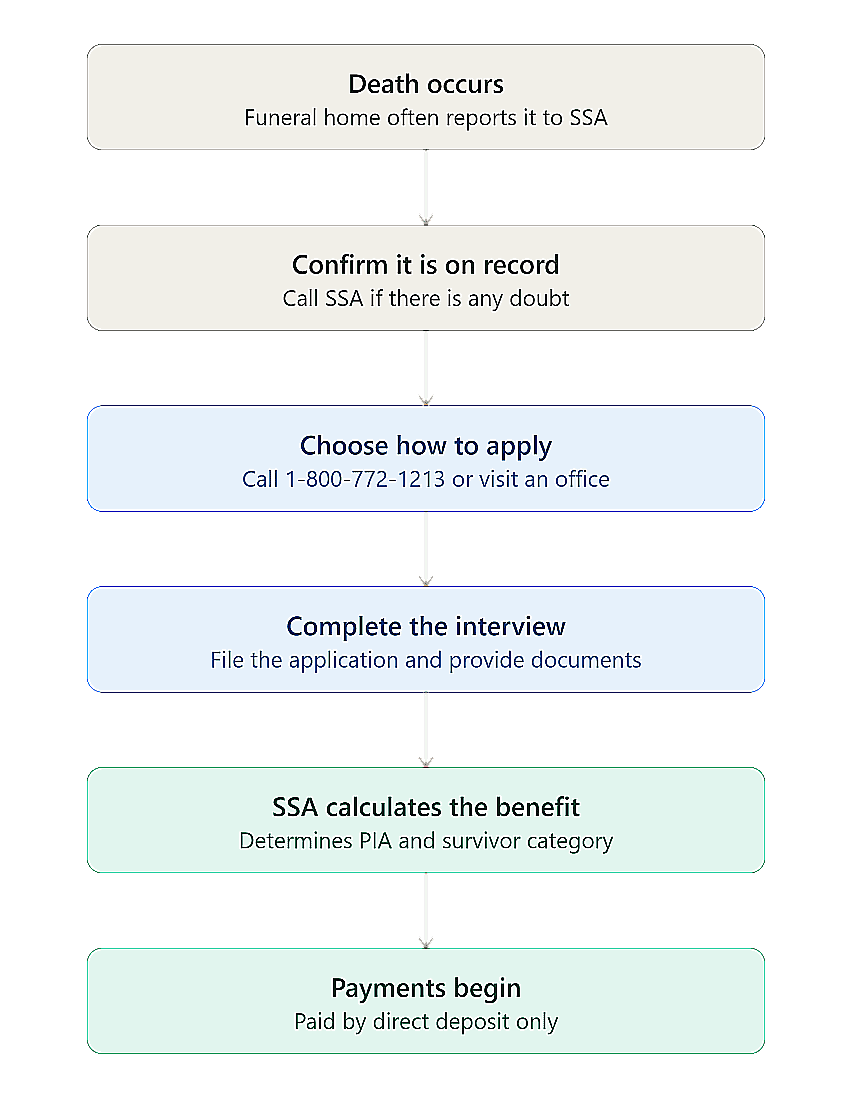
Fig 1. Survivor Benefits Application Process
Step One: Report the Death Before You Apply
Before a survivor benefits claim can move forward, the Social Security Administration needs to know that the worker has died. In many cases, this happens automatically. Funeral homes routinely report deaths to the SSA on behalf of the family as part of their standard paperwork, and if that happens, the family does not need to make a separate report.
It is still worth confirming that the report went through, especially if the death occurred outside a traditional funeral home arrangement, such as with a home funeral, a body donation, or a death that occurred while traveling abroad. If there is any doubt, a surviving family member should call the SSA directly to confirm the death has been recorded before assuming the survivor claim can proceed. For more help
Step Two: Choose How You Will Apply
Survivor benefits can be claimed in one of two ways: by phone or in person at a local Social Security office. There is no walk-in requirement and no need to appear without an appointment, though appointments are recommended to reduce wait times.
Applying by Phone
For most families, the phone is the fastest and least stressful route. The national toll-free line is 1-800-772-1213 (TTY 1-800-325-0778 for those who are deaf or hard of hearing). Representatives are available Monday through Friday, generally between 8:00 a.m. and 7:00 p.m. local time, and calling early in the morning or later in the week tends to mean shorter hold times.
- Call 1-800-772-1213 and tell the representative you need to apply for survivor benefits. This first call establishes your filing date, which matters because benefits can generally begin accruing from this date even if the full interview happens later.
- The representative will either complete the application on that same call or schedule a follow-up phone appointment. If a follow-up is needed, you will be given a specific date and time, or told that your local office will call to arrange one.
- At the scheduled time, stay near the phone and be ready to answer. Representatives sometimes call slightly later than the appointed time, so treat it like waiting in a doctor’s office waiting room rather than expecting a call at the exact minute.
- During the interview, the representative reads the application aloud and records your answers. You will need to provide the routing and account number for a bank account, since Social Security pays benefits only by direct deposit and does not mail paper checks.
Applying in Person
Some survivors prefer to apply face to face, particularly when a claim is complicated, such as one involving a divorced spouse, a disabled adult child, or a dependent parent who needs to establish financial dependency. An in-person appointment also makes it easier to hand over original documents on the spot rather than mailing them.
- Locate your nearest field office using the Social Security office locator tool, which is available through the SSA website, or by asking a phone representative for the address and hours.
- Call ahead to schedule an appointment – while not strictly required, scheduling one in advance typically shortens the wait considerably compared to walking in unannounced.
- Bring the required documents in original form or as certified copies. Field office staff can make copies of originals and return them the same day, so there is no need to mail away irreplaceable paperwork like a death certificate.
- Complete the interview with a claims representative, who will review your eligibility, calculate which survivor category applies to you, and confirm your direct deposit information.
Documents to Gather Before You Apply
Having your paperwork in order before the call or appointment is the single biggest factor in how smoothly a survivor claim goes. The SSA’s official guidance is not to delay applying simply because a document is missing. Staff can often help track down what is needed, but arriving prepared avoids extra callbacks and follow-up appointments. The checklist below covers what most survivors are asked to provide, though not every item applies to every claim type.
Documents commonly requested for a survivor benefits application:
- Certified death certificate for the deceased worker
- Your birth certificate or other proof of age
- Marriage certificate (for a surviving spouse) or final divorce decree (for a surviving divorced spouse)
- Social Security numbers for both yourself and the deceased worker
- The deceased worker’s most recent W-2 forms or, if self-employed, their most recent federal tax return
- Your own most recent W-2 or self-employment tax return, if you are currently working
- Children’s birth certificates, if applying on behalf of minor children
- Proof of financial dependency, if applying as a dependent parent
- Bank routing and account number for direct deposit
If a document such as the death certificate has not arrived yet, it is still worth starting the application. The SSA can begin processing the claim and follow up for outstanding paperwork rather than requiring everything on the first call.
Do Not Forget the $255 Lump Sum Death Payment
In addition to ongoing monthly survivor benefits, a one-time lump sum death payment of $255 is available to an eligible surviving spouse, or to a child if there is no eligible spouse. This payment is not automatic. It must be requested, and it can be applied for during the same phone call or appointment used for the monthly benefits claim, so there is no need to make a separate trip or call.
Survivors generally have two years from the date of death to apply for this payment, but since it is handled in the same interview as the broader survivor claim, most families simply take care of it at the same time.
Why Applying Promptly Matters
Timing is one of the most overlooked parts of the survivor benefits process. Survivor claims can generally be paid retroactively for up to six months before the month an application is filed, provided the survivor was already eligible during those months. That means a family that waits a year after a death to apply could permanently lose several months of benefits that can never be recovered, since the retroactive window does not stretch back further than six months no matter the circumstances.
This is different from the rules for retirement benefits claimed after full retirement age, and it is one of the clearest reasons not to delay contacting the SSA, even if you are still gathering paperwork or have not yet decided whether to claim your own retirement benefit instead.
What Happens After You Apply
Once the application is filed, the SSA reviews the deceased worker’s earnings record to calculate the Primary Insurance Amount, then applies the percentage that corresponds to your survivor category and age at filing. Processing times vary, but the SSA can often provide an estimate of when payments will begin during the interview itself.
If you are eligible for a survivor benefit and your own retirement benefit at the same time, the SSA does not pay both in full. You receive whichever amount is higher, so it is worth asking the representative to walk through both figures during the interview, since claiming strategy can affect your total lifetime income.
Common Mistakes That Slow Down a Claim
- Waiting for every document before making the first call, which delays the filing date that determines retroactive eligibility.
- Assuming the funeral home’s report to the SSA also counts as a benefits application. Reporting a death and applying for benefits are two separate steps.
- Forgetting to ask about the $255 lump sum payment, which is easy to overlook when the focus is on monthly benefits.
- Not confirming that spousal benefits already being received have been converted to survivor benefits, which the SSA typically does automatically but which is worth verifying by phone.
- Missing a scheduled phone appointment, which can push the interview back and delay the start of payments.
Many people also confuse Social Security survivor benefits with Social Security Disability Insurance (SSDI). If you’re trying to understand the difference or have had a disability claim denied, see our guide to the SSDI reconsideration process.
The Bottom Line
Applying for Social Security survivor benefits takes more legwork than most other Social Security transactions, since it cannot be done online and requires a phone call or an office visit to get started.
But the process itself is manageable once you know what to expect;
- Report the death if it has not already been reported,
- Choose between a phone or in-person application,
- Gather the documents you can find without waiting for every last one,
- Apply as soon as possible to protect against the six-month limit on retroactive payments.
Taking these steps early gives survivors the best chance of receiving the full support they are entitled to without unnecessary delay.