How To Receive Your IRS Tax Refund Electronically


Getting your IRS tax refund electronically is faster, more secure, and more flexible than waiting for a paper check in the mail.
Each year, millions of Americans file federal tax returns and wait for a refund. The IRS offers several electronic options for receiving that money, and understanding how each one works can help you make a better choice at filing time. Whether you use tax software, a professional preparer, or file directly through the IRS, directing your refund electronically is straightforward once you know what to expect.
Why Electronic Refunds Work Differently Than Paper Checks
A paper refund check travels through the mail system, which introduces delays, potential loss, and the need to physically deposit or cash it. An electronic refund, by contrast, moves through the banking system directly. The IRS calls this direct deposit, and it has been the agency’s preferred refund method for many years.
Direct deposit means the IRS transmits funds electronically to a bank or credit union account you specify. The money arrives without any action required on your part after filing. You do not need to wait for a postal delivery or visit a bank branch to deposit a check. For most people filing electronically, direct deposit is the default option presented during the filing process.
What You Need to Set Up Direct Deposit
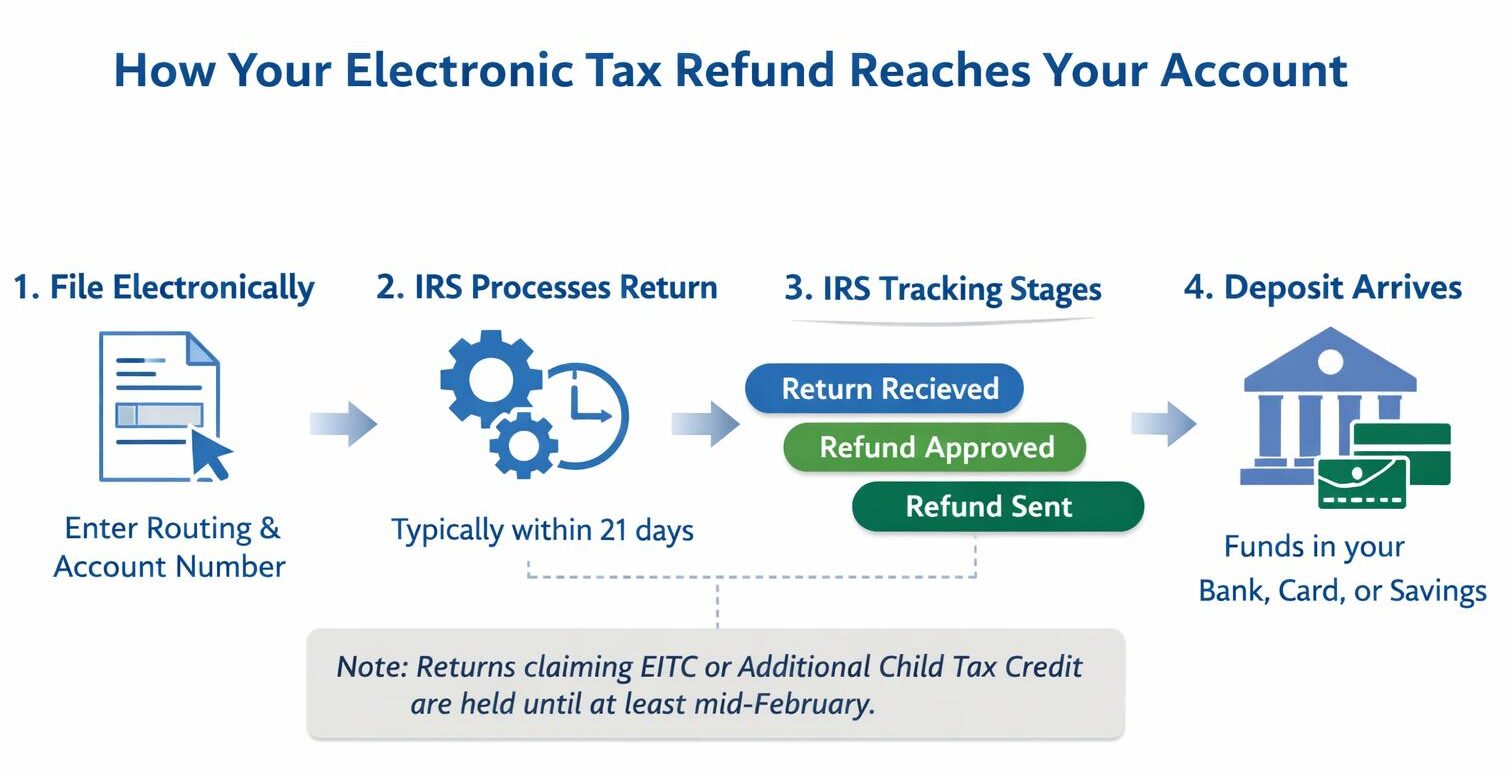
To receive your refund by direct deposit, you need to provide your bank account information when you file your return. Two pieces of information are required:
- Your bank’s routing number, which is a nine-digit code that identifies the financial institution
- Your account number, which identifies your specific account at that institution
Both numbers appear at the bottom of a personal check. The routing number is the first set of numbers on the left, and the account number follows. If you do not have checks, your bank’s website, mobile app, or customer service line can provide both numbers.
You can direct your refund to a checking account, savings account, or certain prepaid debit cards that have been assigned routing and account numbers. Some account types, such as certain money market accounts or brokerage accounts, may not accept direct deposits from the IRS, so it is worth confirming with your financial institution before entering those details.
Splitting Your Refund Across Multiple Accounts
Source: Mooloo Graphics
The IRS allows you to split a refund across up to three different bank accounts using IRS Form 8888, which you attach to your tax return. Splitting a refund can be useful if you want to direct part of it toward savings while keeping the rest in a checking account for everyday expenses.
For example, if you expect a refund of $2,400, you could direct a portion to a savings account, another portion to a checking account, and a remaining amount toward purchasing U.S. Series I Savings Bonds, which is another option available through Form 8888. The IRS will follow your instructions as long as the account details are accurate and the financial institutions accept the deposits.
If the total of your split allocations does not match your actual refund amount due to adjustments the IRS makes to your return, the IRS may send any remaining balance as a paper check or adjust the deposit to the last account in the sequence, depending on the situation. Reviewing the Form 8888 instructions carefully before using this option is recommended.
How Long Electronic Refunds Take
The IRS generally states that most electronically filed returns with direct deposit selected are processed within 21 days. This is a general guideline, not a guarantee, and actual processing times can vary based on several factors.
Returns that include certain credits, such as the Earned Income Tax Credit or the Additional Child Tax Credit, are subject to a mandatory hold. Federal law requires the IRS to hold refunds that include these credits until at least mid-February each year, to allow additional time for fraud detection. If your return includes either of these credits, your refund will not arrive before that date regardless of when you file.
Paper returns, even those requesting direct deposit, take significantly longer to process than electronic returns. The IRS processes paper returns manually, which can extend timelines considerably depending on volume. Filing electronically is the most reliable way to reduce your wait time.
Tracking Your Refund Status
The IRS provides a free online tool called Where’s My Refund, available at IRS.gov. You can also access the same information through the IRS2Go mobile app. To check your refund status, you will need:
- Your Social Security number or Individual Taxpayer Identification Number
- Your filing status
- The exact refund amount shown on your return
The tool updates once per day, usually overnight, so checking multiple times in a single day will not produce new information. It shows three stages: Return Received, Refund Approved, and Refund Sent. Once the status shows Refund Sent, the deposit should arrive in your account within a few business days, depending on your bank’s processing times.
What Happens If There Is an Error in Your Account Information
Entering an incorrect routing or account number is one of the most common problems with direct deposit refunds. If the account number you provide does not exist, the bank will typically reject the deposit and return the funds to the IRS, which will then mail a paper check to the address on your return. This adds several weeks to the process.
If you enter a valid but incorrect account number and the deposit reaches someone else’s account, recovering that money becomes significantly more complicated. The IRS advises contacting the financial institution directly in that situation. The agency recommends double-checking all account information carefully before submitting your return.
The IRS does not allow you to change your direct deposit information after you have submitted your return. If you realize you entered incorrect details, you cannot update them through the IRS website. The agency will attempt the deposit as instructed, and if it is rejected, the fallback is a paper check mailed to the address on file. Delays can also occur due to non-filing – check UnfiledTaxesHelp.com for assistance.
Using a Prepaid Debit Card or Financial App
If you do not have a traditional bank account, you may still be able to receive your refund electronically. Some prepaid debit cards and financial apps that function like bank accounts are assigned routing and account numbers that the IRS can use for direct deposit.
Before entering this type of account information on your return, confirm with the card or app provider that they accept IRS direct deposits. Not all prepaid cards are set up to receive government deposits, and submitting incompatible account details causes the same problems as entering an incorrect bank account number.
Tax Refund Timing and Cash Flow Considerations
A tax refund represents money you overpaid to the IRS during the year, typically through paycheck withholding. Some people treat a refund as a form of forced savings, while others prefer to adjust their withholding to keep more of their money throughout the year. Neither approach is inherently better, and the right balance depends on individual circumstances and preferences.
What is worth understanding is that refund timing can affect short-term cash flow. If you are counting on a refund to cover a specific expense, knowing the likely timeline helps with planning. Filing early, filing electronically, and selecting direct deposit all tend to result in faster processing compared to filing late or on paper.
State Tax Refunds and Electronic Options
Most states that collect income tax also offer direct deposit for state tax refunds. The process generally mirrors the federal approach, with routing and account numbers entered during filing. State processing timelines vary considerably, and each state’s tax agency maintains its own refund tracking tool. Checking your state’s department of revenue website will give you the most accurate and current information for your situation.
Understanding how electronic refund options work at both the federal and state levels helps reduce uncertainty during tax season and gives you more control over where and when your money arrives.