Crypto Exchange Proof of Reserves: What Traders Really Need to Know


Proof of Reserves (PoR) helps traders verify that crypto exchanges hold the assets they claim, but it is not a full safeguard against insolvency, hacks, or mismanagement. As of 2025, PoR audits remain voluntary, vary in quality, and provide only a snapshot of assets and liabilities. Investors should view PoR as one transparency tool, useful but incomplete, and combine it with due diligence, diversification, and self-custody for long-term protection.
- PoR audits confirm reserves, not solvency: They show wallet balances via cryptographic proof but exclude off-chain debts, loans, or hidden liabilities.
- Legal requirements are limited: As of 2025, no universal mandate exists; U.S. oversight remains fragmented across SEC, CFTC, and FinCEN, though regulatory pressure is increasing.
- Quality varies: Strong reports are independent, updated quarterly, cover multiple asset classes, and allow user verification through Merkle trees. Weak reports may be self-audited or omit key assets.
- PoR doesn’t prevent risks: Exchanges can still collapse due to hacks, mismanagement, or regulatory seizures. Example: Bitrue lost $23M in 2023 despite a PoR report.
- Best practice for traders: Use PoR as one input when choosing exchanges, verify reports, avoid platforms with vague or infrequent audits, diversify across providers, and consider self-custody for larger or long-term holdings.
Proof of Reserves (PoR) offers a way to verify that cryptocurrency exchanges actually hold the assets they claim. While many exchanges tout PoR as evidence of trustworthiness and fund security, these audits fall far short of being the comprehensive safety assurance they’re often portrayed as.
PoR is not a safeguard against hacks, exit scams, or operational failures. Instead, PoR is merely one useful transparency tool among many for assessing exchange safety, not an all-encompassing guarantee.
The Trust Problem in Crypto
The collapse of FTX in November 2022, with over $9 billion in liabilities, profoundly changed how traders perceive centralized exchanges. Once ranked among the top five, FTX became insolvent almost overnight, resulting in billions of dollars in lost customer funds.
After its collapse, investigations revealed that FTX allegedly used customer deposits (know as hypothecation) for other ventures, raising concerns about whether exchanges truly hold the assets their users believe they control.
This was not an isolated event. In 2022, other major platforms like Celsius, Voyager, and BlockFi also collapsed, prompting heightened scrutiny of exchange assets and on-chain transactions. The key question that emerged for traders became: how can I verify that my exchange actually holds my money?
Proof of Reserves Explained: The Basics
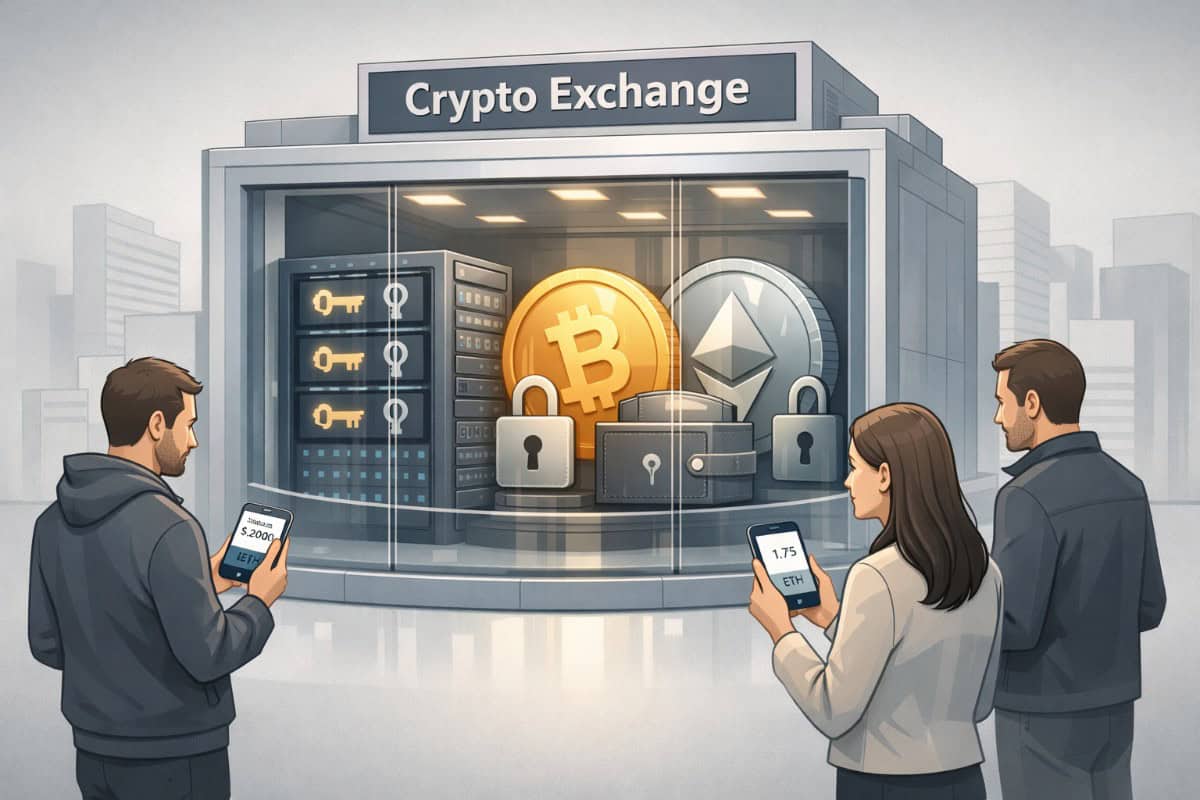
Proof of Reserves is an independent audit process designed to demonstrate that a custodian holds the assets it claims on behalf of users. Essentially, it provides a financial snapshot answering the crucial question: if every user withdrew their funds at once, would the exchange have enough liquidity to cover all withdrawals?
The PoR process involves two essential elements:
-
Assets: Auditors confirm control over the exchange’s crypto wallets by requiring the exchange to cryptographically sign transactions. This proves ownership of specific wallet addresses. Because blockchain transactions are public, anyone can verify these holdings using blockchain explorers.
-
Liabilities: This represents the sum of all customer account balances on the exchange. A healthy exchange should have at least 100% of these liabilities covered by its assets, ideally more to provide a safety buffer.
How Merkle Trees Protect Privacy
Most Proof of Reserves audits use Merkle trees, a cryptographic data structure that allows users to verify their balances were included in the audit without exposing private information. This means users can confirm their accounts are part of the proof without revealing exact balances to others or compromising overall privacy.

Source: Cointelegraph
Exchange Proof of Reserves – Legal and Regulatory Landscape
As of 2025, there is no universal legal mandate requiring crypto exchanges to publish PoR reports. Most exchanges adopt them voluntarily to build trust and stand out from competitors. In the U.S., crypto regulation remains fragmented among agencies like the SEC, CFTC, and FinCEN, with individual states imposing varying licensing requirements.
The regulatory scene is evolving quickly. For example, the GENIUS Act passed in July 2025 regulates stablecoins but does not require exchanges to conduct PoR audits. Still, regulatory pressure is rising, and mandatory transparency measures could become widespread in the near future.
Evaluating PoR Reports: What to Look For
Quality PoR reports generally share several characteristics;
- Independent audits by respected firms add credibility.
- Frequent updates, such as quarterly reports, reduce the risk of misrepresentation.
- Strong reserve ratios, well above 100%, provide important safety margins.
Comprehensive audits cover all major asset types, including spot, margin, futures, and staked holdings. Additionally, user verification tools based on Merkle trees allow individual account holders to confirm their inclusion.
Conversely, warning signs include self-audits without independent oversight, infrequent or inconsistent reporting, vague methodologies, missing assets, and reserve ratios barely meeting 100%, which leave no buffer for volatility or operational risks.
What Proof of Reserves Doesn’t Reveal
Understanding PoR’s limitations is critical. PoR audits typically confirm assets but don’t disclose other liabilities like loans or off-chain debts. They represent a single snapshot in time and don’t guarantee ongoing solvency. For example, an exchanges might temporarily borrow funds to pass an audit and return them later.
PoR also cannot confirm the origin or accessibility of assets, nor does it reflect operational security, management competence, internal controls, regulatory compliance, or business sustainability.
The False Sense of Security
While PoR can identify some risks, such as fractional reserve banking or insufficient customer funds, it does not protect against exchange hacks, exit scams, withdrawal freezes, regulatory seizures, or operational failures.
For example, in April 2023, Bitrue lost $23 million when a wallet containing 5% of its reserves was hacked, despite having a PoR report.
Major Exchange Implementations: Real-World Examples
Kraken stands out as a pioneer of PoR, with independent audits since 2014 and regular quarterly updates since 2022. Their approach includes broad asset coverage and user-verifiable Merkle trees, verifying over $21.5 billion in client assets as of 2024.
Binance employs Merkle trees and zk-SNARK cryptography for privacy but faces criticism for lacking full transparency in audits. Their June 2025 audit showed reserve ratios above 100% for major cryptocurrencies and notably high stablecoin reserves.
KuCoin also claims independent third-party verification with 1:1 backing, though their audit details are less transparent than Kraken’s.
Beyond Proof of Reserves: Complete Due Diligence
Proof of Reserves is an important but incomplete tool. Traders should also evaluate regulatory compliance and licenses, insurance coverage, the exchange’s track record, management background, and overall reputation. Typically exchange insurance policies only cover a tiny fraction of their balance sheets – hot wallet hacks, for example – but not insolvency or cold wallet breaches.
Diversification is crucial; funds should not be concentrated on a single exchange, even if it has a strong PoR. Consider distributing holdings among multiple reputable platforms and using self-custody for long-term storage.
Practical Guidelines for Traders
How to Verify PoR Reports
-
Access the exchange’s dedicated PoR or transparency page.
-
Use Merkle tree verification tools to confirm your balance is included.
-
Review full audit reports for dates, scope, and methodology.
-
Verify the auditor’s independence and reputation.
Red Flags to Watch For
-
Exchanges that provide no transparency or fail to publish audit information.
-
PoR reports that seem overly optimistic or suspiciously perfect.
-
Frequent delays or excuses for missing audit updates.
-
Ambiguous or incomplete methodology explanations.
When PoR Should Influence Your Choice
PoR is especially valuable when choosing between similar exchanges, evaluating new or lesser-known platforms, considering long-term storage, or building institutional compliance procedures.
When to Withdraw Regardless of PoR
Consider withdrawing funds if you encounter regulatory troubles, management controversies, unresolved technical problems, or liquidity concerns triggered by market conditions.
The Future of Exchange Transparency
Advances like real-time PoR using blockchain oracles and smart contracts could address current snapshot limitations. Chainlink and similar services are developing automated PoR verification solutions.
Regulatory frameworks may soon require mandatory PoR audits, improving transparency industry-wide. Organizations such as Hacken are working to standardize PoR methodologies for consistent auditing practices.
Conclusion: PoR as One Tool Among Many
Proof of Reserves marks progress toward transparency but is not a cure-all. It helps detect fractional reserves and builds trust but cannot eliminate all risks. Traders should consider PoR as one factor among many, prioritize exchanges with comprehensive independent audits and user verification, and maintain diversification and self-custody strategies.
Remember the core crypto principle: “Not your keys, not your coins.” As the industry matures, transparency tools like PoR will likely become standard, but prudent risk management requires thorough due diligence and control over your own assets.