The Disinheritance Shock: What to Do When You’re Cut Out of a Parent’s Will


In the United States, parents can legally disinherit adult children in 49 out of 50 states, Louisiana being the only exception under its forced heirship law. While will contests are possible, success rates are extremely low, typically under 5%. Winning requires strong medical, documentary, or witness evidence of undue influence, fraud, or incapacity at the time the will was signed. Given high legal costs and emotional strain, experts recommend evaluating both financial and emotional outcomes before filing a challenge.
- Contesting odds: Only about 0.25%-3% of wills face a legal challenge, and just 1%-5% succeed, often through settlement or modification.
- Valid legal grounds: Lack of testamentary capacity, undue influence, fraud, forgery, or failure to meet execution requirements. See IRS or state probate codes for details.
- No-contest clauses: May void your inheritance if you lose – but they’re unenforceable in some states like Florida.
- Louisiana exception: Children under 24 or incapacitated must receive part of the estate under Louisiana Civil Code.
- Costs and timeline: Typical probate litigation runs $10,000-$50,000 and takes 1-2 years; contingency fees are rare.
Picture the scene. A conference room falls silent as an estate attorney clears his throat. Three adult children sit together, mourning their parent’s death while quietly wondering about their inheritance. Then comes the shock: only one sibling receives anything. Or worse – the entire multi-million-dollar estate goes to a local animal shelter.
Scenes like this occur more often than people imagine. In the United States, roughly 0.25 % to 3 % of wills are formally contested in probate court, and disinherited children account for many of those disputes. Yet contesting a will is rarely straightforward, and success depends on strict legal standards and convincing evidence.
The Harsh Reality: Testamentary Freedom in America
In 49 out of 50 states, parents have the right to disinherit adult children entirely. American law strongly protects testamentary freedom, allowing individuals to dispose of property as they wish, even if that means leaving nothing to their children while donating millions to a charity, neighbor, or pet.
The United States stands apart from many other countries that follow forced heirship, a legal system requiring a parent to leave a minimum portion of their estate to their offspring. The one exception within America is Louisiana’s forced heirship law. Under Louisiana Civil Code, children under age 24, or of any age if permanently incapacitated, must receive a portion of the estate: one-quarter if there is one forced heir, or one-half if there are two or more. Parents can only disinherit these heirs for legally defined reasons such as violence, cruelty, or willful neglect.
Legal Grounds for Contesting a Will
Being disinherited does not automatically make a will invalid. The law provides only a few narrow avenues for challenge:
Lack of Testamentary Capacity: The challenger must show the parent lacked the mental ability to understand the act of making a will, the extent of their property, or the identity of their heirs. Courts apply a low threshold, and medical evidence from the time of signing carries the most weight.
Undue Influence: If someone manipulated or coerced the parent into changing the will, such as a caretaker, new spouse, or favored sibling, courts may set it aside. Proof requires showing that influence overpowered the parent’s free will.
Fraud or Forgery: A forged signature, swapped pages, or deceit that changed the will’s content may render it void.
Improper Execution: Each state sets formal rules on signatures and witnesses. If these execution requirements were not followed, the will may be invalid.
Omitted or Pretermitted Heir: When a child is born or adopted after a will was created, many states presume the omission was accidental, granting that child a statutory share unless disinheritance was explicit. These protections are often defined by state intestacy laws.
The Success Rate: Sobering Statistics
Before you rush to court, understand the odds. Of the small percentage of wills that are contested, roughly 0.25% to 3% of all wills, only a small fraction succeed. Most probate attorneys agree that around 1% to 5% of challenges result in full or partial success through settlement, modified distribution, or invalidation.
Why so low? Courts start with a presumption that a properly executed will is valid. The burden of proof falls on the person challenging it, and they typically must prove their case by “clear and convincing evidence”, a much higher standard than the “preponderance of evidence” used in most civil cases.
Factors That Improve Your Chances
Your likelihood of success increases significantly if you can demonstrate:
- Compelling medical evidence of incapacity at the specific time the will was signed
- Multiple witnesses who can testify about undue influence or suspicious circumstances
- A pattern of changes to the will that coincide with a new person entering your parent’s life
- Prior wills that show dramatically different intentions
- Documentary evidence like emails, texts, or recordings showing coercion
- Financial irregularities such as large withdrawals or asset transfers shortly before death
The No-Contest Clause Trap
Many wills include no-contest clauses, which state that anyone who challenges the will forfeits their inheritance. These clauses deter litigation but don’t always hold up. States like Florida prohibit them entirely, while others enforce them only when a challenge lacks probable cause.
If you were fully disinherited, such clauses have no effect, you have nothing to lose by contesting. But if you received even a modest inheritance, challenging the will could mean forfeiting that share if you lose.
The Animal Shelter Scenario: When Charities Inherit Everything
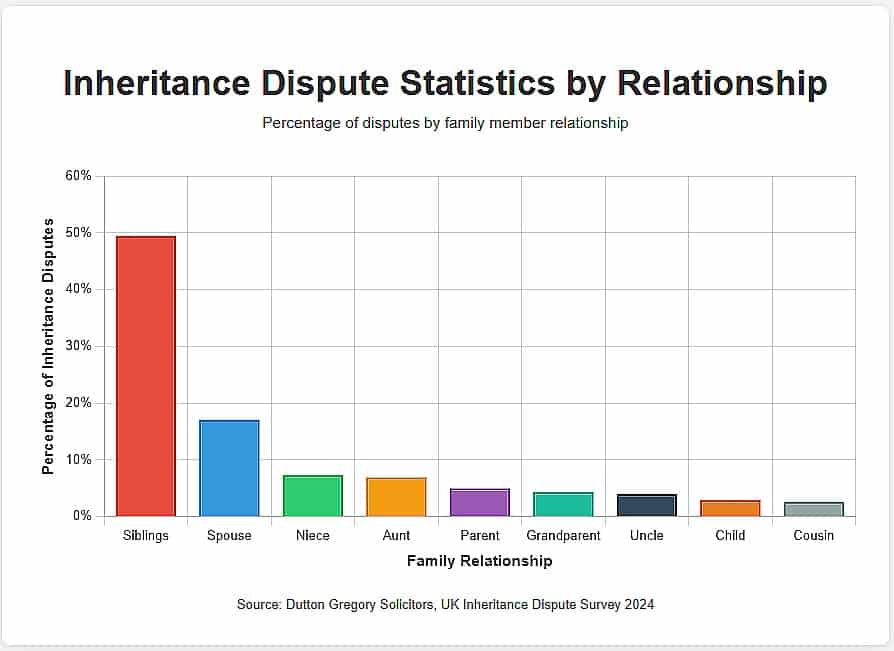
The One-Sibling-Gets-Everything Scenario
When one sibling receives the entire estate while others get nothing, questions naturally arise. Was this truly what the parent intended, or did the favored child influence the outcome?
The Price of Justice
Probate litigation is expensive and emotionally draining. Attorney fees often range between $300 and $500 per hour, and total costs can reach $10,000 to $50,000, or far more if the case proceeds to trial. Expert witnesses, depositions, and court fees add up quickly.
Most cases take one to two years to resolve, and contingency arrangements, where lawyers take a percentage of winnings, are rare because of the uncertainty of outcome. Before proceeding, challengers must weigh whether the potential inheritance justifies the cost and strain.
Steps to Take If You’re Disinherited
Immediate Actions (Within Days)
Obtain a copy of the will. As an interested party, you’re entitled to see it once it’s filed for probate. Document everything you remember about your parent’s mental state, relationships, and any suspicious circumstances. Preserve evidence such as previous wills, letters, emails, or statements your parent made about their intentions. Request medical records if needed, either through the estate or by court order.
Within the First Few Months
Consult an estate litigation attorney to assess whether you have grounds to contest. Many offer free initial consultations. Know your state’s deadlines, most allow only 120 days after probate to file a challenge. Consider mediation before filing a lawsuit to see if beneficiaries can reach a settlement. Evaluate your finances realistically to ensure you can afford the process.
Legal Procedure
If you proceed, your attorney will file a petition to contest the will in probate court, request discovery to obtain documents, take depositions, and question the drafting attorney. They may also seek a temporary restraining order to freeze assets. Evidence is then gathered and presented at hearings or trial, with potential for settlement at any point.
When Not to Contest
The Emotional Reality
Beyond legal strategy and statistics, disinheritance carries deep emotional weight. Many disinherited children feel rejected and unloved, even when they understand that a parent’s decision doesn’t define their worth. Others experience anger toward siblings who inherited, sometimes damaging relationships beyond repair.
Feelings of guilt may arise over the idea of contesting a parent’s final wishes, along with confusion about what could have caused such treatment. Seeking professional counseling can be invaluable in processing these emotions, whether or not you decide to take legal action.
Preventive Measures for Parents
If you’re the parent reading this and want to disinherit a child without triggering a legal battle:
- Explicitly state the disinheritance in the will: “I intentionally make no provision for my child [Name]”
- Work with an experienced attorney: Proper execution is critical
- Consider leaving something small: A token gift makes it harder to claim accidental omission
- Document your reasons: While not required, a letter explaining your reasoning (kept separately from the will) can provide context
- Have a capacity evaluation: If your mental state might be questioned, get a contemporaneous medical evaluation
- Use a trust instead of a will: Assets in a properly structured trust avoid probate entirely, making challenges more difficult