Open Banking Permissions: Understanding What Apps Can (and Can’t) Access


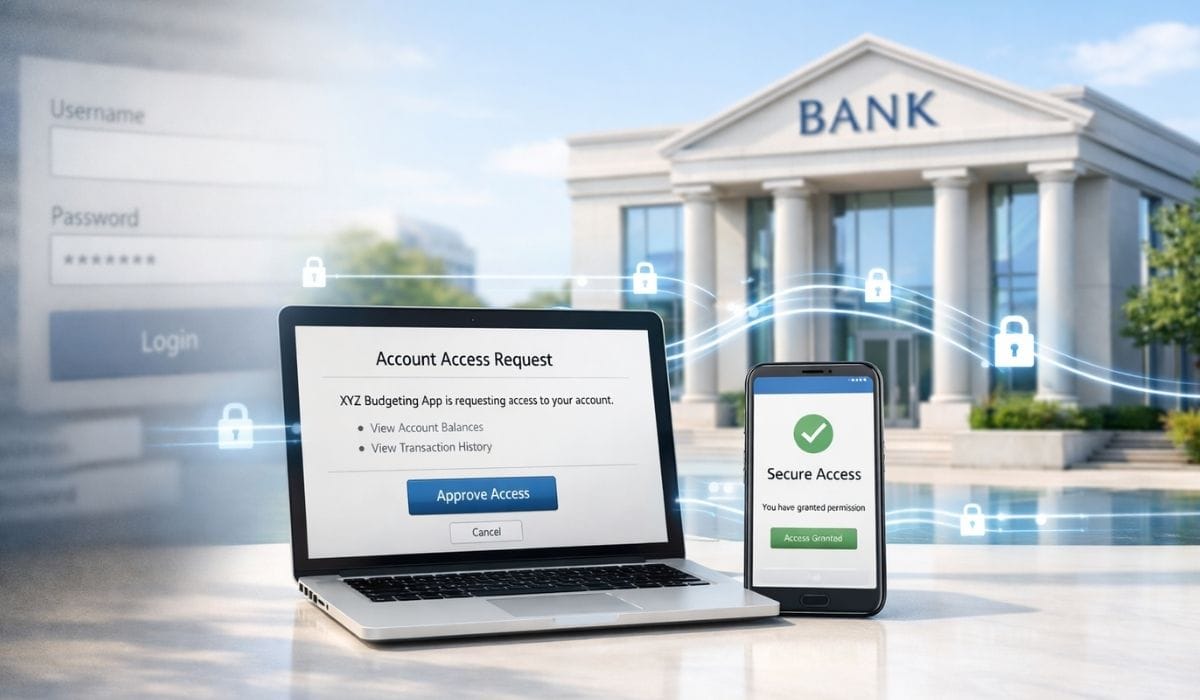
When you connect a third-party app to your bank account using regulated open banking, you grant narrowly defined, consent-based access, not unlimited control. Each authorization specifies exactly what data can be accessed, for what purpose, and for how long, with most read-only access expiring automatically after about 90 days in the UK and EU. You can review or revoke permissions at any time through your bank or the app. Understanding these built-in limits, data scope, time-bound access, and explicit revocation rights, helps consumers use open banking confidently while keeping control of their financial information.
- Consent is granular and explicit: Apps must clearly state which data they want (balances, transactions, standing orders), the purpose, and the access duration, general terms alone are not enough.
- Read-only access means no money movement: Most apps can view approved data only; they cannot change details or initiate payments unless you grant a separate, transaction-specific payment permission.
- Permissions are time-limited by design: Open banking access typically expires automatically (often ~90 days), reducing long-term data exposure if you stop using a service.
- You can revoke access anytime: Withdrawal of consent is immediate and can be done via your bank’s consent dashboard or the app itself, no explanation required.
- Data use is purpose-limited: Providers may use your data only for the specific purpose you authorized; any new use requires fresh, explicit consent.
When you authorize a third-party app to access your bank account through regulated open banking, you are not granting unlimited access. Instead, you provide explicit, consent-based permissions that define what financial data can be accessed and for how long.
Open banking systems are designed around user control. Access is limited to specific data types, approved through secure authentication, and can be reviewed or revoked at any time under applicable financial regulations. Understanding this permission structure helps consumers use open banking services confidently while maintaining control over their financial information.
The Anatomy of Open Banking Consent
Open banking consent differs from traditional app permissions because it is governed by strict regulatory and technical standards designed to ensure clarity, granularity, and user control.
When a third-party application requests access to your bank account, it must define specific parameters. These include the exact categories of data requested, such as account balances, transaction history, or standing orders, the intended purpose for using that data, and the duration of access. In many jurisdictions, particularly under EU and UK open banking rules, consent is time-limited and commonly requires reauthorization every 90 days, though requirements vary by region.
Consent must be explicit and informed. Access cannot be granted solely through acceptance of general terms and conditions. Instead, users are presented with a dedicated authorization flow that clearly outlines what data will be shared and for how long, allowing them to make an intentional decision.
This structured consent model reflects regulatory efforts to move beyond opaque data-sharing practices. By requiring clear definitions of access, purpose, and duration, open banking frameworks aim to give users meaningful control over how their financial data is shared and used.
Read-Only Access: What Third Parties Can See
The most common open banking permission is read-only data access, provided by entities technically known as Account Information Service Providers (AISPs). These third-party apps can retrieve information from your accounts but are not permitted to modify data or initiate transactions.
Read-only access typically includes several defined data categories. Account identification information allows an app to distinguish between different accounts and display them separately. The specific identifiers shared depend on the bank and jurisdiction and are typically masked or tokenized rather than exposed in full.
Balance information shows how much money is in each account. This may include the current balance, available balance after pending transactions, and, where supported by the bank, overdraft limits or usage for accounts with overdraft facilities.
Transaction history is often the most valuable data for third-party services. This includes incoming and outgoing payments with details such as amount, date, and description. Access to transaction history is limited by bank policy and consent scope, commonly covering recent periods such as 90 days or up to 12 months, with longer access requiring renewed authorization.
Standing orders and direct debits form another category of accessible information when explicitly included in the consent. Apps can view existing recurring payments, including payment amounts, frequency, and recipients, allowing budgeting tools to forecast cash flow or identify ongoing subscriptions.
What read-only access explicitly cannot do is change any account information or move money. The app cannot create or cancel payments, modify standing orders or direct debits, or alter account details. Read-only access is strictly observational and limited to viewing approved financial data.
Payment Initiation: A Different Permission Entirely
Some open banking services request the ability to initiate payments from your account. This is a fundamentally different and more powerful permission than read-only data access, governed by separate regulations and requiring stronger authorization.
Payment Initiation Service Providers can trigger transfers from your account, but only under tightly controlled conditions. In standard payment initiation flows, each individual payment requires your explicit authorization. You must authenticate the specific transaction, the exact amount, recipient, and timing, before it proceeds.
The practical application typically involves streamlined payment experiences. When checking out from an online merchant that accepts open banking payments, you might authorize the app to initiate a payment directly from your bank account. The amount and recipient are clearly displayed, you authenticate the payment, and it processes without needing to enter card details or account information manually.
Payment initiation combines convenience with security. It is more convenient than manually setting up a bank transfer because the details are pre-populated and you do not leave the checkout flow. It is also more secure than card payments for merchants because no card number is shared that could be stolen or reused.
It is important to understand that standard payment initiation does not grant open-ended authority to move money. If you authorize a payment initiation service to pay £50 to a specific merchant on Tuesday, that authorization applies only to that payment. A future payment, even to the same merchant for the same amount, requires a new authorization, except in limited cases where regulated recurring payment permissions are explicitly set up.
Scope Limitations and Data Minimization
Open banking frameworks incorporate data-minimization principles, meaning third-party providers should request only the data necessary to deliver their stated service. A basic balance-checking app, for example, does not require full transaction histories, while a budgeting tool may reasonably need access to recent transactions but not excessive historical data.
When reviewing consent requests, assess whether the data scope aligns with the app’s purpose. If a service presents itself as a simple balance viewer yet requests extensive transaction history or standing order information, that mismatch deserves closer scrutiny.
Open banking also offers account-level granularity. Most implementations allow you to choose which accounts to share, enabling you to exclude specific accounts such as business or savings accounts while granting access only to personal checking accounts.
This granularity extends across apps as well. A budgeting app might require broad transaction access, while another service verifying account ownership may need only basic account information for a single account. Each authorization is separate, purpose-specific, and independently controlled.
Time-Bound Permissions and Automatic Expiry
Unlike many app permissions that persist indefinitely until manually revoked, open banking permissions are designed to expire automatically. In regulated frameworks such as PSD2 and UK Open Banking, access to account information is typically time-limited, most commonly to 90 days for Account Information Services (AIS), though exact durations vary by jurisdiction and service type.
Automatic expiration serves important security and privacy functions. It prevents access from continuing if you stop using a service but forget to revoke authorization. It creates regular decision points where you must consciously renew or discontinue access. It also limits the exposure window if a third-party provider’s systems are compromised.
As consent approaches expiration, the third-party app generally prompts you to reauthorize access. In regulated environments, this renewal requires re-authentication with your bank using Strong Customer Authentication (SCA) and confirmation of the same consent parameters. Some services request renewal when you next open the app, while others send advance notifications, such as email reminders, though notification timing and methods vary by provider.
The open banking consent lifecycle includes three core stages: grant, manage, and revoke. You grant consent with clearly defined parameters at the outset. During the active period, you can review and manage that consent, including its scope and expiration date. At any time, you may revoke consent, through the app or your bank, immediately terminating the third party’s access.
Revoking Access: Your Absolute Right
One of the most important features of open banking is your clear and enforceable right to revoke permissions at any time. You do not need to provide a reason, and withdrawing consent is a core requirement of open banking regulations designed to keep control firmly with the customer.
Revocation can occur through several channels. Most banks offer consent management tools within their online or mobile banking platforms, allowing you to view which third-party services have access to your accounts and withdraw that access. These interfaces typically show the authorized provider, the type of data shared, when consent was granted, and when it is due to expire.
Many third-party apps also provide disconnection options within their settings. When you disconnect an account or stop using a service, the app should initiate consent withdrawal. However, best practice is to confirm revocation through your bank’s consent dashboard to ensure access has been fully terminated at the source.
You may also contact the third-party provider directly to request revocation or account closure. Under data protection laws such as GDPR, you can request deletion of personal data the provider holds, subject to any legal retention obligations the company must follow.
Banks generally cannot withdraw consent on your behalf without your involvement, except in specific circumstances such as suspected fraud, security risks, or regulatory violations. Regulators have emphasized that consent withdrawal is primarily a customer-controlled action. At the same time, banks are not permitted to block compliant third-party access by default, as open banking rules are designed to promote competition and user choice.
Once consent is revoked, access to live banking data is effectively terminated. The third party can no longer retrieve new information using its access credentials. Any data previously collected remains governed by the provider’s retention policies and applicable privacy laws, but the direct connection to your bank account is closed.
Purpose Limitation: Using Data Only as Authorized
Open banking operates under strict data-protection rules, particularly the GDPR principle of purpose limitation, which governs how third parties may use the data they access. Personal and account data may be processed only for the specific purpose you authorized when granting consent.
If you authorize a budgeting app to access your transactions for the purpose of categorizing spending, that provider cannot use the same identifiable data for credit scoring, advertising targeting, or resale to data brokers unless you have separately and explicitly authorized those additional uses. The commercial value of transaction data does not override consent requirements.
When reviewing permission requests, the stated purpose should be clear and directly aligned with the service being provided. Broad or vague statements such as “to improve our services” or “for business purposes” may not, on their own, meet the standard for informed consent if they are not accompanied by a specific and understandable explanation of how the data will be used.
If a third party wishes to process your data for purposes beyond those originally authorized, it must obtain fresh, explicit consent for those new uses. This additional consent must be as clear, specific, and informed as the original authorization.
Monitoring Your Active Authorizations
Managing open banking permissions is not a one-time action but a best-practice habit that helps maintain control over your financial data. Periodically reviewing which services have access to your accounts, and whether you still actively use them, reduces unnecessary data exposure.
Most banks that support open banking provide consent management dashboards within their online or mobile banking platforms. These dashboards typically list active authorizations and show key details such as the name of the third-party provider, which accounts are covered, the categories of data authorized, when consent was granted, and when it is scheduled to expire.
The level of detail available varies by bank and jurisdiction. Some implementations may display limited indicators related to consent usage, but in most cases dashboards show what a provider is permitted to access, not a full audit trail of when or how often data is retrieved.
Regular reviews can reveal authorizations for services you no longer use. For example, a budgeting app you tried briefly may still have access until the consent expires or is manually revoked. Periodic cleanup ensures that only actively used services retain access to your financial data.
The Information Asymmetry Problem
While open banking represents a major improvement over older data-sharing practices, a degree of information asymmetry still remains. You explicitly authorize what data a third-party provider can access, but in practice you often have limited day-to-day visibility into how that data is stored, processed, or used after access is granted.
Third-party providers may retain transaction data for service delivery, security, compliance, or analytics purposes, and some may aggregate or anonymize data across users. These practices should be disclosed in privacy policies and terms of service, but the depth and clarity of those disclosures vary significantly. More responsible providers clearly explain what data they retain, how long it is stored, whether it is shared with other entities, and the specific purposes for which it is used.
Broader data-protection frameworks such as GDPR apply regardless of whether personal data is obtained through open banking. These regulations give users the right to access their data, request corrections, and, in certain circumstances, request deletion. However, deletion rights are not absolute and may be limited by legal, regulatory, or fraud-prevention obligations that require continued data retention.
As a result, once data is shared, even with informed consent and a legitimate purpose, you inevitably relinquish some practical control over how it is handled downstream. This makes the initial decision about which providers to trust especially important. Regulatory authorization, transparency around data practices, security standards, and a strong compliance record are key indicators of whether a provider is likely to handle open banking data responsibly.
Looking Forward: Enhanced Consent Management
As open banking continues to evolve, improvements in consent management are expected to be incremental rather than transformational. Current frameworks already focus on clearly defined data scope, time-limited access, and user-controlled revocation. While more granular controls are sometimes discussed, features such as time-based access or highly customized permission rules are not yet standard in regulated open banking systems.
Most progress is occurring in oversight and security. Banks and regulated third-party providers use automated monitoring to detect suspicious or abnormal access patterns, primarily for fraud prevention and compliance. These systems protect users in the background but do not replace explicit, user-granted consent or provide extensive real-time control over how access is exercised.
Consent management also remains institution-specific. Users typically review and revoke permissions through individual bank dashboards, and a unified, cross-bank consent view is not yet available. Even so, the core principle remains consistent: open banking is designed to ensure users understand who can access their financial data, for what purpose, and for how long, with the ability to withdraw that access at any time.