Open Banking Explained: Your Financial Data, Your Control


Open banking is a regulatory framework that gives consumers the legal right to control and share their bank data with approved third-party providers through secure, consent-based APIs, rather than through passwords, PDFs, or screen scraping. In practice, this means you can authorize budgeting apps, lenders, or payment services to access specific account data for a defined purpose and time period, and revoke that access at any time. Introduced through rules like the EU’s Payment Services Directive 2 (PSD2), the UK’s Open Banking Standard, and the U.S. CFPB’s Personal Financial Data Rights (Section 1033), open banking shifts data ownership from banks to consumers while improving security by replacing shared credentials with token-based API access.
- Consumer-controlled data: You, not your bank, decide who can access your transaction data, for what purpose, and for how long.
- APIs replace passwords: Authorized apps connect via secure, standardized APIs instead of using your bank login, reducing fraud and security risk.
- Regulatory-backed access: Banks are required by law in many regions to provide data access to licensed providers when you consent.
- Real-world use cases: Enables account aggregation, faster lending decisions, personalized budgeting tools, and bank-to-bank payments.
- Not mandatory, not unlimited: Data sharing is always optional, scope-limited, time-bound, and revocable.
For decades, banks have served as the primary custodians of customers’ financial data. To check an account balance, customers typically log into their bank’s app. To share transaction history with an accountant, they usually download PDF or CSV files. Comparing spending across multiple banks has traditionally required checking each institution separately, one by one.
Open banking changes this relationship in jurisdictions where formal regulatory frameworks exist. It reduces banks’ role as exclusive gatekeepers of financial data and gives consumers the legal right to authorize approved third-party providers to access their information for specific purposes. Instead of relying on manual file sharing or screen scraping, customers can grant time-limited, consent-based access through secure, standardized digital connections.
How Open Banking Redefines Data Ownership
The core principle behind open banking is that consumers have the legal right to control and share their financial data, rather than banks acting as the exclusive gatekeepers of that information. While banks have always been custodians of customer funds, they have historically controlled access to transaction histories, balances, and account data, limiting how customers could use or share that information with third-party services.
Open banking alters this relationship by requiring banks, at a customer’s request, to make certain financial data available through secure, standardized application programming interfaces (APIs). In most jurisdictions, open banking initially applies to payment accounts such as checking or current accounts and supports services like account aggregation and payment initiation. The expansion of these principles to cover products such as loans, savings, investments, pensions, and insurance is commonly referred to as “open finance,” which is still in varying stages of regulatory development globally.
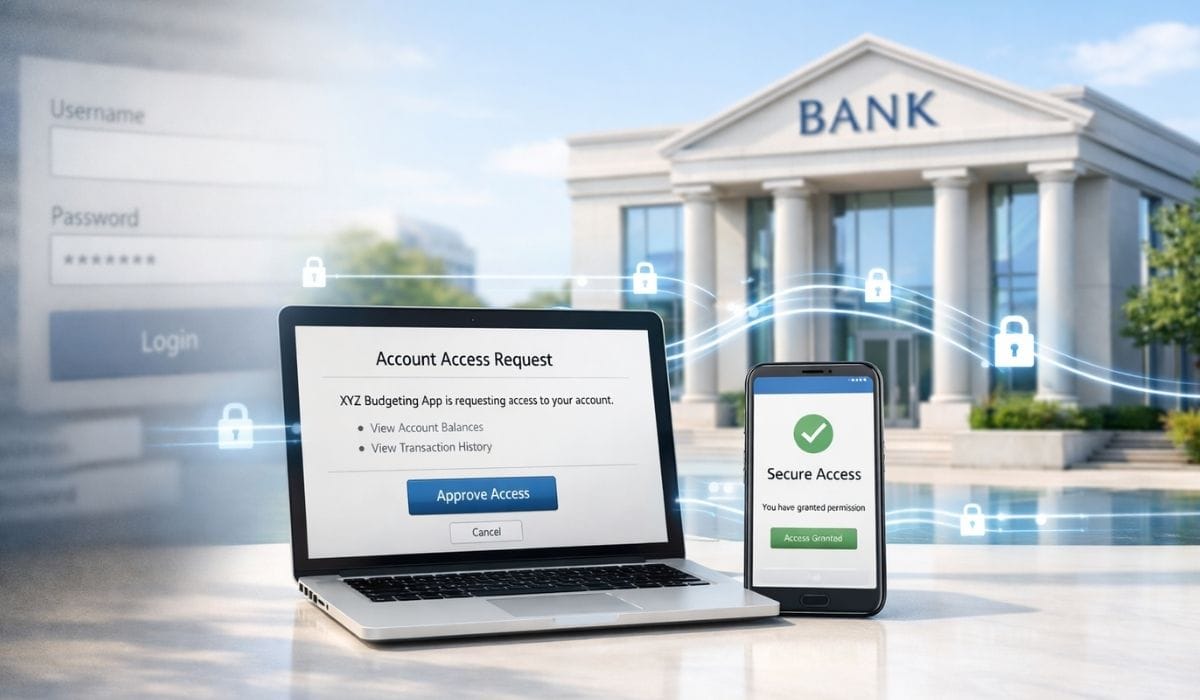
A defining feature of open banking is explicit, customer-driven consent. Users must actively authorize third-party providers to access specific data for a clearly defined purpose and time period, and that consent can be withdrawn at any time. This framework replaces older and less secure practices, such as screen scraping or sharing online banking login credentials, which exposed customers to elevated fraud and security risks. Under open banking models, third parties receive limited, permissioned access via APIs, while customers’ login credentials remain solely with their bank, significantly improving both security and user control.
The Technical Foundation: APIs Instead of Passwords
Open banking operates through Application Programming Interfaces (APIs), which are standardized digital channels that allow different software systems to communicate securely. When you authorize a budgeting or financial management app to access your transaction data, the app does not log into your bank account using your username and password. Instead, it connects through the bank’s API using a dedicated access token that you have explicitly approved.
This token-based model provides several important protections. Access is typically limited to specific data scopes and is often read-only, meaning third parties can view account information but cannot move funds or change account settings. Payment initiation or other sensitive actions require separate, explicit authorization. Access is also time-limited and can be revoked at any time through your bank or the authorized third-party provider. At no point are your actual banking credentials shared with external services.
Under open banking frameworks such as those implemented in the EU and UK, regulatory technical standards require account-servicing institutions to provide secure, standardized, and reliable API access to payment accounts for authorized providers. This standardization ensures consistent security controls and interoperability across banks, reducing reliance on insecure methods like credential sharing and making open banking services broadly compatible regardless of where you hold your account.
The Regulatory Foundation
Open banking did not emerge purely from market forces. It was driven by regulatory intervention after policymakers concluded that incumbent banks’ control over customer data was limiting competition and slowing innovation. In Europe, the framework was established through the Payment Services Directive 2 (PSD2), which came into effect on 13 January 2018. PSD2 requires banks to provide licensed third-party providers with access to customer payment account data and payment initiation services through secure, standardized interfaces, subject to explicit customer consent.
In the United Kingdom, regulators went further. Following a retail banking market investigation, the Competition and Markets Authority (CMA) required the nine largest UK banks to develop and maintain open application programming interfaces (APIs) for customer-authorized data sharing. This mandate led to the creation of the UK Open Banking Standard and the Open Banking Implementation Entity, producing one of the most mature and widely adopted open banking ecosystems globally.
Other jurisdictions have adopted similar, though not identical, approaches. Australia introduced its Consumer Data Right (CDR), which extends beyond banking to other sectors such as energy and telecommunications. In the United States, the Consumer Financial Protection Bureau (CFPB) issued final rules in October 2024 implementing Personal Financial Data Rights under Section 1033 of the Dodd-Frank Act, establishing a federal framework for consumer-authorized access to financial data. While timelines, scope, and technical standards differ across regions, the core principle is consistent: consumers, not financial institutions, should control their financial data and be able to share it securely with services of their choosing.
What Open Banking Enables
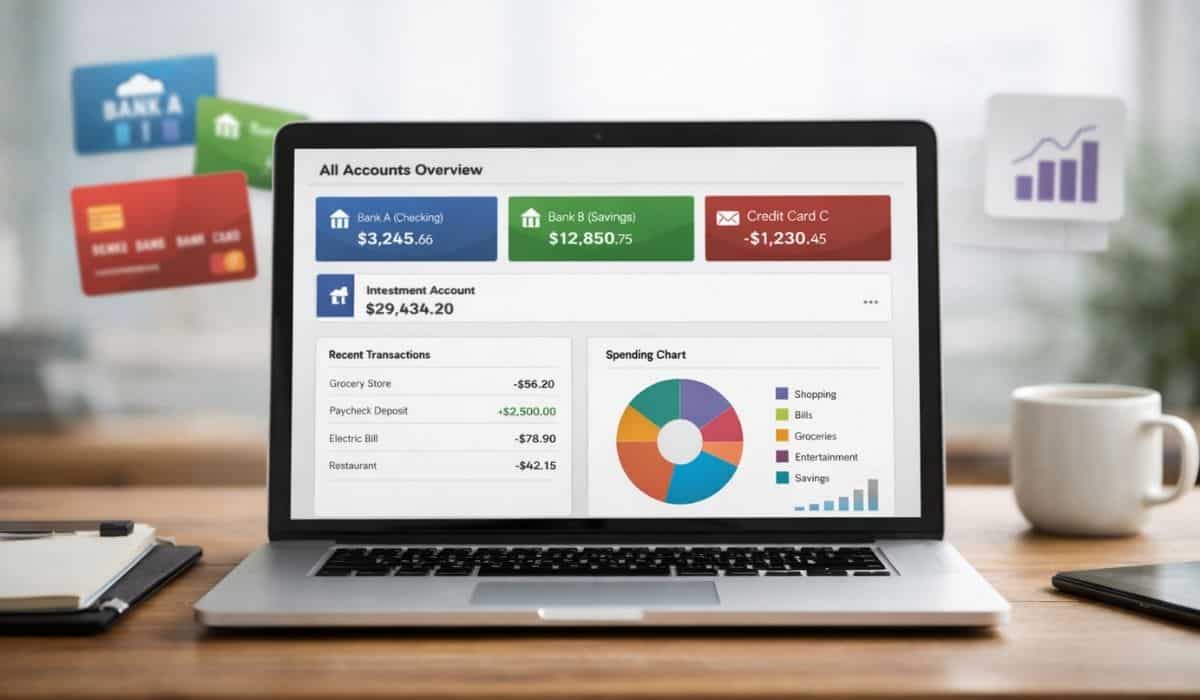
The most visible impact of open banking appears in account aggregation services. These applications can pull information from multiple banks, credit cards, and, in some cases, investment accounts into a single dashboard. Instead of logging into several separate apps to understand your financial position, users can view balances and transactions across institutions in one place.
The potential extends well beyond simple account viewing. Open banking enables payment initiation services, allowing authorized providers to trigger payments directly from a customer’s bank account without relying on traditional card networks. This can reduce processing costs for merchants and, in some cases, enable faster settlement. Open banking also supports automated financial tools that analyze spending patterns across multiple accounts to generate personalized budgeting insights or product recommendations. In lending, it facilitates faster loan and credit applications by allowing lenders, subject to explicit user consent, to verify income, expenses, and cash-flow history directly from bank transaction data, reducing paperwork and decision times.
In the United Kingdom, open banking has reached meaningful scale. By early 2025, more than 13 million consumers and small businesses were using open banking-enabled services, with tens of millions of open banking payments processed each month. These adoption levels indicate that open banking has moved beyond experimentation and is delivering practical value in everyday financial use cases.
The Boundaries and Limitations
Understanding what open banking is also requires understanding what it is not. Open banking is not a free-for-all in which companies can access financial data at will. All access requires explicit, informed consumer consent, which must be limited in scope, purpose, and duration. It also does not allow third parties to move money without authorization. Most open banking services are read-only, and services that enable payment initiation require separate, explicit consent tied to each transaction or defined payment mandate.
Open banking is voluntary, not compulsory. Consumers are never required to share their data. If you prefer to keep your financial information entirely within your bank’s systems, that choice remains fully intact. The framework exists to ensure that when consumers do choose to share data, such as with a budgeting app, payment service, or lender, they can do so through secure, regulated interfaces rather than by sharing bank login credentials.
The infrastructure supporting open banking is designed with security as a foundational requirement, but it introduces additional considerations regarding how third parties use, store, and protect consumer data. While banks are subject to extensive prudential and cybersecurity regulations, authorized third-party providers must also meet defined regulatory and security standards. However, the specific requirements and supervisory rigor applied to these providers can vary by jurisdiction, making governance, oversight, and consumer awareness essential components of the open banking ecosystem.
Moving Forward
Open banking represents a structural shift in financial services, one that reallocates control over financial data from institutions to consumers. By enabling individuals to authorize secure, standardized access to their financial information, open banking supports greater transparency, more competitive financial products, and improved consumer choice.
The framework continues to evolve across jurisdictions. Regulators are gradually extending its scope beyond basic payment accounts toward broader forms of data sharing, often described as “open finance,” which may include savings, lending, investments, and insurance. At the same time, technical standards are improving, resulting in smoother user experiences, more granular consent controls, and stronger security safeguards. Consumer adoption is also increasing as people see tangible benefits from using services that can securely analyze and act on their financial data with permission.
For anyone navigating modern financial services, understanding open banking is increasingly essential. It underpins a growing number of financial tools and platforms and is shaping how consumers interact with money, data, and financial institutions going forward.
This topic is part of the broader banking system. For a complete explanation of accounts, transfers, fees, and consumer protections, see our Banking & Cash Management guide.