Average Homeowner’s Insurance Cost: Are You Overpaying?


Homeowner’s insurance premiums have risen sharply, up 24% nationally since 2021, according to the Consumer Federation of America. The average U.S. homeowner now pays between $1,966 and $2,601 per year (roughly $164–$217 monthly), but costs vary dramatically by state and risk profile. Knowing whether you’re overpaying means comparing your rate against local averages, assessing coverage accuracy, and checking for missed discounts or outdated policy assumptions. Reviewing your policy annually can save hundreds per year without reducing protection.
- Regional differences drive cost: Premiums range from about $613 in Hawaii to $5,858 in Oklahoma, depending on climate risk, rebuilding costs, and claims history.
- Rising deductibles = lower premiums: Increasing your deductible from $1,000 to $2,500 can cut costs by roughly 12–24%, but ensure you can cover the out-of-pocket risk.
- Credit score impact: Homeowners with poor credit may pay over 70% more than those with good credit; credit-based pricing is banned in CA, MD, and MA.
- Discounts often overlooked: Bundling auto + home, installing safety systems, or remaining claim-free can lower rates by up to 25%.
- Premiums outpacing inflation: The U.S. Treasury reports homeowner’s insurance rose 8.7% faster than inflation (2018–2022), with climate-risk areas paying 82% more on average.
Homeowner’s insurance is one of the largest recurring expenses for property owners, yet many households simply renew their policies without questioning whether the price they pay truly reflects the coverage they need. With premiums climbing faster than inflation in most parts of the United States, understanding the factors that drive costs, and recognizing signs that you may be overpaying, is more important than ever.
What’s the Current Average Homeowner’s Insurance Cost?
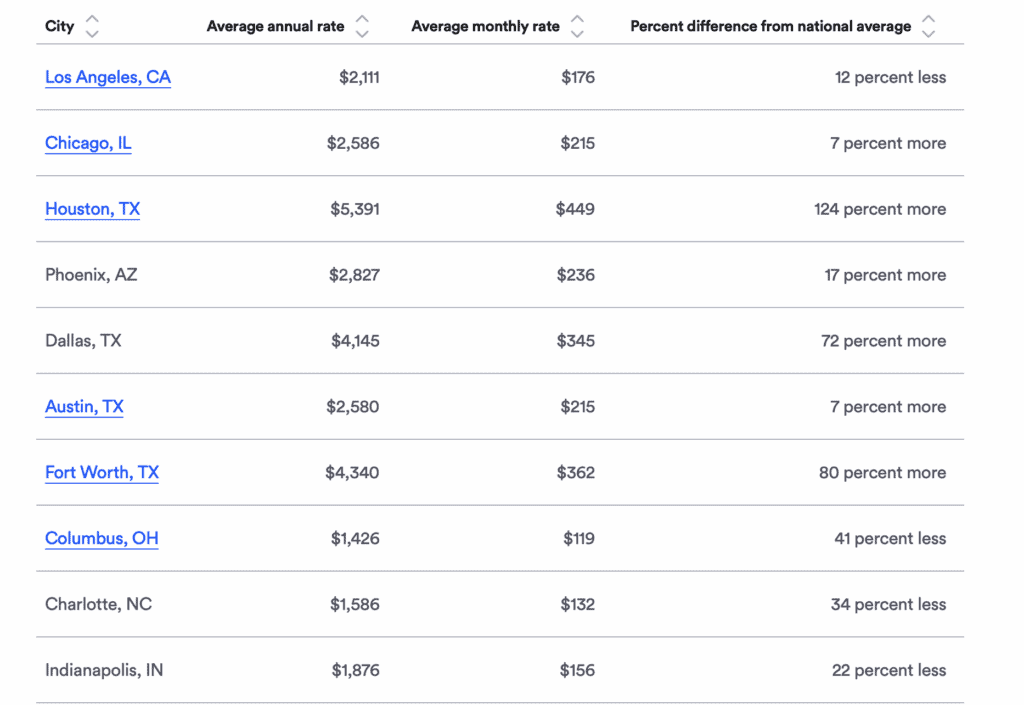
Understanding whether you’re overpaying starts with knowing the baseline. The average cost of homeowners insurance varies significantly by source and coverage level, with national averages ranging from approximately $1,966 to $2,601 per year depending on the data source and coverage amounts analyzed. That breaks down to roughly $164 to $217 per month, a substantial ongoing expense for most households.
Source: Bankrate
However, this national average can be misleading. Your actual costs depend heavily on where you live, the value of your home, your coverage limits, and several other variables.
Regional Differences: Location Matters Enormously
One of the biggest factors affecting your homeowners insurance cost is where you live. States prone to natural disasters consistently see higher premiums.
Highest-Cost States
Oklahoma is often ranked as the most expensive state for homeowners insurance, averaging around $5,858 annually for a standard $300,000 policy with a $1,000 deductible. Other high-cost states include Louisiana and Florida, where homeowners frequently pay several thousand dollars more than the national average due to hurricane and flood risks. Texas and Kansas also face elevated costs from tornadoes, hailstorms, and other severe weather events.
Lowest-Cost States
On the other end, Hawaii has the lowest average homeowners insurance premium in the nation at approximately $613 annually. States such as Vermont, Alaska, Delaware, New Hampshire, and West Virginia also tend to report rates well below the national average.
If you live in a high-cost state and your premium is at or below your state’s average, your policy may already be competitive. Conversely, if you’re in a low-cost state but paying well above the average, it’s worth reviewing your coverage and comparing quotes.
Key Factors That Influence Your Premium
Beyond location, several factors determine your homeowner’s insurance cost:
Home Characteristics
The age, size, and condition of your home significantly impact pricing. Larger homes cost more to insure because they have more surface area that can be damaged. Older homes may have been built with less stringent safety standards, especially regarding plumbing and electrical systems, making them more expensive to insure.
Coverage Amount
Your dwelling coverage limit should reflect your home’s replacement cost, what it would cost to rebuild from scratch. Underinsuring to lower premiums is risky as you could face devastating out-of-pocket expenses after a loss. However, overinsuring won’t benefit you either, as insurers only pay up to actual replacement cost.
Deductible Selection
Raising your deductible from $1,000 to $2,500 can save you almost 12% on your premium on average with Oklahoma homeowners seeing the largest average savings at $1,228 annually when increasing from a $500 to $2,500 deductible. Just ensure you can afford the deductible if you need to file a claim.
Credit Score
In most states, insurers use credit-based insurance scores to help determine home insurance rates. A NerdWallet analysis found that someone with poor credit would pay an average premium of $3,620 per year compared to $2,110 for someone with good credit, over 71% more. California, Maryland, and Massachusetts do not allow the use of credit as a home insurance rating factor.
Claims History
When you file a claim against your homeowners insurance policy, it may signal to carriers that you are likely to submit additional claims in the future, which can push your rates higher. Multiple claims within a few years can result in premium increases or even policy non-renewal.
Safety and Security Features
Homes equipped with monitored security systems, fire sprinklers, smoke detectors, or impact-resistant roofing often qualify for discounts. Insurance companies recommend various safety features and offer discounts for burglar alarms, smoke detectors, and other protective devices.
Red Flags That Suggest You’re Overpaying
While premiums will always reflect risk, several warning signs indicate you may be paying more than necessary:
-
No recent quote comparison: If you haven’t shopped for quotes in three or more years, you may be leaving hundreds on the table.
-
Above-average premium in your region: Paying 20% or more above your state’s average without unusual risk factors should prompt further investigation.
-
Outdated coverage limits: If your home value, mortgage balance, or possessions have changed, your current coverage may no longer be a fit.
-
No bundling discounts: Insurers frequently offer up to 25% discounts for bundling auto and homeowners policies.
-
Missed discounts: Many households don’t ask about loyalty, claims-free, senior, or professional affiliation discounts that could immediately reduce costs.
How to Determine If You’re Overpaying
Taking action requires a systematic approach:
Step 1: Review Your Current Policy
Examine your declarations page to understand exactly what you’re paying for. Look at your dwelling coverage, personal property limits, liability coverage, and any additional endorsements.
Step 2: Compare Against State Averages
Research your state’s average homeowner’s insurance cost. If you’re significantly above average, investigate why. It could be justified by your home’s characteristics, or you might be overpaying.
Step 3: Get Multiple Quotes
Obtain quotes from at least three to five different insurers. Make sure you’re comparing equivalent coverage by matching deductibles, coverage limits, and policy features. Online comparison tools can streamline this process.
Step 4: Evaluate Your Coverage Needs
Are you overinsured? Underinsured? Your personal property coverage might be too high if you’ve decluttered significantly. Conversely, if you’ve acquired valuable items, you might need additional coverage.
Step 5: Ask Your Current Insurer About Discounts
Before switching, contact your existing insurer. Ask specifically about every available discount. Sometimes a simple conversation can result in immediate savings.
Strategies to Lower Your Homeowner’s Insurance Cost
If you discover you’re overpaying, here are proven strategies to reduce your premium:
Increase Your Deductible
Increasing your deductible from $1,000 to $2,500 can lower your premiums by approximately 24%, while raising it to $5,000 can result in about 37% savings. Ensure you have adequate emergency savings to cover the higher deductible if needed.
Improve Your Home’s Safety
Installing modern smoke detectors, a security system, or updating your roof can qualify you for discounts while also protecting your investment.
Bundle Your Policies
Consolidating your home, auto, and potentially umbrella policies with one insurer typically yields substantial discounts.
Improve Your Credit Score
Pay bills on time, reduce credit card balances, and check your credit report for errors. Even modest credit improvements can lower your insurance costs in states where credit-based insurance scoring is allowed.
Review Annually
Make it a habit to review your homeowner’s insurance annually. Your circumstances, home value, and insurance market conditions change, and your policy should too.
Consider Lesser-Known Insurers
While major brand-name insurers dominate advertising, smaller regional carriers often offer competitive rates with excellent service. Don’t overlook them when comparing quotes.
When Lower Cost Isn’t Better
The Rising Cost Trend
According to a Consumer Federation of America report (April 2025) American homeowners saw their insurance premiums increase by an average of 24% between 2021 and 2024. The report found that premiums rose in 95% of U.S. ZIP codes, and in many areas the rate of increase was far higher, with substantial numbers of communities seeing double-digit jumps. On average, homeowners paid about $648 more per year than in 2021, though national estimates of annual premiums vary depending on methodology and coverage levels.
A U.S. Department of the Treasury report (January 2025) found that average homeowners insurance premiums rose 8.7% faster than inflation between 2018 and 2022. The analysis also highlighted climate-risk disparities: homeowners in the top 20% of ZIP codes most exposed to climate-related perils paid an average of $2,321 in premiums, about 82% more than those in the lowest-risk areas.
The Bottom Line
The average homeowner’s insurance cost serves as a useful benchmark, but your individual circumstances determine whether you’re overpaying. With premiums rising nationally, taking time to review your coverage, compare quotes, and optimize your policy could save you hundreds or even thousands of dollars annually.
Don’t let inertia keep you locked into an overpriced policy. The hour or two you invest in reviewing your homeowner’s insurance could be the best return on time you’ll get this year. Start by gathering your current policy documents, researching your state’s average costs, and requesting quotes from multiple insurers.
Remember, the goal isn’t just finding the lowest price. It’s securing adequate protection at a fair cost. The right homeowner’s insurance policy provides peace of mind without breaking your budget.