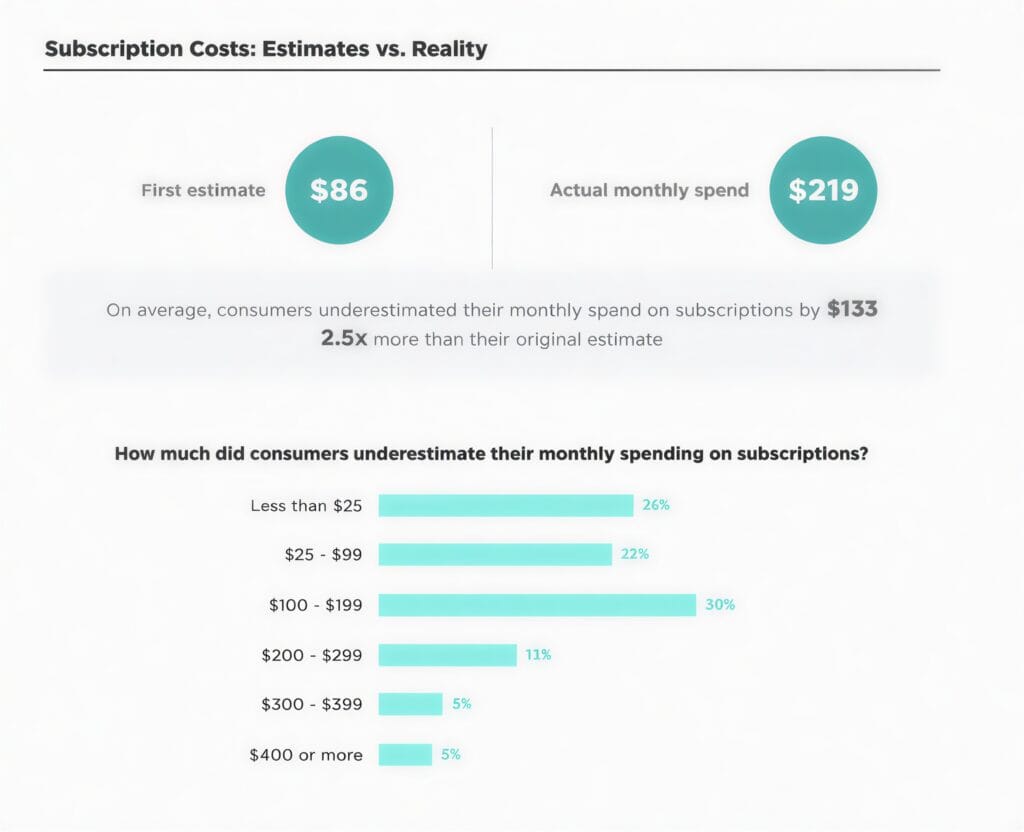
Many households underestimate how much they spend on recurring services, with surveys from C+R Research showing consumers guess $86 per month while actual costs average $219. As 2025 closes, a targeted “subscription purge” can uncover unused plans, eliminate silent renewals, and free up $500–$1,500 per year, money that can immediately strengthen emergency savings or reduce high-interest debt.
- Consumers routinely underestimate subscription spending, with studies showing real costs are more than double estimates.
- Invisible recurring charges, especially small app-store plans, cause the most budget leakage across households.
- Review three to six months of statements to identify all repeating charges; tools like Rocket Money can assist.
- Categorize services by usage and cancel or downgrade low-value or redundant plans before annual renewals hit.
- Redirect recovered cash toward emergency funds, debt reduction, or 2026 retirement contributions for immediate financial impact.
Subscriptions used to be simple, one or two streaming services, maybe a cloud-storage plan. Today they’ve become a quiet, ever-expanding ecosystem of monthly fees that slip beneath the surface of everyday spending. They renew automatically, bill silently and blend into the background of digital life. Most people don’t even know how many they have.
Recent research makes this painfully clear. In a widely referenced study from C+R Research, consumers estimated they spent about $86 per month on subscriptions. When researchers calculated the real number, it was $219, more than 2.5 times their guess. A separate survey reported by Advanced Television found that 23% of Americans spend over $100 per month on streaming and subscription services.
These aren’t rare cases of financial carelessness, they’re the predictable outcome of a decade-long shift toward the subscription economy. Companies love recurring billing because it creates dependable revenue. Consumers tolerate it because each fee feels small. But as 2025 nears its end, those small fees are exactly why a subscription purge can be one of the most financially rewarding moves you make heading into 2026.
The Psychology of Invisible Spending
The problem isn’t that subscriptions are inherently bad, many of them add real value to everyday life. The real issue is invisibility. Recurring charges slip in without friction, they don’t require an active decision, and they rarely trigger emotional resistance. A few dollars here and a few more there can quietly redirect a surprising share of your disposable income toward services you barely remember signing up for.
This behaviour is often described as the “set-and-forget effect,” a psychological pattern companies rely on to minimize cancellations. It’s a well-documented dynamic within the subscription economy: once a payment becomes automated, consumers are far less likely to revisit whether the service still matters.
This effect becomes even more powerful in December, when annual renewals, often priced far higher than the introductory offer, begin hitting accounts. Many people realize too late that a free trial from last January has silently rolled into a full-price annual plan.
How to Conduct a December Subscription Audit
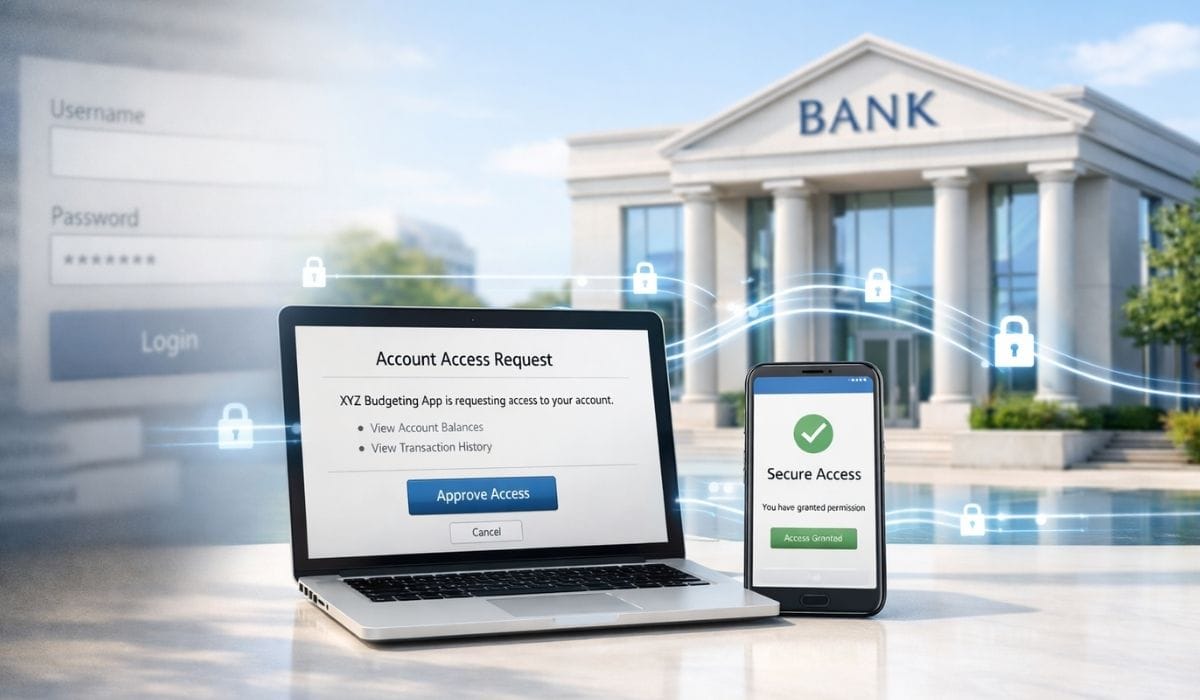
The most effective subscription purge starts not with cancellation, but with discovery. Most people have no idea how many recurring charges they’ve accumulated until they see them all in one place. The simplest method is to review the last three to six months of bank and credit-card statements and highlight every repeating charge. Tools like Rocket Money or Quicken Simplifi can automate this step, but a manual review often delivers the biggest reality check. A recent survey found that many Americans underestimate both the number of subscriptions they hold and the total monthly cost.
Once identified, group your subscriptions into three categories:
• Services you rely on regularly
• Services you use occasionally
• Services you rarely or never use
Most households discover far more in that last category than they expect, digital newspapers they no longer read, cloud-storage plans they didn’t realize were active, streaming services joined for one show, trial apps that converted to paid plans, and redundant tools with nearly identical features.
Subscriptions don’t accumulate because we value them. They accumulate because canceling requires intentional effort, while paying for them happens automatically.
The Hidden Drains You’re Probably Missing
The subscriptions that do the most financial damage are often the smallest ones. A $5.99 storage plan here, a $4.99 meditation app there, individually harmless, but dangerous when they quietly pile up. Some of the most commonly overlooked culprits include:
• Duplicate cloud-storage plans spread across multiple providers
• Entertainment platforms with overlapping content libraries
• Annual renewals for productivity tools, VPNs or note-taking apps
These charges often hide inside app-store billing histories or old device-protection plans you forgot you purchased. Once uncovered, they become some of the easiest savings wins in any year-end audit.
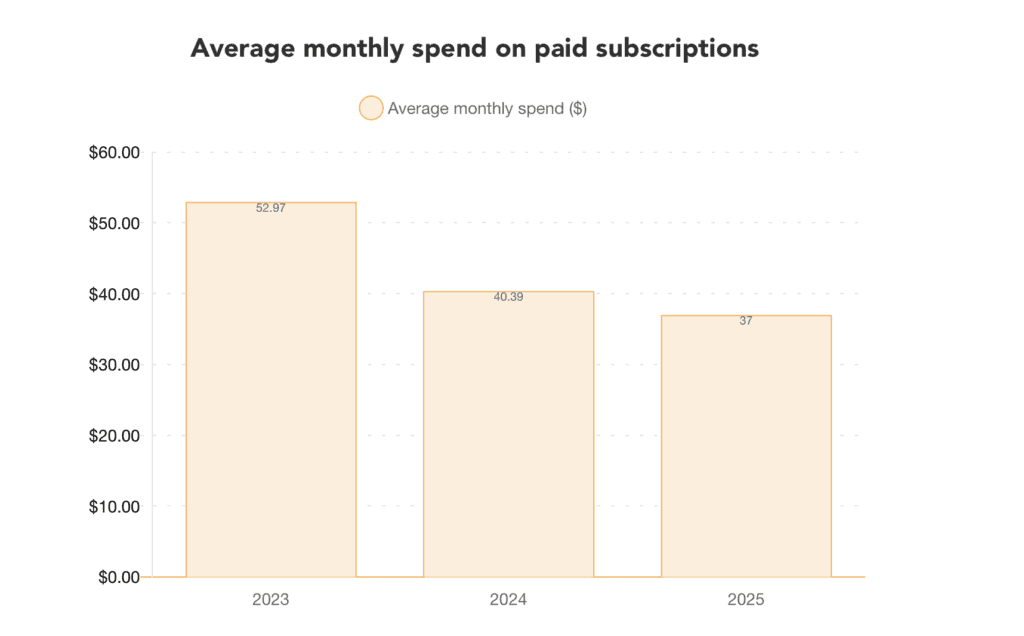
The impact can be significant. A recent analysis found that the average number of paid subscriptions fell from 4.1 to 2.8 per person, yet unused services still drain household budgets every year.
Cut a few of these low-value subscriptions and it’s common to free up $500–$1,500 annually, money you can redirect toward financial goals that actually matter in 2026.
Put the Savings to Work Before They Disappear
A subscription purge isn’t just about cutting costs, it’s about redirecting money toward goals that actually matter. Many households unknowingly spend $50–$150 per month on unused or rarely used subscriptions, a range consistently cited in industry surveys of consumer subscription behavior. Reclaiming even a portion of that amount can create immediate financial breathing room.
Putting the recovered money to work has a measurable impact. Some families use it to finally build an emergency fund, while others channel it into paying down high-interest credit card balances or boosting retirement contributions. Even small reallocations compound over time, making the early months of 2026 feel more stable and less reactive. The key is to capture those savings before they silently roll into another year of automatic charges.
Make It an Annual Ritual
The subscription economy is growing faster every year. New services launch constantly, many bundled, tiered or designed to make recurring payments the default. A recent consumer analysis shows that Americans are spending more than ever on monthly subscriptions, while becoming less aware of how much these charges actually cost.
That’s why a December subscription audit should become a permanent part of your financial routine. Review your charges, cancel what you don’t use, downgrade what you don’t need, and give yourself a cleaner, more intentional start to the new year.
A subscription purge is one of the few money tasks that provides immediate savings. It requires no budget cuts, no lifestyle changes and no long-term planning, just a closer look at what you’re paying for. When 2026 begins, you’ll enter the year with fewer financial drains, more clarity and far greater control over your monthly expenses. That clarity is worth far more than any forgotten subscription ever will be.