Second Chance Bank Options That Ignore ChexSystems and Help You Rebuild Your Record


Being denied a checking account due to ChexSystems doesn’t mean you’re permanently shut out of banking. Negative records like overdrafts or closed accounts can stay on file for five years, but many banks and credit unions now offer second chance checking accounts that help consumers rebuild trust and eventually qualify for standard accounts again.
Digital banks such as Chime and Varo bypass ChexSystems entirely, while mainstream options like Wells Fargo’s Clear Access Banking provide a low-cost entry point. The right choice depends on fees, ATM access, and whether the account offers an upgrade pathway.
- ChexSystems tracks banking history (unpaid overdrafts, closed accounts) and records can remain for up to five years (CFPB).
- Second chance checking accounts offer debit cards, mobile banking, and direct deposit but often restrict checks and overdrafts.
- Upgrade reviews typically occur after 6–12 months of responsible use, enabling access to standard accounts.
- Verified options: Wells Fargo Clear Access, Chime (no ChexSystems), Varo (fee-free digital banking), and many local credit unions.
- Alternatives if denied: prepaid debit cards, cash management accounts, or secured credit cards to rebuild financial history.
What is ChexSystems and Why It Matters
ChexSystems acts as a safeguard for the banking industry. When you apply for a new checking or savings account, the bank or credit union may pull your ChexSystems report to assess risk. If you’ve had accounts closed for unpaid fees or repeated overdrafts, those records will appear and may result in a denial.
While this system helps banks manage potential losses, it often punishes consumers long after they’ve resolved past debts. For someone who has paid off obligations and is trying to start fresh, the presence of a ChexSystems record can become a serious barrier to stability. This is where second chance accounts step in, they offer consumers a way back into the financial system while still protecting institutions from risk.
How Second Chance Checking Accounts Work
According to the Consumer Financial Protection Bureau (CFPB), second chance accounts are designed for people who’ve been turned away from traditional accounts due to negative banking history. These products typically include basic features but come with certain restrictions to limit risk.
Most second chance accounts include:
Basic features: A debit card, mobile and online banking, and direct deposit.
Restrictions: Limited or no check-writing privileges, no overdraft protection, and monthly maintenance fees, which vary by bank.
Review periods: Many banks review accounts after 6–12 months of responsible use, and if you’ve demonstrated good behavior, you may be upgraded to a standard checking account.
This progression makes second chance checking a stepping-stone rather than a permanent solution.
Verified Banks That Don’t Use or Overlook ChexSystems
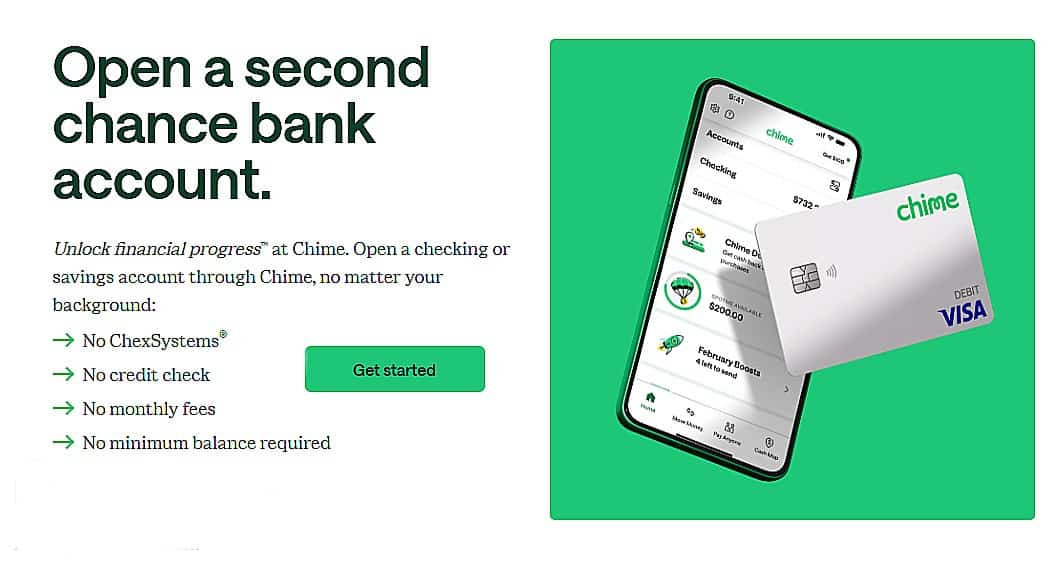
Source: Chime Second Chance Banking
One of the most widely recognized second-chance options is Wells Fargo Clear Access Banking. Available nationwide, it requires a $25 opening deposit and charges a $5 monthly service fee. There is no minimum balance requirement, and while it excludes check-writing, account holders receive a debit card and full digital banking features, making it a practical entry point.
For those more comfortable with digital-first platforms, Chime and Varo Bank provide flexible alternatives. Chime does not use ChexSystems and offers fee-free checking with early access to direct deposits, while Varo combines mobile banking with access to a wide fee-free ATM network and no monthly fees.
Credit unions also play an important role. Many local credit unions across the country offer second-chance programs, often tied to financial education initiatives, though availability depends on state regulations and membership eligibility.
How to Choose the Right Second Chance Account
When selecting a second chance account, it is important to weigh a few key considerations. Monthly fees vary significantly, with some institutions charging as little as $5 while others may require $15 or more. ATM access is another crucial factor since out-of-network fees can quickly eat into your balance.
Consumers should also prioritize accounts that include an upgrade pathway, ideally after 12 to 18 months, so that the product serves as a steppingstone rather than a long-term limitation. Finally, it is worth noting any restrictions, such as limits on deposits, check-writing, or paper statements, which can affect usability.
Alternatives If You Can’t Get Approved
Even if you don’t qualify for a second chance account, other financial tools can help:
Prepaid debit cards: These cards often offer easy approval (no credit check) and wide acceptance at merchants that take Visa, Mastercard, or AmEx, though fees can vary (activation, monthly, reload, ATM).
Cash management accounts (CMAs): Offered by fintechs, brokerages, and online platforms, CMAs combine features of checking and savings accounts. Many are FDIC insured through partner banks or sweep programs and provide debit cards, bill pay, and competitive yields.
Secured credit cards: While not a substitute for a checking account, secured cards are designed to help rebuild credit history. They require a refundable deposit and report activity to the major credit bureaus, helping you improve your credit over time with responsible use.
Conclusion: Building a Better Banking Future
Second chance checking accounts are more than just a temporary fix, they are essential pathways back into mainstream finance. By managing these accounts responsibly, consumers can repair their financial reputation, avoid costly services like check-cashing, and eventually qualify for stronger banking products.
The opportunities are broad, whether through a national bank, a mobile-first provider, or a local credit union. The key is to treat the account as a steppingstone: use it carefully, meet requirements consistently, and show financial responsibility. Doing so can open the door to long-term stability and a healthier relationship with the banking system.
Related: This article is part of Mooloo’s Loans & Credit Hub, covering credit scores, loans, mortgages, credit cards, and smart borrowing decisions: