How to Get Upgraded to First Class on US Domestic Flights


In 2025, free airline upgrades are rarer than ever, but not impossible. Airlines now sell up to 80% of their first-class seats, leaving limited space for complimentary upgrades, most reserved for top-tier elite members. The key is understanding how upgrade algorithms work and when to take advantage of paid offers or status-based windows.
- Elite status rules the system: Airlines like American, Delta, and United publish upgrade hierarchies, status level, fare class, and request time all matter more than charm or dress.
- Paid upgrades offer value: Cash offers ($26–$500) often appear 24–48 hours before departure. Delta’s October 2025 deals showed upgrades as low as $26 from major hubs.
- Timing is critical: ConciergeKey and 1K members clear first (120–96 hours pre-flight), but most upgrades don’t process until boarding as airlines hold seats for last-minute sales.
- No-status strategy: Book higher fare classes, fly off-peak (Tues/Wed/Sat), and monitor empty first-class cabins in apps or tools like ExpertFlyer before booking.
- Sometimes buying first class is smarter: If the price gap is under $200 or comfort matters (overnight or business travel), skip the waitlist and book outright.
Every traveler has walked past those spacious first-class seats, wondering how people manage to snag them without paying thousands of dollars extra. Popular travel myths suggest that dressing well, asking politely, or celebrating a special occasion might help, but in reality, airlines operate under strict, published upgrade systems. In 2025, free upgrades are rarer than ever, yet they remain possible for travelers who understand how airlines make these decisions.
The Reality: Free Upgrades Are Harder Than Ever
Airlines have shifted their strategies since the pandemic, prioritizing revenue over loyalty perks. American Airlines now sells about 80% of its first-class inventory, leaving just 20% potentially available for upgrades. Before 2020, elite flyers accounted for nearly 25% of American’s passengers, but today that number has dropped to 15%.
The implications are clear: airlines would rather sell discounted upgrades than hand them out for free. Competition is intense, and even high-level elite members often find themselves waitlisted. The era of easily scoring a complimentary upgrade has largely ended.
Who Actually Controls Upgrades?
Contrary to travel folklore, the gate agent doesn’t have much power over upgrades anymore. While agents can override the system in rare cases, such as a broken seat or operational necessity, airlines now rely on automated algorithms. These systems follow rigid rules based on loyalty program data, fare class, and upgrade type.
Credit cards can help travelers earn elite status faster, but they don’t directly determine who gets upgraded. The upgrade hierarchy depends entirely on the airline’s rules and your placement on the waitlist.
The Upgrade Priority System: How Airlines Decide
All major US airlines publish their upgrade priority hierarchies. Here’s how it works:
| Priority Level | American Airlines | Delta Air Lines | United Airlines |
|---|---|---|---|
| 1 | Elite Status Level:• ConciergeKey• Executive Platinum (200k LP)• Platinum Pro (125k LP)• Platinum (75k LP)• Gold (40k LP) | Medallion Status Tier:• Diamond Medallion• Platinum Medallion• Gold Medallion• Silver Medallion | Premier Status Level:• Premier 1K• Premier Platinum• Premier Gold• Premier Silver |
| 2 | Loyalty Points earned in past 12 months (tie-breaker within tier) | Million Miler Status (tie-breaker within tier) | Premier Qualifying Points earned (tie-breaker) |
| 3 | Upgrade Type: systemwide upgrades before complimentary | Delta SkyMiles Reserve Card holders get higher priority within their tier | Fare Class Purchased (higher fare classes prioritized) |
| 4 | Time of Upgrade Request (earlier requests win) | — | — |
When Upgrades Actually Clear
Status level not only influences upgrade position but also the timing of when upgrades may clear. American Airlines publishes specific windows: ConciergeKey members can clear as early as 120 hours before departure, Executive Platinum at 100 hours, Platinum Pro at 72 hours, Platinum at 48 hours, and Gold at 24 hours.
These windows are not guarantees, upgrade confirmation depends on seat availability and airline inventory controls. In practice, airlines frequently hold back first-class seats for cash sales, meaning that many complimentary upgrades don’t clear until much closer to departure, sometimes just hours before the flight or even during boarding, as reported by frequent flyers on traveler forums.
Strategy 1: Earn Elite Status (The Most Reliable Path)
Elite status remains the most consistent way to get upgraded, but it’s expensive and time-consuming.
Is Elite Status Worth It?
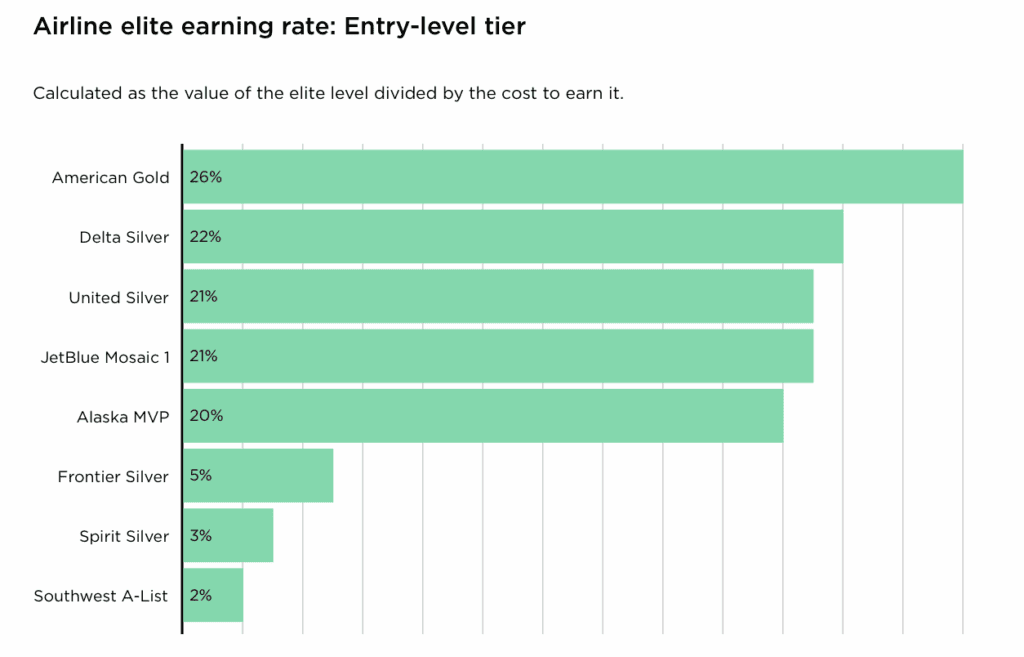
NerdWallet’s analysis found that American Airlines Gold status (the entry-level tier requiring 40,000 Loyalty Points) offers the highest value among entry-level status tiers. However, even travel experts note that upgrades are much harder to clear than they used to be.
Source: NerdWallet
The math on earning status:
To earn American Airlines Gold status, you need 40,000 Loyalty Points. You earn:
- 5 points per dollar on American flights
- 1 point per dollar with co-branded credit cards
- Bonus points through hotel bookings and shopping portals
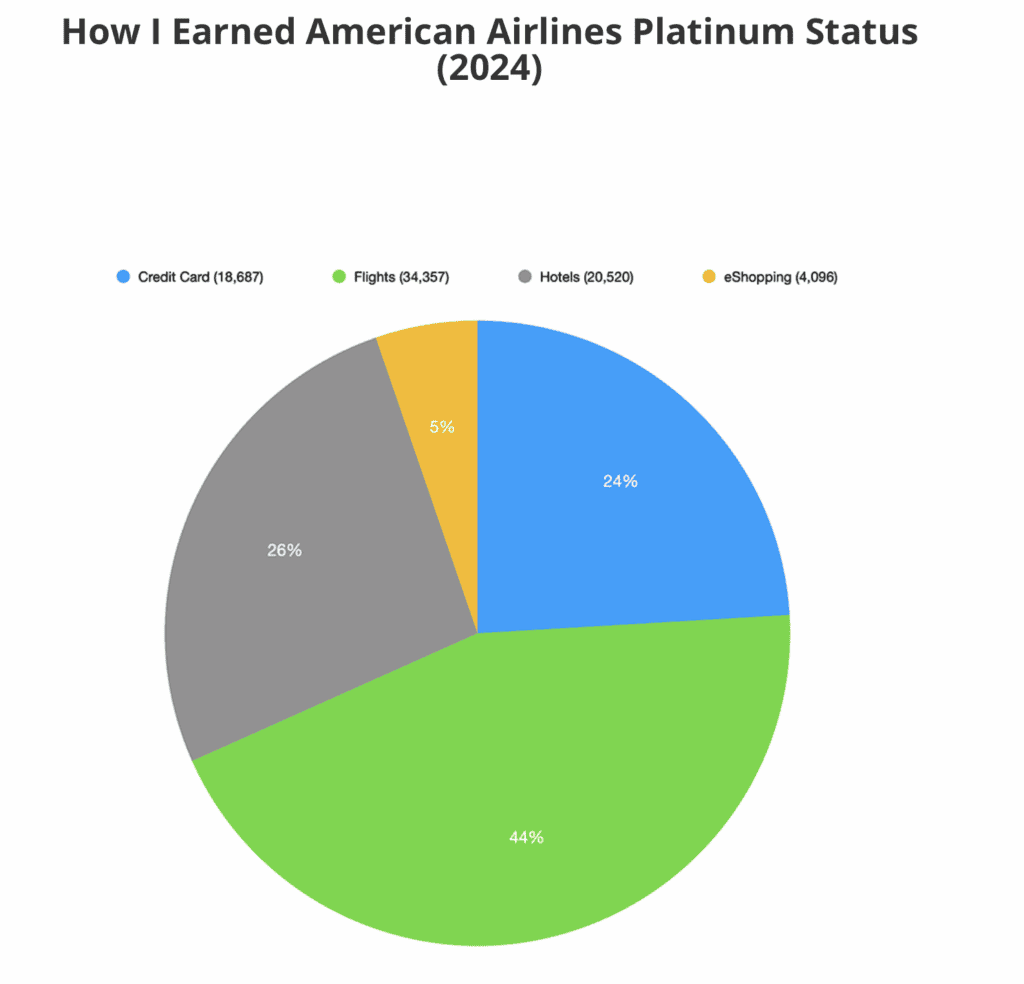
One traveler documented earning Platinum status by combining flights (44%), credit card spending (24%), hotel bookings through American (26%), and shopping portals (5%).
Source: TravelLikeAnna
The reality check: Even with top-tier Executive Platinum status, many frequent flyers report that their upgrades rarely clear because airlines are selling upgrades for cash and filling cabins with paid passengers.
Strategy 2: Pay to Upgrade (Often Cheaper Than You Think)
Airlines now offer multiple ways to purchase upgrades at various price points.
Cash Upgrades at Check-In
Starting 24-48 hours before departure, airlines may offer paid upgrades ranging from $75 to $500 for domestic flights. These offers appear primarily in the airline’s mobile app, though some passengers also receive email notifications.
How to find upgrade offers:
- Check the American Airlines app when you check in (offers appear inconsistently, not for everyone)
- Look in the Delta app under “My Trips” after checking in
- Monitor the United app starting at the 24-hour check-in window
- Some travelers receive emails, but many frequent flyers report never getting email offers even with notifications enabled
Important: If you’re already on the complimentary upgrade waitlist (for elite members), paid upgrade offers typically won’t appear in your app. Airlines prioritize selling upgrades to non-elite passengers.
These can be legitimate bargains compared to booking first class outright. Delta made headlines in October 2025 by offering upgrades as low as $26 on select short-haul routes, primarily out of major hubs like Atlanta. However, pricing varies dramatically by route, demand, and timing. You might see offers ranging from $26 to $500+ on the same day for different flights. American and United also offer similar cash upgrades, though typically starting higher than Delta’s rock-bottom prices.
According to industry analysis, if you’re looking at upgrade costs of $600 or less for a flight where first class would have cost $2,000+, you’re getting good value.
Upgrade With Miles
Most airlines allow you to upgrade using miles, though the value varies significantly.
American Airlines previously had fixed mileage charts but now uses dynamic pricing. Domestic upgrades typically start around 15,000 miles plus a cash co-pay.
Delta ties its SkyMiles upgrade pricing to the cash upgrade cost, often requiring 100,000+ miles for upgrades that would cost $1,000+ in cash.
United allows upgrades with miles on most fare classes, with costs varying by route.
Bid for Upgrades
Some airlines are experimenting with auction-style upgrade bidding, though this is less common on US domestic routes. The Points Guy recommends bidding 20-40% of the difference between your economy fare and the business class fare to have a competitive chance.
Strategy 3: Maximize Your Chances Without Elite Status
If you don’t have elite status, here are tactics that actually improve your odds:
Book Higher Fare Classes
Not all economy tickets are equal. Airlines use fare class codes to determine upgrade eligibility, with higher-priced flexible economy fares getting priority over basic economy or deeply discounted tickets.
Basic economy fares are almost never eligible for complimentary upgrades, even if you have elite status.
Fly Less Popular Routes and Times
Your upgrade chances increase dramatically on:
- Off-peak flights (Tuesday, Wednesday, Saturday)
- Early morning or late evening departures
- Routes with less business travel
- Non-hub to non-hub routes
Travel experts recommend avoiding Friday afternoon flights and Monday morning flights when business travelers dominate and first class is typically sold out.
Use Airline Credit Cards Strategically
While co-branded airline credit cards don’t guarantee upgrades, some provide benefits that help:
- Delta SkyMiles Reserve Card holders get higher upgrade priority within their Medallion tier
- Most airline cards offer free checked bags and priority boarding
- Cards help you earn status faster through everyday spending
Check Seat Maps Before Booking
Before purchasing your ticket, check the first class seat availability. If the cabin is mostly empty, your chances of an upgrade (whether complimentary or paid) improve. Use tools like ExpertFlyer or the airline’s own app to monitor availability.
Strategy 4: Leverage Companion Upgrades
If you’re traveling with someone who has elite status, you might benefit too.
American Airlines offers companion upgrades where elite members can upgrade one person traveling on the same reservation. The companion receives the same upgrade priority as the elite member.
This works on:
- Domestic flights within the US
- Short-haul international flights to Canada, Mexico, Caribbean
Important: You must be on the same reservation, and only one companion qualifies.
What Doesn’t Actually Work
Many common upgrade hacks simply don’t work. Dressing well and asking nicely won’t move you up the priority list, as gate agents rarely override the automated system unless there’s an operational issue like a broken seat.
Celebrating a special occasion such as a honeymoon or birthday also doesn’t factor into airline decisions. Likewise, waiting to check in late is counterproductive, upgrades are processed throughout the check-in window, so checking in early improves your chances of clearing faster.
The Smart Traveler’s Upgrade Strategy
The best approach depends on how often you fly. Occasional travelers should monitor cash upgrade offers at check-in, book refundable economy fares, and use miles sparingly, ideally only for longer flights where comfort makes a difference.
Frequent flyers are best served by focusing on one airline, leveraging co-branded credit cards to accelerate point accumulation, and flying off-peak whenever possible. Status chasers, meanwhile, must carefully calculate whether the cost of achieving elite tiers outweighs simply purchasing upgrades when needed. Reports suggest that even top-tier elites clear upgrades less than 30% of the time on busy routes, meaning loyalty does not always guarantee results.
When to Just Book First Class Outright
Sometimes, chasing upgrades is not worth the effort. If the fare difference between economy and first class is under $200, or if you are flying overnight and need rest, purchasing a first-class seat outright makes sense.
This is also true for business trips or special occasions where certainty matters. During sales, first-class fares occasionally match or fall just above economy prices, making them a practical choice without the uncertainty of waiting lists.
The Bottom Line
In 2025, first-class upgrades are harder to obtain than ever before. Airlines aggressively monetize their premium cabins, leaving few complimentary options for even the most loyal customers. Still, opportunities remain for those who understand how the systems work. Elite status provides consistency, paid upgrades can be bargains, and off-peak strategies improve odds. Myths about charm and appearances, however, are firmly outdated.
The golden age of free upgrades may be behind us, but informed travelers can still find ways to enjoy first-class comfort without always paying the full price.