How To Crash Proof Your Portfolio – Lessons From Three Market Meltdowns


The Nasdaq took 15 years to recover from its 2000 peak. Since then, investors have endured three historic crashes, 2000, 2008, and 2020, all proving the same point: valuation, quality, and discipline always win. The investors who survived (and thrived) didn’t predict the bottom, they were simply prepared. Here’s the repeatable formula for portfolio resilience in 2025 and beyond.
- Prioritize fundamentals over fads. Across 1987, 2000, and 2008, companies with consistent earnings, strong balance sheets, and dividend histories outperformed hype-driven growth stocks. Example: During 2008, the S&P 500 Dividend Aristocrats Index fell 22% vs. the S&P 500’s 38% drop.
- Use balanced asset allocation. A 60/30/10 mix (stocks/bonds/cash) historically cut drawdowns by half compared to all-stock portfolios. Bonds provided stability in every major crash, cushioning volatility and protecting mental discipline.
- Hold cash as both defense and offense. Keeping 6–12 months of expenses plus 10% portfolio cash prevents forced selling and funds opportunistic rebalancing when markets hit generational lows.
- Diversify by behavior, not geography. Sector and asset-class diversification worked; “global diversification” didn’t in 2008 when correlations spiked. Focus on how assets move, not just where they’re based.
- Write your crisis plan now. Decide in advance how you’ll act when your portfolio drops 40%. Investors who pre-commit to rebalancing or holding steady outperform panic sellers who miss the recovery.
It’s March 2000, and your portfolio is collapsing. Cisco, the darling of the internet age, has plunged from $80 to below $15. Amazon’s stock is down 95%. The tech boom that once sent portfolios soaring 200% has vanished, leaving investors with less than their initial investment. Many hoped it was temporary. It wasn’t.
The Nasdaq Composite wouldn’t reclaim its 2000 peak until March 2015, a 15-year recovery. Over the next 25 years, investors would face three major market crashes, each revealing the same hard truth: valuation and fundamentals always matter. The good news? Every downturn left clues about what survives and what gets destroyed. And if you pay attention to those patterns, you can build a portfolio designed to weather any storm.
What The Three Crashes Taught Us
2000–2002: The Valuation Reckoning
The dot-com crash was selective carnage. The Nasdaq Composite Index plunged about 78% from its March 2000 peak to its October 2002 trough, wiping out trillions in market value. Stocks like Priceline.com lost more than 94% of their worth, while dividend-paying value stocks barely flinched.
The takeaway was brutal and timeless: valuation matters, profits matter. When investors chase hype instead of earnings, someone is left holding the bag. The survivors were companies with real cash flow and reasonable multiples, proof that fundamentals always outlast fads.
2008–2009: The Everything Crash
This time, everything fell together. The S&P 500 dropped roughly 50% from its October 2007 peak to its March 2009 low as the global financial system nearly collapsed. Banks failed, credit froze, and international diversification offered little protection as global correlations spiked.
Yet quality still outperformed. According to S&P Dow Jones Indices, the Dividend Aristocrats Index declined about 22% in 2008, compared with a 37% drop in the S&P 500. Johnson & Johnson’s stock fell around 21% while the broader market sank more than 50%.
Meanwhile, a classic 60/40 portfolio declined roughly 24%, as bonds provided stability when stocks crashed. Investors who held cash reserves had the dry powder to buy at generational lows in March 2009.
Lesson: balance sheets, liquidity, and discipline are survival tools. Quality and cash aren’t just defensive, they’re strategic advantages.
1987: The Historical Echo
Black Monday (October 19, 1987) saw U.S. stocks plunge 22.6% in a single day, then the worst one-day percentage drop in history. Panic was absolute. Yet by mid-1988, markets had largely recovered. Those who stayed invested recouped their losses; those who sold missed the rebound entirely.
The enduring lesson: staying invested beats panic selling. The bottom is only visible in hindsight.
The Pattern Across All Three Crashes
Across 1987, 2000, and 2008, the results were identical:
-
Quality beat hype – companies with real earnings endured.
-
Cash provided opportunity – liquidity turned downturns into buying windows.
-
Diversification cushioned losses – balanced portfolios preserved long-term compounding.
-
Panic selling destroyed wealth – those who sold rarely recovered.
History doesn’t repeat, but it rhymes. Every market crash reinforces the same rule: discipline, diversification, and patience always win.
The Crash-Resistant Portfolio Formula
Start With Asset Allocation
Here’s what actually worked when markets imploded: a mix of stocks, bonds, and cash appropriate to your timeline. For most investors 10–20 years from retirement, a 60/30/10 split (60% stocks, 30% bonds, 10% cash) remains a sound starting point. Closer to retirement, shifting toward 50/40/10 or even 40/40/20 helps reduce volatility and preserve capital.
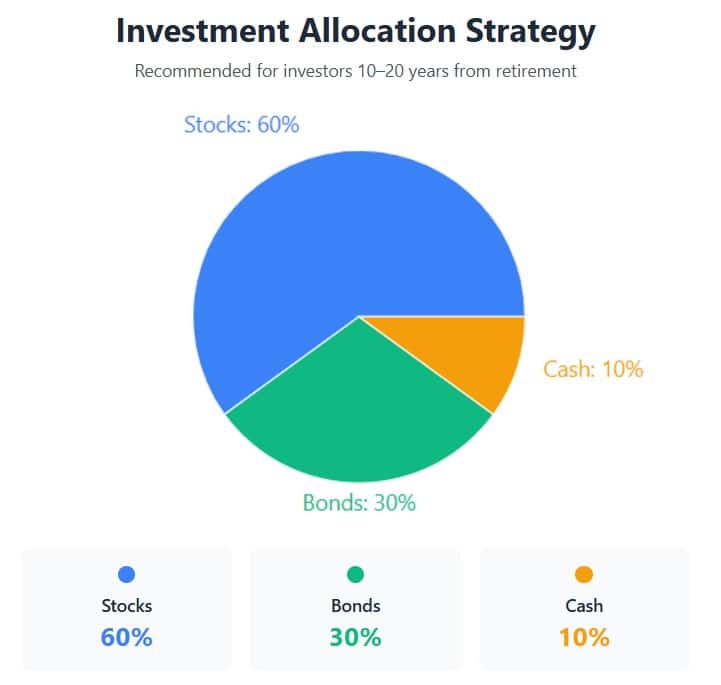
Source: Mooloo.net
Why? During the 2000–2002 bear market, the S&P 500 fell nearly 49% from its March 2000 peak to its October 2002 low. In comparison, a balanced 60/40 portfolio declined about 24–26%, based on historical backtests using U.S. stock and bond indexes. You still lost money, but you lost less, recovered faster, and, most importantly, were far less likely to panic and sell at the bottom.
Bonds aren’t exciting. They don’t dominate headlines or dinner-table talk. But in nearly every major crash, from 2000–2002 to 2008–2009, they provided stability when stocks were in freefall. That stability isn’t just financial, it’s psychological. It’s what keeps you from making catastrophic decisions at 3 a.m. when you can’t sleep.
Finally, the 10% cash allocation serves two essential purposes: it ensures you never have to sell stocks at the bottom to cover expenses, and it gives you dry powder to rebalance your portfolio into bargains when others are panicking.
Quality Over Everything
The 2000 crash taught this lesson most brutally. While profitless tech companies with sky-high valuations went to zero, companies with real earnings, strong balance sheets, and long dividend histories endured.
What does “quality” actually mean?
Strong balance sheets. Companies with low debt-to-equity ratios don’t face existential threats when credit markets freeze. They can weather storms without desperate measures.
Consistent earnings. Look for companies with 10+ years of steady, growing profits, not rocket-ship growth that can vanish, but reliable performance through multiple cycles. Dividend track records. During the 2008 financial crisis, the S&P 500 Dividend Aristocrats Index declined about 22%, while the S&P 500 fell roughly 38%.
Yet dividends kept flowing, investors were still earning income even as prices dropped. Pricing power and essential products. Companies that sell what people truly need, and can raise prices without losing customers, survive downturns better than those tied to luxury or cyclical demand.
Real examples from past crashes:
-
McCormick & Company (MKC): In 2008, the spice maker’s net sales grew nearly 9%, and net income rose 11%, even as global markets collapsed. Its defensive business and pricing power helped its stock outperform the S&P 500 by more than 40% that year.
-
Colgate-Palmolive (CL): From the 2007 peak to the 2009 trough, Colgate’s share price declined only about 12–13%, while the S&P 500 plunged more than 50%.
They weren’t flashy. They didn’t promise to change the world. They just kept earning money and paying shareholders while the “exciting” companies imploded.
Smart Diversification (Not Naive Diversification)
There’s diversification that works, and diversification that fails when you need it most.
What worked: Diversifying across asset classes. Stocks, bonds, and cash behave differently. When stocks crashed in all three events, bonds held steady or even rose as investors fled to safety. This is diversification that actually protects.
Sector diversification also mattered – especially in 2000. Investors who owned not just tech but also industrials, utilities, and consumer staples survived. Those who went all-in on the “new economy” got destroyed.
What failed: International diversification in 2008. The theory was that global stocks would move independently – when U.S. markets fell, international markets would hold up. But correlations spiked. Everything fell together. Geography didn’t save you.
The takeaway? Diversify by what assets DO (growth vs stability vs liquidity), not just where they’re located or what they’re called.
The Cash Superpower
This is the secret weapon that crash survivors used and panic sellers didn’t have. First, maintain 6-12 months of living expenses in cash outside your investment portfolio. This emergency fund means you never have to sell stocks at the bottom to pay bills. Ever. This alone prevents most catastrophic investment mistakes. Second, keep an additional 10% of your investment portfolio in cash or very short-term bonds. This serves as rebalancing ammunition.
Here’s how it worked in 2009: When stocks were down 50%+, those with cash could rebalance – selling some bonds and buying stocks at generational lows. They weren’t trying to time the bottom (impossible). They were simply maintaining their target allocation. The result? They captured the massive recovery that followed and compounded wealth while others were still frozen in fear. Cash feels wasteful in bull markets. In crashes, it’s oxygen.
What NOT To Do
Don’t Panic Sell
History shows that panic selling always costs more than it saves. In 2000’s dot-com crash, investors who dumped tech stocks during the 2002 lows missed the full 2003–2007 recovery. In 2008’s financial crisis, those who sold in prior to March 2009 sat out one of the greatest bull markets ever. Market bottoms only become visible in hindsight, never in real time. Selling in fear guarantees bad timing. Accept this as a law of investing physics.
Don’t Concentrate
Cisco Systems lost 86% of its value during the dot-com crash and has still never reclaimed its 2000 peak, not in five years, not in twenty (as of 2025). The takeaway is simple: no single stock should exceed 5% of your portfolio, and no sector more than 25%. This includes company stock, one-sector bets, and even crypto holdings above 5%. Concentration builds wealth on the way up, but it destroys it on the way down. Diversification is your only insurance against total wipeout.
Don’t Chase Performance
In 1999’s tech bubble, investors piled into overvalued companies right before the collapse. The hottest sectors with the best recent returns, whether dot-coms in 2000, housing in 2008, or today’s speculative manias (hello A.I!) , eventually revert to reality. When everyone from taxi drivers to relatives is bragging about “can’t-miss” trades, that’s not your buy signal, it’s your exit cue.
Don’t Use Leverage
Every crash exposes leverage as the silent killer. Margin calls force liquidation at rock-bottom prices, while leveraged ETFs magnify losses beyond recovery, a 50% drop requires a 100% rebound just to break even. Borrowing to invest isn’t risk management; it’s gambling with a ticking clock. In a downturn, the house always wins when you’re playing with borrowed money.
Your Action Plan
Stop reading and take action this weekend. Check your asset allocation, are you roughly 60/30/10 in stocks, bonds, and cash, or whatever split fits your timeline? If your balance has drifted because stocks have run up, rebalance. Audit for quality by reviewing your holdings. Do they have strong balance sheets, consistent earnings over the past decade, and a solid dividend history? If your portfolio is filled with speculative growth stocks with no profits, you’re holding 2000-vintage time bombs.
The Reality Check
Here’s the truth: no portfolio is truly crash-proof. If stocks fall 50%, your stocks will fall too. Anyone promising complete protection is selling something. The goal isn’t to avoid losses, it’s to survive them and recover faster. The real measure of resilience is falling 30% when others fall 50%, and having both the resources and psychological stability to rebalance into the chaos rather than selling into it.
Three major crashes in the past 25 years have taught the same lesson repeatedly: quality-focused, diversified portfolios with healthy cash reserves fall less, recover faster, and ultimately reach new highs. The investors who became wealthy weren’t the ones who avoided crashes, because those people don’t exist. They were the ones who built portfolios they could hold onto through the worst of the storm.
Build yours now, because the next crash isn’t a possibility, it’s a certainty. The only question is whether you’ll be ready when it comes.