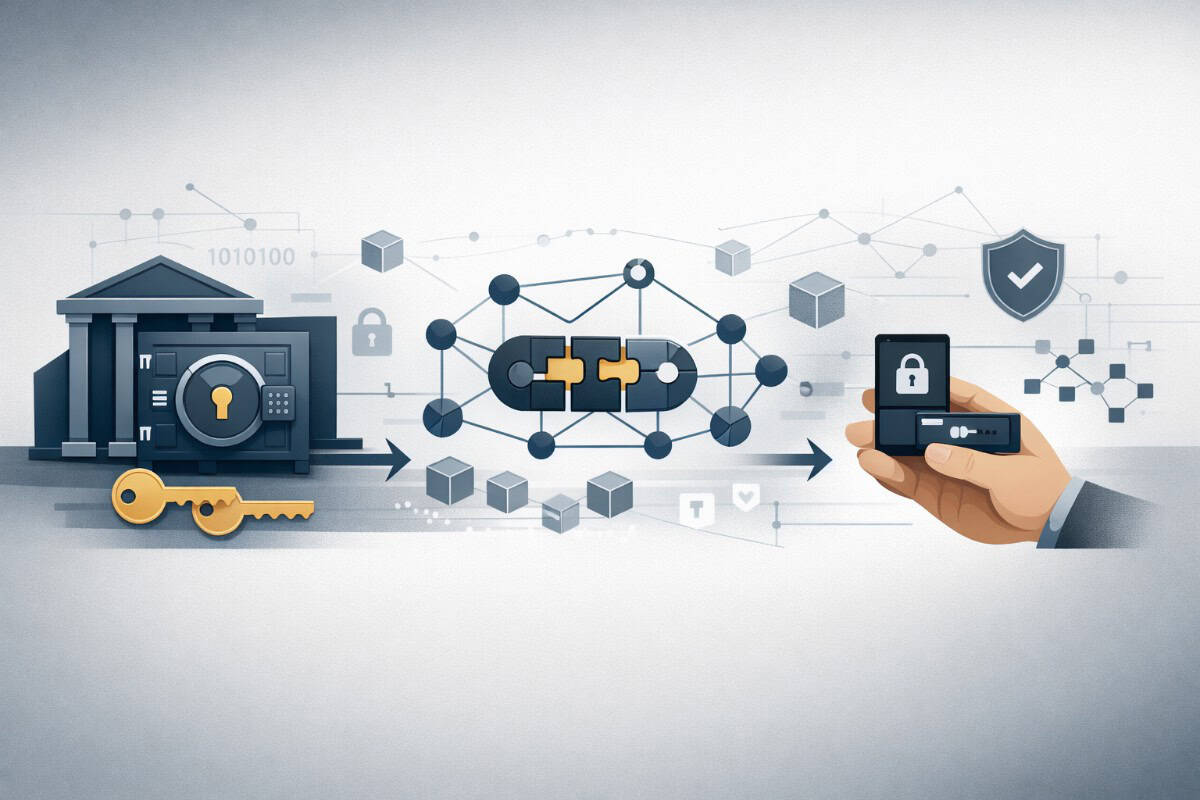
What Are Crypto Custody Models? A Structural Overview


Cryptocurrency custody refers to the systems and processes used to secure, manage, and control access to digital assets. Unlike traditional financial assets held in bank accounts or brokerage systems, cryptocurrencies exist as cryptographic keys – long strings of alphanumeric characters that prove ownership and authorize transactions. Custody models define who holds these keys, how they are managed, and under what conditions they can be used to move funds.
The choice of custody model determines the fundamental relationship between an asset holder and their cryptocurrency. It establishes whether control rests with the individual, a third party, or is distributed among multiple participants. This structural decision has direct implications for security, accessibility, regulatory compliance, and operational risk. Understanding the spectrum of custody models is essential for anyone holding, managing, or building infrastructure for digital assets.
Custody models exist on a continuum from fully centralized arrangements, where a single institution manages all keys, to entirely decentralized systems where individuals maintain exclusive control. Between these poles lie various hybrid and multi-party models that attempt to balance competing priorities of security, convenience, and regulatory compliance.
Why Custody Models Matter in Cryptocurrency
Traditional financial custody relies on established legal frameworks, insurance systems, and institutional trust. Banks and brokerages hold assets on behalf of customers, with legal protections defining ownership rights and recovery mechanisms. Cryptocurrency operates differently. Possession of private keys constitutes effective ownership. If keys are lost or stolen, assets are typically irrecoverable. No central authority can reverse transactions or restore access.
This technical reality makes the custody decision more consequential than in traditional finance. The entity or system controlling private keys has unilateral power to transfer assets. Poor custody practices have resulted in billions of dollars in losses through exchange hacks, individual errors, and institutional failures. The Mt. Gox collapse in 2014, the QuadrigaCX incident in 2019, and the FTX bankruptcy in 2022 all stemmed from custody failures, whether through technical vulnerabilities, fraud, or operational mismanagement.
Custody models evolved to address these risks while accommodating different user needs. Retail investors may prioritize ease of use over absolute control. Institutional investors require compliance with fiduciary duties and regulatory standards. Decentralized applications need trustless custody mechanisms that align with their governance structures. Each use case demands different trade-offs between security, convenience, and control.
Core Dimensions of Custody Models
All custody models can be evaluated along several key dimensions that define their structural characteristics and practical implications.
Key control describes who physically possesses and manages private keys. In some models, a single custodian holds all keys in secure infrastructure. In others, keys are split across multiple parties, or individuals maintain their own keys with no intermediary involvement. The distribution of key control directly determines who can authorize transactions and who bears responsibility for security.
Authorization architecture defines the process required to execute transactions. Some models allow unilateral action by a single key holder. Others require multiple approvals, either from different parties or through cryptographic protocols that distribute signing authority. The authorization structure affects both security—making theft more difficult – and operational efficiency, as complex approval processes introduce friction.
Legal relationship establishes the formal ownership and liability framework. When users deposit cryptocurrency with an exchange or custodian, they typically enter a creditor relationship, where the custodian legally owns the assets and owes a contractual obligation to return them. Self-custody preserves direct ownership, while multi-party arrangements may create novel legal structures with shared or conditional control.
Recovery mechanisms determine what happens when keys are lost, compromised, or when authorized users become unavailable. Centralized custodians can implement internal recovery procedures, though these introduce security vulnerabilities. Decentralized models often lack recovery options, making key loss permanent. Some newer approaches use social recovery or cryptographic techniques to enable restoration without compromising security.
Regulatory treatment varies significantly across custody models. Centralized custodians typically fall under money transmission, securities, or banking regulations depending on jurisdiction. Self-custody generally remains unregulated, though using self-custodied assets for certain activities may trigger compliance obligations. Hybrid models occupy uncertain regulatory territory, sometimes deliberately structured to minimize oversight.
The Custody Spectrum
Custody models span a spectrum defined primarily by the degree of intermediation and the locus of control.
Centralized custody concentrates control with a single institution. Users transfer cryptocurrency to an exchange, custodian, or service provider who manages all key material. The institution operates the technical infrastructure, implements security protocols, and processes withdrawal requests. Users access their holdings through the institution’s interface but do not directly control private keys. This model mirrors traditional financial custody and enables regulatory compliance, insurance coverage, and professional risk management.
Self-custody places complete control with individual users. Asset holders generate and manage their own private keys, typically using hardware wallets, software wallets, or paper storage. No intermediary can access, freeze, or confiscate funds. Users bear full responsibility for security, backup, and operational management. This model maximizes sovereignty and censorship resistance but demands technical competence and careful risk management.
Multi-party custody distributes control across multiple participants. Rather than concentrating keys with one entity or individual, these models require cooperation among several parties to authorize transactions. Multi-signature arrangements divide signing authority among separate key holders. Multi-party computation protocols split key material cryptographically so no single party possesses a complete key. These approaches reduce single points of failure and enable governance structures that prevent unilateral action.
Hybrid models combine elements of different approaches. A custodian might hold one key while the user controls another, requiring both parties to approve transactions. Alternatively, a platform might provide custody services while giving users cryptographic proof of reserves or withdrawal guarantees. These structures attempt to preserve some user control while leveraging institutional infrastructure and expertise.
Structural Trade-offs and Incentive Alignment
Every custody model involves fundamental trade-offs that cannot be fully eliminated, only rebalanced. Security improvements often reduce convenience. Greater user control typically increases operational complexity. Regulatory compliance mechanisms may compromise privacy or censorship resistance.
Centralized custody achieves operational efficiency and regulatory clarity by concentrating control and responsibility. Users benefit from professional security, insurance coverage, and streamlined interfaces. However, this concentration creates custodial risk—the possibility of institutional failure, fraud, or external seizure. Users must trust the custodian’s competence, honesty, and solvency.
Self-custody eliminates custodial risk by removing intermediaries but transfers all operational and security responsibility to individuals. Users gain sovereignty and censorship resistance but must manage key storage, backup procedures, and inheritance planning. Technical errors, physical disasters, or coercion can result in permanent asset loss.
Multi-party models distribute risk and control but introduce coordination costs and potential governance challenges. Requiring multiple approvals slows transaction processing and creates dependencies on other participants. However, this friction can be valuable, preventing impulsive decisions, unauthorized access, or single points of compromise.
The optimal custody model depends entirely on the specific context, assets involved, and priorities of stakeholders. Large institutions managing client assets face different constraints than individual holders securing personal savings or decentralized protocols coordinating treasury management.
Custody Models and System Architecture
The custody model often determines broader system architecture and operational characteristics. Centralized custody enables features difficult or impossible in other models, such as instant internal transfers between users on the same platform, lending and staking services, and fiat integration. These capabilities depend on the custodian’s ability to move assets without individual authorization for each transaction.
Decentralized custody aligns with peer-to-peer system architecture and smart contract interaction. Users sign transactions directly from their wallets, interacting with blockchain protocols without intermediaries. This enables participation in decentralized finance applications, governance systems, and other trustless protocols. However, it requires users to manage gas fees, understand protocol risks, and maintain constant vigilance over security.
Multi-party custody supports organizational and collaborative structures. Treasuries, joint accounts, and institutional arrangements benefit from shared control mechanisms that enforce governance rules and prevent individual malfeasance. These models can implement complex approval workflows, spending limits, and role-based access controls encoded in custody arrangements.
The Evolution of Custody Standards
Custody practices continue to evolve as the cryptocurrency ecosystem matures. Early adopters relied primarily on self-custody or informal arrangements. As institutional participation increased, professional custodians emerged offering qualified custody services under regulatory frameworks. More recently, technological innovations like multi-party computation and smart contract-based custody have expanded the range of available models.
Regulatory developments drive significant changes in custody practices. Jurisdictions increasingly require licensed custodians for certain activities, define fiduciary standards for asset management, and establish consumer protections for retail custody services. These requirements shape which custody models are viable for different use cases and influence industry standardization.
Security incidents and high-profile failures accelerate custody innovation. Each major loss event reveals vulnerabilities in existing models and motivates development of more resilient approaches. The industry continues moving toward custody solutions that minimize trust assumptions while maintaining usability and regulatory compliance.
Understanding Custody as a Foundational Choice
Custody models represent fundamental architectural decisions that shape how cryptocurrency systems function, who controls assets, and how risks are distributed. Unlike traditional finance where custody practices are largely standardized and legally mandated, cryptocurrency offers genuine choice among structurally different approaches.
This flexibility creates both opportunity and responsibility. Users and institutions must actively choose custody arrangements aligned with their specific needs, capabilities, and risk tolerance. There is no universally superior model—only approaches better suited to particular circumstances.
Understanding custody models requires looking beyond surface features to examine the underlying distribution of control, responsibility, and risk. Technical sophistication, operational procedures, and legal frameworks all matter, but the fundamental question remains: who controls the keys, and under what conditions can those keys be used? The answer to this question determines the true nature of cryptocurrency ownership and the practical security of digital assets.