Gemini vs. JP Morgan: The High-Stakes Battle Over Financial Data Access and Open Banking


In July 2025, JPMorgan Chase announced steep new fees on fintechs accessing customer data through aggregators like Plaid, sparking backlash from Gemini co-founder Tyler Winklevoss. Gemini argues the fees violate consumer rights under the CFPB’s Section 1033 and amount to anti-competitive barriers to crypto adoption. JPMorgan counters that fraud costs and non-customer API traffic justify monetizing data access. The dispute, dubbed part of “Operation Chokepoint 2.0,” highlights growing tension between big banks, fintechs, and regulators over who controls U.S. consumer financial data. The outcome could reshape open banking, crypto innovation, and fintech valuations in 2025–2026.
- JPMorgan’s fees: Could add up to hundreds of millions annually for Plaid and other aggregators, with the bank citing $50M+ in ACH fraud costs.
- Gemini’s stance: Claims the fees stifle competition, violate CFPB Section 1033 rights, and extend “Operation Chokepoint 2.0.”
- Regulatory backdrop: GENIUS Act and crypto rules favor TradFi banks; Coinbase litigation revealed FDIC discouraging banks from working with crypto firms.
- Investor impact: JPMorgan (NYSE: JPM) stock largely unaffected; fintech stocks like PayPal (PYPL) and Block (SQ) dipped 5% after the announcement.
- Broader stakes: Sets precedent on whether consumer data is a monetizable bank asset or a user-controlled right, shaping both TradFi and crypto adoption.
A public clash between Gemini co-founder Tyler Winklevoss and JPMorgan Chase marks a critical moment in the ongoing struggle over access to consumer financial data in the U.S. banking system. As JPMorgan moves to impose new data access fees, this conflict signals deeper regulatory and competitive pressures that could reshape the future of open banking, fintech innovation, and crypto adoption.
The Catalyst: JP Morgan’s Controversial Data Access Fees
In July 2025, JPMorgan Chase & Co. announced it would begin charging substantial fees, potentially totaling hundreds of millions annually, to fintech firms accessing customer data via third-party aggregators like Plaid.
Tyler Winklevoss swiftly condemned the move, warning that these fees would “bankrupt fintechs that help you link your bank accounts to crypto companies” and branded the move “egregious regulatory capture that kills innovation, hurts the American consumer, and is bad for America.” Certainly, the recently signed GENIUS Act and other impending US ‘crypto’ regulations will favor America’s traditional banking infrastructure and TradFi companies.
Shortly afterward, JP Morgan reportedly halted Gemini’s re-onboarding process, a decision Gemini claims was in retaliation for the public criticism.
Competing Arguments: Control vs. Competition
Gemini’s Position
Gemini argues the new fees amount to anti-competitive behavior that undermines fintech and crypto innovation.
-
Key Points:
-
The fees infringe on consumer rights granted under Section 1033 of the Consumer Financial Protection Act, which allows users to control and share their financial data.
-
JP Morgan is allegedly leveraging its banking power to build artificial barriers to crypto adoption.
-
The move echoes a broader campaign dubbed Operation Chokepoint 2.0, which crypto firms say aims to restrict access to financial services for digital asset companies.
-
JP Morgan’s Position
JPMorgan contends that the fees are justified by the significant costs and security risks associated with third-party data access.
-
Key Points:
-
According to CNBC, JPMorgan faced $50 million in fraud claims tied to Automated Clearing House (ACH) transactions initiated via aggregators, a number projected to triple.
-
In June 2025, only 13% of the 1.89 billion API requests were initiated by customers. The bank says many calls are made for non-customer activities, such as data harvesting and resale.
-
Forbes reports that Plaid alone may face up to $300 million in new annual costs.
-
Operation Chokepoint 2.0: A Pattern of Financial Censorship?
The term “Operation Chokepoint 2.0” refers to alleged efforts by U.S. regulators to restrict banking access for crypto companies, similar to a controversial Obama-era initiative aimed at curbing “high-risk” industries. In 2024, documents obtained through a Coinbase-backed lawsuit revealed 23 separate incidents where FDIC officials advised banks to delay or halt crypto activities.

Source: Tyler Winklevoss
Gemini itself was reportedly asked to find a new banking partner in 2023, though the company denied claims that it was due to profitability concerns.
Implications for Investors
JP Morgan (NYSE: JPM)
-
Risk Level: Low to Moderate
-
Stock Impact: Minimal. The data fee announcement has had limited effect on share price, as investors appear to view it as a revenue-positive development.
-
Advantages:
-
JP Morgan serves over 80 million customers, giving it unparalleled leverage in shaping industry norms.
-
If adopted by other banks, these fees could create a new standard for monetizing data access.
-
-
Risks:
-
Antitrust scrutiny or regulatory intervention.
-
Negative public perception if viewed as stifling competition.
-
Gemini
-
Risk Level: High
-
IPO Outlook: Gemini has filed a confidential SEC Form S-1, signaling intent to go public. Its last known valuation was $7.1 billion, based on a 2021 Series A funding round.
-
Challenges:
-
Greater operational costs tied to data access and banking.
-
Risk of exclusion from major banking services.
-
Regulatory uncertainty and politicization of crypto finance.
-
-
Opportunities:
-
Public alignment with the “innovation vs. banking monopoly” narrative.
-
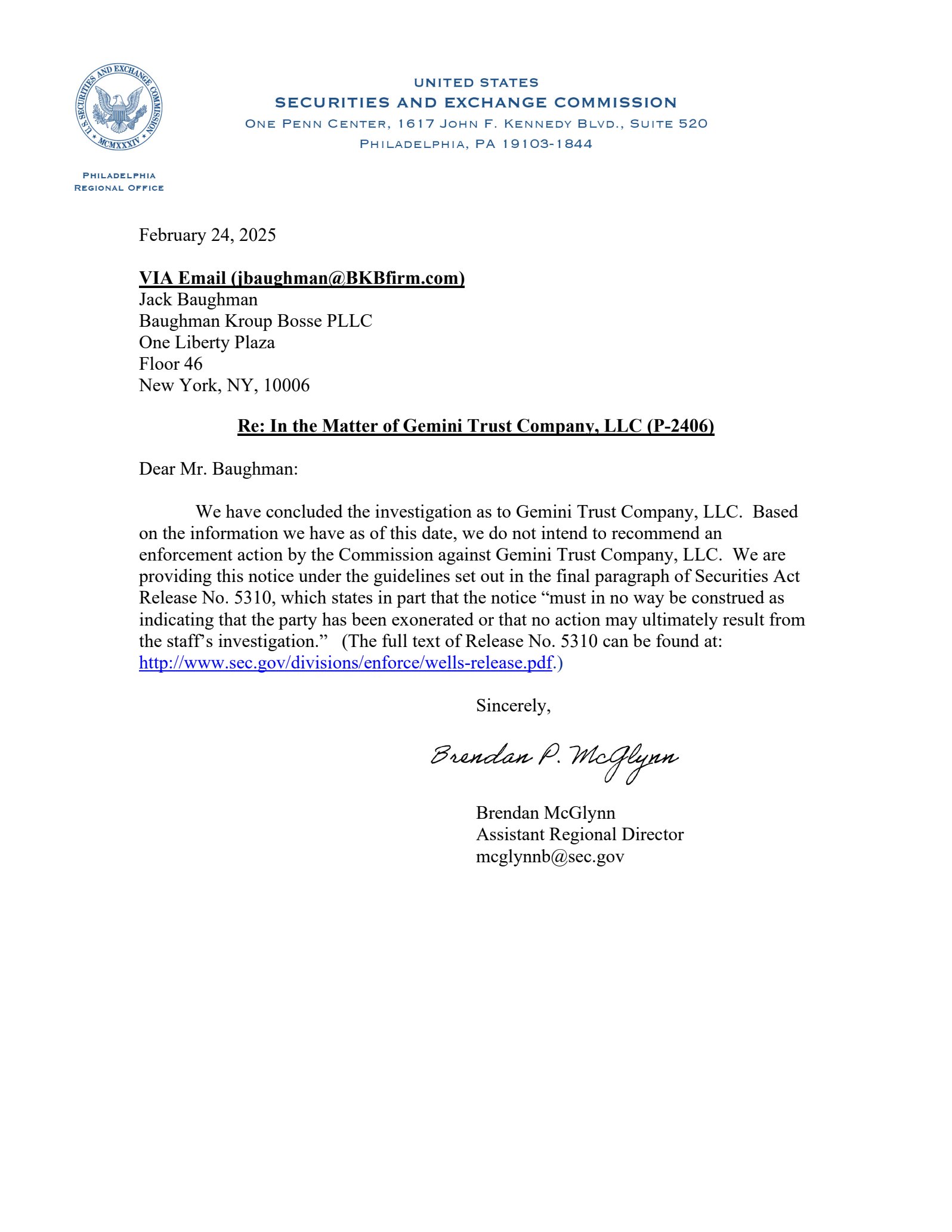
Recent regulatory clarity, Gemini settled with the CFTC in January 2025 and the SEC dropped its probe in February.
-
Source: Cameron Winklevoss
Broader Industry Impact
The fallout from JPMorgan’s decision has already rippled across fintech stocks. Bernstein reports that shares of PayPal (NASDAQ: PYPL) and Block (NYSE: SQ) fell 5% following the announcement. Still, Evercore ISI analysts believe the long-term impact is manageable. They estimate that even with fees, the effect may only increase the cost of onboarding users by 50–60 cents per account.
Conclusion: Who Controls the Future of Finance?
This dispute is more than a policy disagreement—it’s a foundational question about who owns and controls consumer financial data. As crypto and fintech firms push for decentralization and user empowerment, traditional banks like JPMorgan are asserting the right to monetize infrastructure access.
The outcome will shape the future of open banking and influence investor strategies across both traditional finance and digital assets. If JPMorgan’s approach is broadly embraced, it could pave the way for industry-wide monetization of data access. Conversely, if opposition from firms like Gemini gains momentum, it may drive the development of stronger consumer data rights protections.
This topic is part of the broader banking system. For a complete explanation of accounts, transfers, fees, and consumer protections, see our Banking & Cash Management guide.