The Lean Team Playbook: Doing $1M in Revenue with Less Than 5 People


Building a $1 million revenue business with fewer than five people is no longer an edge case, it’s an increasingly repeatable model for AI-native, software-first companies in 2024–2025. The shift is driven by automation-first architecture, AI-assisted execution, and disciplined focus rather than aggressive hiring. Founders who prioritize leverage over headcount are achieving materially higher revenue per employee, faster paths to profitability, and lower operational risk compared to traditional startup models.
- Revenue per employee is the core metric: Lean SaaS teams reaching $1M ARR with 3–5 people often generate ~$200K–$300K per employee, compared with ~$80K–$100K at traditionally staffed peers.
- Focus beats scale early: Winning teams solve one core problem for one clear customer profile, dominate a single acquisition channel, and avoid multi-segment complexity.
- AI tools are structural, not optional: AI coding assistants, automated support, no-code ops, and AI-assisted marketing materially reduce the need for engineering, support, and ops headcount.
- Automation replaces repetition: Onboarding, billing, reporting, support triage, and internal workflows are automated end-to-end, freeing humans for revenue-driving work.
- Delay hiring until it’s a constraint: Small teams organized around clear outcome ownership (product, revenue, customer success) consistently reach $1M before expanding.
The billion-dollar company with a handful of employees is no longer science fiction, it’s an emerging operating model. Anysphere, the company behind the AI coding tool Cursor, scaled from early revenue to more than $100 million in annual recurring revenue by early 2025, achieving that growth with a relatively small team compared to traditional software companies. Perplexity AI reached unicorn status with a valuation exceeding $1 billion while still operating with a lean workforce. These companies are increasingly cited as examples of how AI-native businesses can grow revenue and valuation far faster than legacy startup models.
The more relevant question for most founders isn’t how to build a billion-dollar company overnight, but how to build a lean operation that can reach $1 million in revenue with fewer than five people. This isn’t about grinding yourself into burnout. It’s about making deliberate architectural decisions, selecting the right automation-first tools, and enforcing operational discipline so small teams can produce output that once required dozens of employees.
The New Baseline
The economics of lean teams have shifted meaningfully over the past few years. Companies that combine lean operating principles with modern AI tools consistently show higher revenue per employee and faster paths to sustainability than traditional team structures. While exact percentages vary by company and stage, industry benchmarks and founder disclosures increasingly point to materially better efficiency and margin discipline in smaller, AI-augmented teams.
Consider a common scenario. A bootstrapped SaaS company reaching $1 million in ARR with four people produces roughly $250,000 in revenue per employee. By comparison, many traditionally structured SaaS companies at the same revenue level operate with 10–12 employees, translating to approximately $80,000–$100,000 per employee, closer to median private SaaS benchmarks. The difference isn’t cosmetic. Higher revenue per employee directly reduces burn, shortens the time to break-even, and lowers the revenue threshold required for profitability.
Real-world examples reinforce this model. Multiple founder-led SaaS products have publicly reported reaching six- or seven-figure ARR with solo founders or very small teams before expanding. Companies such as Testimonial and Seats.aero have been cited in industry reporting as reaching around $1.5 million in ARR with minimal headcount, while other solo-founder products have crossed meaningful revenue milestones before hiring. These are not passive lifestyle projects, they are scalable businesses that prioritized efficiency, automation, and leverage from day one.
The Lean Architecture
Building a million-dollar business with fewer than five people requires three foundational elements: ruthless focus, multiplicative tools, and systematic automation.
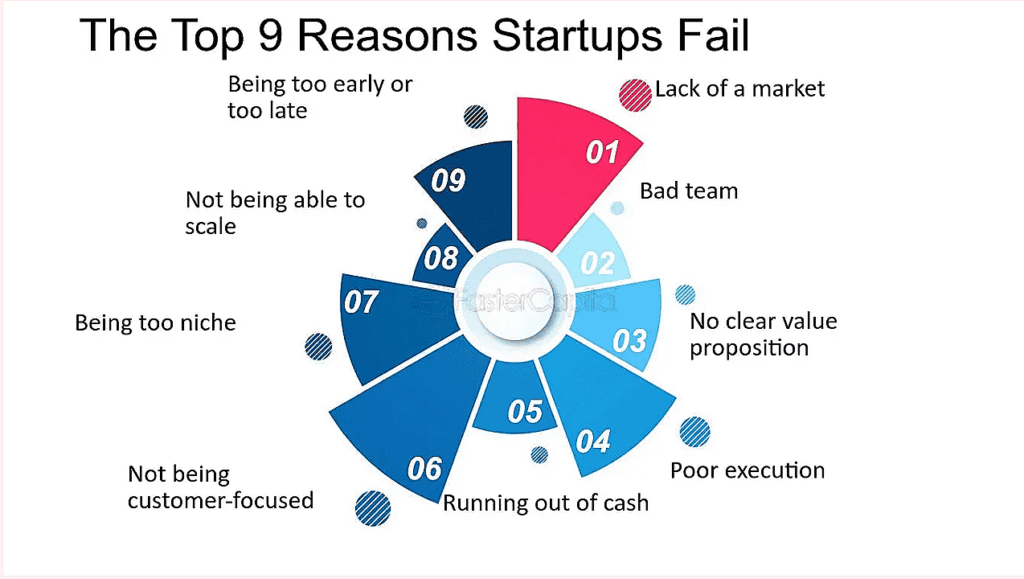
Ruthless focus means saying no to almost everything. Research on lean startups shows they don’t scale by adding layers, they scale by designing systems that reduce reliance on headcount. This starts with product focus. You’re building one core product that solves one problem exceptionally well, not a platform addressing multiple use cases. Every feature that doesn’t serve the core value proposition becomes technical debt a small team can’t afford.
Source: The VC Corner
It extends to customer focus. You’re serving one clear ideal customer profile, not multiple segments. PostHog illustrates this principle well: with fewer than 50 people, the company built a broad product by organizing into small micro-teams, typically two to six people, each owning a product area end-to-end, while maintaining a shared focus on the same core customer.
Market focus matters too. Teams that reach $1 million in revenue with very small headcount typically dominate one channel or geography before expanding. They are not running enterprise sales, SMB sales, and self-service motions simultaneously. They pick one, make it work, and then expand.
Multiplicative tools amplify individual productivity dramatically. The tool stack for a lean $1 million business in 2025 looks very different than it did even two years ago. Analysis of AI-native teams shows engineers using tools such as Cursor or GitHub Copilot can ship faster and handle significantly more scope. At the company level, many generative-AI-first startups have reached $10 million ARR with teams of roughly 20–30 people, where traditional software companies often required 60–80.
The modern lean stack includes AI coding assistants for engineering, AI-assisted content tools for marketing, customer support chatbots handling roughly 70–80% of routine inquiries, no-code automation tools for operations, AI-powered analytics that reduce the need for dedicated data teams, and automated bookkeeping and payroll systems requiring minimal human intervention.
These tools are no longer optional. Teams that don’t adopt them operate at a structural disadvantage. Engineers working without AI coding assistance ship more slowly than competitors who use it. Marketers writing everything from scratch produce far less output than teams using AI for research and first drafts.
Systematic automation eliminates repetitive work entirely. Any task performed more than once or twice a month should be automated or removed. Lean startup practice in 2025 increasingly emphasizes this principle: the goal isn’t doing things efficiently, it’s not doing them at all.
Customer onboarding is automated through email sequences and self-service documentation. Billing and invoicing run automatically through platforms like Stripe. Social posting operates through schedulers. Support tickets receive initial responses from AI systems. Financial reports generate directly from connected tools without manual data entry. The time saved is reinvested in activities that actually grow revenue.
The Four-Person Configuration
Many lean teams that reach approximately $1 million in revenue organize around a small set of core functional roles rather than large departments. While structures vary by industry and business model, this four-role configuration is commonly observed in early-stage SaaS and digital businesses.
- Person 1: Technical / Product Lead: This role owns product development, technical architecture, and system reliability. In SaaS businesses, this is typically an engineer or technical co-founder responsible for shipping features, maintaining the product, managing infrastructure, and making architectural decisions. Modern cloud platforms and AI-assisted development tools allow a single highly skilled engineer to build and operate products that serve large user bases, particularly for low-to-moderate complexity software.
- Person 2: Revenue Lead: This role owns customer acquisition and revenue growth. Depending on the business model, this may focus on sales activities such as prospecting, closing, and pipeline management, or on marketing functions including content, SEO, paid acquisition, and conversion optimization. In early-stage B2B businesses, revenue efforts are often founder-led before a dedicated sales or growth role is added.
- Person 3: Customer Success / Operations: This role owns customer retention, support, and operational execution. Responsibilities include handling escalated support issues, managing internal tools and workflows, and ensuring customers successfully adopt and renew the product. Strong operational ownership reduces friction across the organization and enables other team members to focus on product and revenue.
- Person 4 (Optional): Strategic Lead: This role focuses on positioning, partnerships, fundraising, and long-term direction. In many lean teams, these responsibilities are handled by the founder alongside product or revenue work rather than as a separate full-time role.
Some companies reach $1 million in revenue with three people by combining strategic responsibilities with product or revenue ownership, depending on complexity and growth strategy.
The Tool Stack
The infrastructure supporting lean operations has matured significantly. Evidence from modern SaaS startups, founder case studies, and operator reports shows that an optimized software stack can materially reduce staffing needs, primarily by automating deployment, coordination, analytics, and routine workflows. Rather than replacing entire roles outright, these tools reduce the number of people required to perform the same amount of work.
- Engineering and product: AI-assisted coding tools such as GitHub Copilot or Cursor increase developer productivity, while platforms like Vercel or Netlify enable fast deployment without dedicated DevOps teams at early stages. Supabase or Firebase provide managed backend infrastructure, reducing operational complexity. Linear supports lightweight project management, and PostHog or Mixpanel handle product analytics. For small teams, total costs typically range from $500–1,000 per month, depending on usage.
- Revenue and marketing: CRMs and sales tools such as HubSpot or Apollo centralize lead management and automate outreach. Website builders like Webflow or Framer allow teams to ship production-ready sites without ongoing engineering involvement. AI writing tools such as Jasper or Copy.ai support content workflows, while Google Analytics and Search Console provide traffic insights. Email platforms like Mailchimp or ConvertKit manage lifecycle communication. Combined costs generally fall between $300–800 per month.
- Operations and finance: Stripe manages payments and billing, while QuickBooks or Xero handle accounting and financial reporting. Payroll platforms such as Gusto or Rippling replace manual HR processes. Notion or Coda function as internal documentation hubs, and Zapier or Make automate cross-tool workflows. Typical monthly costs range from $400–700, depending on scale and automation volume.
- Customer support and success: Intercom or Help Scout manage support workflows, while Loom enables asynchronous explanations and training. Calendly reduces scheduling friction, and AI assistants such as Intercom Fin increasingly handle first-line customer inquiries, with humans managing escalations. Monthly costs typically range from $300–600.
Across categories, total monthly software spend for a lean operation usually falls between $1,500–3,000. At $1 million in annual revenue, this represents roughly 2–4% of revenue, a modest cost relative to the productivity, scalability, and operational leverage these tools enable.
The Operational Disciplines
Tools and architecture alone do not create high-performing lean teams. Sustained execution at high velocity requires a small set of operational disciplines that reduce coordination overhead and keep accountability clear without adding headcount.
Lean teams prioritize documentation over meetings by default. Product decisions, customer insights, strategic context, and internal processes are written and shared asynchronously rather than explained repeatedly in live discussions. This approach supports distributed work, preserves institutional knowledge as roles change, and minimizes time spent in recurring meetings. A common operating principle is simple: if something must be explained more than once, it should be documented.
Clear ownership is essential in small teams. Responsibilities are defined around outcomes rather than task lists, with each person accountable for a specific domain such as product reliability and delivery, revenue generation, or customer retention and operational stability. When results fall short, ownership is unambiguous, enabling faster correction. This outcome-driven ownership model is widely used by modern product-led companies that scale efficiently with small teams.
Execution is typically organized around a weekly operating rhythm. Teams set priorities at the start of the week and review what shipped and what stalled at the end of the week. This cadence maintains momentum and visibility without the overhead of heavy sprint planning, while higher-level strategy and goal setting continue on monthly or quarterly cycles.
Metrics replace managerial oversight in lean organizations. Teams rely on clear performance indicators to guide focus, reviewing revenue and pipeline frequently, monitoring customer retention and churn regularly, tracking product usage continuously, and measuring support volume and resolution time in near real time. Data-driven execution ensures attention stays aligned with the outcomes that matter most.
The Real Case Studies
Looking at real companies that reached meaningful revenue milestones with lean teams reveals consistent patterns that go beyond tools or organizational structure.
Lovable is a standout example. The AI-powered software creation platform reached approximately $17 million in annual recurring revenue within about three months of launch, with a team of roughly 15 people at the time. Lovable’s product automates large portions of application development by converting natural-language prompts into functional software, dramatically reducing the human labor traditionally required to build and ship applications. The company’s leadership has publicly emphasized that AI-driven development will significantly reshape how software is created, though specific numerical forecasts about the percentage of SaaS built by AI are speculative rather than established fact.
Linear demonstrates a different version of the same principle. The company has grown a large base of professional software teams by focusing relentlessly on product quality, speed, and clarity rather than breadth. Linear operates with a relatively small, remote-first team compared to legacy software companies, though its headcount has grown beyond the sub-40 range as the business has scaled. Its success comes from disciplined focus: Linear is not trying to serve every use case, but to be an exceptional project management tool specifically for modern software teams.
Zapier illustrates how automation enables scale even as organizations grow. The no-code workflow automation platform now generates hundreds of millions of dollars in annual recurring revenue, far exceeding earlier benchmarks around $140 million, with a globally distributed workforce numbering in the high hundreds. Importantly, Zapier built its business with minimal outside funding and a relatively lean team, achieving rapid revenue growth by allowing non-technical users to automate workflows that previously required custom engineering, a value proposition that set the foundation for its long-term efficiency and sustained scale.
The shared pattern across these companies is clear. They systematically automate or remove the need for human involvement in traditionally labor-intensive business functions, allowing relatively small teams to serve large and growing customer bases. This is not about cutting corners or reducing quality. It is about redesigning systems so human effort is applied only where it creates the most leverage, and automation handles the rest.
The Constraints That Focus
Building lean imposes real constraints that often improve decision-making. Small teams cannot build every feature customers request, pursue every distribution channel, or serve every customer segment at once. While these limitations can appear restrictive, they frequently force sharper prioritization around what actually drives outcomes.
With a five-person team, attention naturally concentrates on the highest-impact work, the small set of activities that produces the majority of results. While the “80/20” principle is a heuristic rather than a strict rule, extensive research in innovation and organizational behavior shows that constrained resources tend to increase focus, discipline, and creative problem-solving, whereas excess capacity often leads to complexity and wasted effort. Lean teams cannot afford to ship features that fail to move core metrics; larger teams often build them simply because they have the bandwidth.
The same dynamic applies to sales. Lean teams typically avoid complex, multi-touch sales processes because they lack the personnel to support them. Instead, they rely on simple value propositions, clear positioning, and product-driven or self-serve growth. Larger organizations can sustain layered sales motions precisely because they have dedicated headcount.
Importantly, these efficiencies often persist as companies scale. Businesses that reach early revenue milestones with lean teams frequently maintain higher revenue per employee as they grow, reaching $10 million or more in revenue with significantly fewer staff than competitors built on heavier operating models.
The Path Forward
Reaching $1 million in revenue with fewer than five people isn’t achievable for every business model. It is most realistic for software-first businesses such as SaaS, digital products, and tech-enabled services, where marginal costs are low and automation can replace significant human labor. It is far more difficult in hardware, deep-tech research, or businesses that depend on physical production and delivery. For many software and digital businesses, however, this lean approach is increasingly viable as tools and infrastructure reduce the need for large teams.
The playbook is straightforward but demanding: focus tightly on a single customer profile and a single core problem, use AI and automation wherever they can reliably replace manual work, structure teams around clear outcome ownership rather than tasks, maintain operational discipline through documentation and metrics, and delay hiring until a true constraint is identified. This approach prioritizes leverage over headcount rather than growth through staffing.
Many analyses of lean startups point to the same shift in incentives. The modern founder advantage is not raising large amounts of capital and scaling headcount quickly, but building durable revenue with minimal team size and high revenue per employee. Running a $10 million business with a small, focused team is increasingly feasible given today’s tools, economics, and operating models. What ultimately determines success is not access to capital, but the discipline to execute lean principles instead of defaulting to traditional scaling assumptions.
That is the lean team playbook: small by design, effective through execution, and profitable by necessity.