Self Custody Explained – Decentralized Control Without Intermediaries


Self-custody eliminates intermediaries from cryptocurrency control by placing private key management entirely in the hands of individual users. Asset holders generate, store, and use cryptographic keys without relying on exchanges, custodians, or third-party services. While this model provides maximum sovereignty and censorship resistance, aligning with cryptocurrency’s original vision of peer-to-peer financial systems, it always requires immense personal discipline as all risk profiles fall on the individual asset holder.
The term “self-custody” describes any arrangement where users maintain exclusive possession of private keys. This encompasses various technical implementations, from hardware wallets and software applications to paper storage and metal backups. What unites these approaches is the absence of intermediaries who could access, freeze, or confiscate assets without the user’s cooperation.
Self-custody represents the purest form of cryptocurrency ownership, where cryptographic proof of key possession constitutes legal and practical ownership. This directness eliminates many risks inherent in custodial arrangements but introduces distinct challenges related to operational security, technical competence, and personal responsibility.
How Self-Custody Works
Self-custody begins with key generation. Users create private keys through wallet software or hardware devices designed for this purpose. The private key mathematically derives a public key, which generates the blockchain addresses where the user receives cryptocurrency. The private key enables signing transactions that move funds from these addresses, proving ownership without requiring trusted intermediaries.
Secure storage constitutes the core operational challenge of self-custody. Private keys exist as 256-bit numbers, typically represented as either 64-character hexadecimal strings or 12-24 word mnemonic phrases following the BIP39 standard. Users must preserve these keys while preventing unauthorized access. Physical compromise, digital theft, or simple loss all result in permanent asset forfeiture with no recovery mechanism.
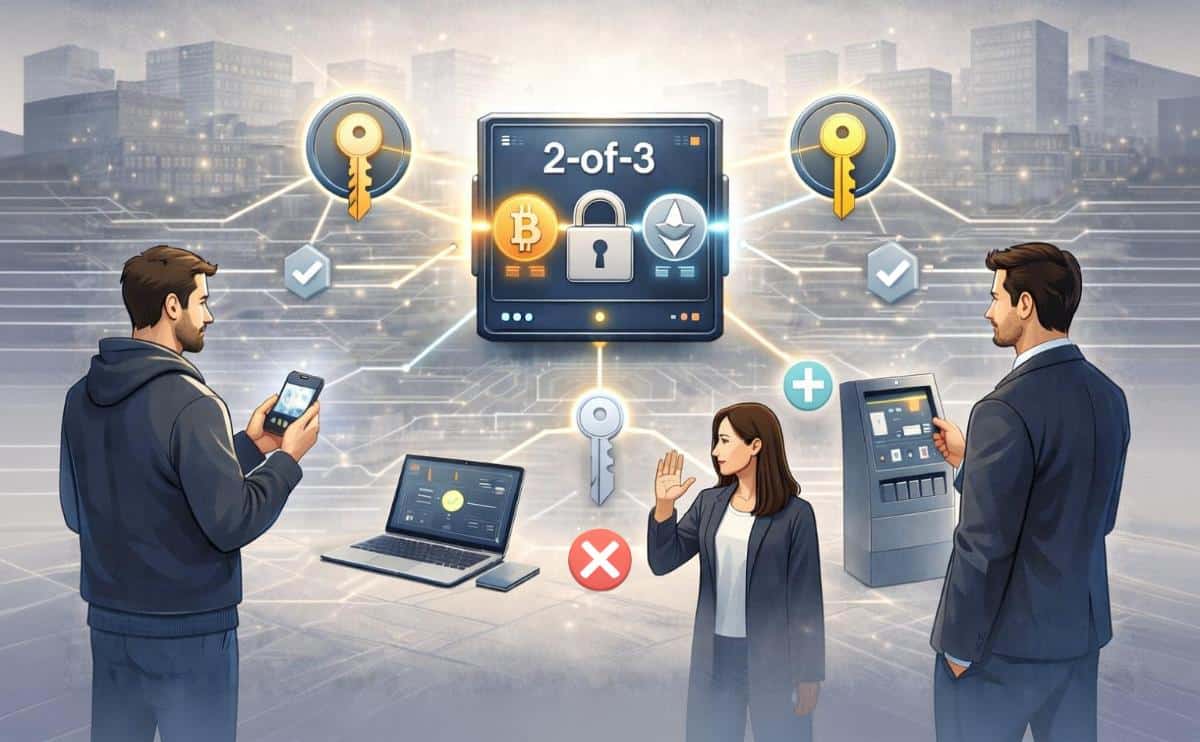
Hardware wallets provide purpose-built devices for key storage and transaction signing. These devices generate and store private keys in secure elements isolated from internet-connected computers. When users need to sign transactions, they connect the hardware wallet, which signs internally without exposing the private key to potentially compromised systems. This architecture protects against malware and remote attacks while maintaining user control.
Software wallets store keys on general-purpose devices like smartphones or computers. These applications provide more convenient access but expose keys to the full attack surface of the host device. Malware, operating system vulnerabilities, or physical device theft can compromise keys. Software wallets suit smaller amounts or active use cases where convenience outweighs maximum security.
Paper wallets and metal backups provide offline storage by encoding private keys or seed phrases in physical form. Users generate keys on offline computers, print or engrave them, then store the physical artifacts securely. This method eliminates digital attack vectors but introduces risks related to physical durability, discovery, and the challenge of eventually using the keys without compromising them.
Who Uses Self-Custody
Self custody is frequently the preferred option for the following groups;
- Long-term holders prioritize self-custody for assets they intend to keep for extended periods. Once cryptocurrency reaches self-custody wallets, it requires no ongoing institutional relationship or service continuity. Users concerned about exchange failures, regulatory seizure, or counterparty risk generally prefer controlling their own keys for significant holdings.
- Privacy-conscious users value self-custody for its minimal data exposure. Custodial platforms require identity verification, maintain transaction records, and share information with regulators. Self-custody allows users to transact pseudonymously using blockchain addresses not directly linked to their legal identity, though achieving meaningful privacy requires additional operational precautions.
- Participants in decentralized finance applications typically use self-custody because these protocols require direct wallet interactions. Smart contracts cannot accept deposits from custodial platforms in the same way they interact with user-controlled wallets. DeFi users sign transactions from personal wallets, connecting through browser extensions or mobile wallet applications.
- Ideological advocates of cryptocurrency’s decentralizing potential often practice self-custody as a matter of principle. These users view eliminating trusted intermediaries as central to cryptocurrency’s value proposition. They accept self-custody’s operational burdens as necessary for achieving genuine financial sovereignty and censorship resistance.
Geographic and political contexts also influence self-custody adoption. Users in jurisdictions with capital controls, unstable banking systems, or authoritarian governance may need self-custody to preserve assets from confiscation or economic instability. When institutional custody faces political risk, self-custody becomes the only viable long-term storage option.
Control and Responsibility Allocation
Self-custody concentrates both control and responsibility entirely with the key holder. No institution can freeze funds, block transactions, or confiscate assets without obtaining physical access to the keys through coercion or theft. This sovereignty extends to all operational aspects: security procedures, backup strategies, inheritance planning, and risk management.
Users assume complete responsibility for security. They must protect keys from theft, maintain viable backups against loss, and implement operational security preventing compromise. There are no customer service representatives to contact, no account recovery procedures, and no insurance policies. Technical errors, social engineering, physical threats, and natural disasters all pose risks users must mitigate independently.
The permanence of self-custody mistakes distinguishes it from custodial arrangements. Forgotten passwords to custodial accounts can be reset. Lost keys to self-custodied wallets cannot be recovered. Incorrectly sent transactions cannot be reversed. Compromised keys cannot be changed without first moving assets, which may be impossible if the attacker acts quickly.
This responsibility structure creates both empowerment and exposure. Users who successfully implement self-custody achieve genuine financial sovereignty unavailable through any custodial arrangement. Users who fail to meet its operational demands risk permanent loss through preventable errors or predictable attacks.
Key Risks and Limitations
Permanent loss from key mismanagement represents the most common self-custody failure mode. Users forget passwords, lose seed phrases, damage storage media, or fail to maintain accessible backups. Estimates suggest millions of Bitcoin remain permanently lost due to forgotten or destroyed keys. Unlike custodial arrangements where recovery procedures exist, self-custody offers no redemption for operational failures.
Theft through physical access threatens self-custody despite its resistance to remote attacks. Home invasions targeting known cryptocurrency holders, coerced key disclosure, and simple burglary of inadequately secured storage all represent attack vectors absent in properly secured custodial arrangements. Self-custody shifts security concerns from institutional cybersecurity to personal physical security.
Inheritance and continuity planning becomes complex without institutional intermediaries. Users must communicate key locations and access methods to heirs while preventing premature access or disclosure. Traditional estate planning mechanisms struggle with digital assets whose ownership depends on secret information. Failed inheritance planning has resulted in permanent loss of assets when sole key holders died unexpectedly.
Operational complexity limits self-custody accessibility for non-technical users. Safely generating keys, verifying wallet software integrity, implementing secure backup procedures, and recognizing attack attempts all require knowledge many users lack. The consequences of errors exceed those in traditional financial systems, where institutional safeguards and legal protections provide some error tolerance.
Transaction irreversibility means user mistakes have permanent consequences. Sending funds to incorrect addresses, paying excessive transaction fees, or falling for scams result in permanent loss. Custodial platforms can sometimes reverse internal transactions or freeze suspicious transfers. Self-custody offers no such protections—the blockchain executes all validly signed transactions regardless of whether they represent user intent.
Regulatory uncertainty surrounds self-custody in some jurisdictions. While generally legal, using self-custodied assets may trigger reporting requirements, tax obligations, or compliance demands users are unprepared to meet. The perceived anonymity of self-custody can lead to unintentional regulatory violations when users fail to report transactions or holdings as legally required.
Self-Custody vs Centralized Custody: A Structural Comparison
Where centralized custody concentrates assets with institutions that provide security and convenience while introducing counterparty risk, self-custody eliminates counterparty risk by making users solely responsible for their own security and operations. This fundamental trade-off cannot be escaped—only chosen based on user priorities and capabilities.
Centralized custody provides recovery mechanisms, customer support, and professional security infrastructure, but requires trusting institutional solvency, competence, and intentions. Self-custody eliminates all trust requirements but demands users independently develop and maintain security practices adequate to protect potentially significant assets from all threats.
The operational experience differs substantially. Centralized custody resembles traditional financial services with familiar interfaces, instant internal transactions, and support resources. Self-custody requires users to manage technical details including wallet software, seed phrase security, transaction fee estimation, and blockchain interaction. This complexity decreases over time as users develop competence, but the initial learning curve exceeds that of custodial platforms.
Feature availability varies significantly. Centralized custody enables margin trading, earning programs, instant conversions, and fiat integration that depend on custodial control. Self-custody permits direct interaction with decentralized protocols, truly peer-to-peer transactions, and participation in DeFi applications impossible through custodial intermediaries.
When Self-Custody Makes Sense
Long-term storage of significant holdings represents the strongest use case for self-custody. Assets intended for multi-year holding periods face extended counterparty risk if left with custodians. Self-custody eliminates this risk entirely, requiring only that users maintain secure storage over time rather than relying on continued institutional performance.
Users with technical competence and interest in understanding cryptocurrency mechanics benefit substantially from self-custody. The operational knowledge required to safely manage private keys deepens understanding of how cryptocurrency works and enables participation in the broader ecosystem beyond custodial platforms. This knowledge compounds over time as users develop security practices and operational confidence.
Privacy requirements often necessitate self-custody. While blockchain transactions remain pseudonymous rather than truly anonymous, self-custody avoids the identity verification and transaction monitoring inherent in custodial platforms. Users subject to capital controls, surveillance, or confiscation risks may find self-custody essential despite its operational demands.
Decentralized protocol participation requires self-custody by design. Users wanting to provide liquidity, participate in governance, use decentralized exchanges, or interact with smart contracts generally need self-custodied wallets. Custodial platforms cannot replicate these interactions because they fundamentally depend on direct key control.
Ideological commitment to financial sovereignty provides sufficient justification for self-custody regardless of other factors. Users who value censorship resistance, trustlessness, and independence from institutions may accept self-custody’s risks and complexity as necessary costs of alignment with their principles.
What to Understand Before Adopting Self-Custody
Self-custody demands permanent vigilance and operational discipline. Unlike custodial arrangements where institutions handle security, backup, and operational concerns, self-custody places these responsibilities entirely on users. This requires both initial learning and ongoing practice to maintain secure operations.
Adequate security requires hardware wallets for significant holdings, secure seed phrase storage with redundant backups in separate locations, and operational security practices preventing key exposure during use. The specific implementation varies based on threat model and technical sophistication, but all viable approaches require thoughtful planning and consistent execution.
Users should test self-custody practices with small amounts before transferring significant holdings. Creating wallets, executing transactions, recovering from seed phrases, and managing different cryptocurrency types all involve learning curves with permanent consequences for errors. Practice with amounts one can afford to lose provides essential experience before trusting the model with substantial assets.
Estate planning becomes critical for self-custody. Users must balance preventing unauthorized access during their lives with ensuring heirs can access assets after death. This requires communicating key locations and access procedures without compromising immediate security – a genuinely difficult problem without simple solutions. Legal mechanisms like trusts or specialized services can help, but require careful implementation.
Self-custody is not an all-or-nothing proposition. Users can adopt hybrid approaches keeping funds for active use on custodial platforms while maintaining long-term holdings in self-custody. This balances the security of direct key control for the bulk of assets with the convenience of custodial access for operational needs.
The fundamental question for prospective self-custody users is whether they can and will maintain the operational discipline required for secure key management. Technical capability matters less than consistent execution of security practices. Users who honestly assess their likelihood of following through on backup procedures, operational security, and inheritance planning can make informed decisions about whether self-custody suits their circumstances.