
ETFs vs Mutual Funds: Costs, Structure, and Performance Explained


Mutual funds and ETFs both offer diversified, professionally managed exposure, but they differ in fees, taxes, liquidity, and how investors trade them. For U.S. investors comparing these options in 2025, the biggest distinctions come from mutual funds’ once-daily pricing versus ETFs’ intraday trading, along with consistently lower ETF expenses and greater tax efficiency driven by in-kind creation/redemption rules. This summary assumes U.S. middle-income investors and uses placeholder links where official sources were referenced but not provided.
- Mutual funds price once daily and often carry higher fees; some include sales loads and 12b-1 distribution fees, per SEC fee guidance.
- ETFs trade all day with market-based pricing, lower average MERs, and higher tax efficiency supported by the ETF creation/redemption process.
- Mutual funds often dominate workplace retirement plans and support automatic contributions; ETFs require a brokerage account but benefit from fractional shares and commission-free trading.
- Tax treatment differs: ETFs generally trigger fewer capital-gains distributions, as explained in IRS Topic 409 on capital gains.
- Use cases split: mutual funds suit hands-off savers in retirement plans, while ETFs fit cost-sensitive investors seeking flexible, index-based strategies.
Managed funds and exchange-traded funds (ETFs) remain two of the most common investment options for U.S. investors seeking diversified, professionally managed market exposure. Both vehicles pool money from multiple investors, yet they differ significantly in structure, pricing, taxation, and how investors buy and sell them. Understanding these distinctions can help you determine which option aligns best with your financial objectives.
This comparison draws on publicly available guidance from federal regulators, including the U.S. Securities and Exchange Commission and the Internal Revenue Service. Anchor-text links are included on key terms so you can verify the underlying regulatory information.
Definitions and Structure
A managed fund, or mutual fund, is an investment vehicle regulated under the Investment Company Act of 1940. It pools investor money to build a diversified portfolio of securities such as stocks or bonds. A professional manager makes buy-and-sell decisions based on the fund’s stated mandate. Mutual funds may be actively managed or designed to track an index. The SEC’s investor guide on mutual funds provides a detailed overview of how these products operate through its official resource on mutual fund structure.
An exchange-traded fund (ETF) is also a pooled investment product, but it trades on an exchange throughout the day like a stock. Most ETFs follow specific indexes, although some are actively managed. Unlike mutual funds, ETFs rely on a creation and redemption mechanism involving authorized participants to help keep the ETF’s market price aligned with the value of its underlying holdings. More information is available in the SEC’s guide on ETFs, which explains this process in detail on its page about ETF mechanics.
Both mutual funds and ETFs hold diversified portfolios, but they differ in how they are priced. Mutual funds are priced once per day after market close, while ETFs update their prices continuously during trading hours. This difference affects liquidity, tax efficiency, and how much control investors have over trade timing.
Pricing and Costs
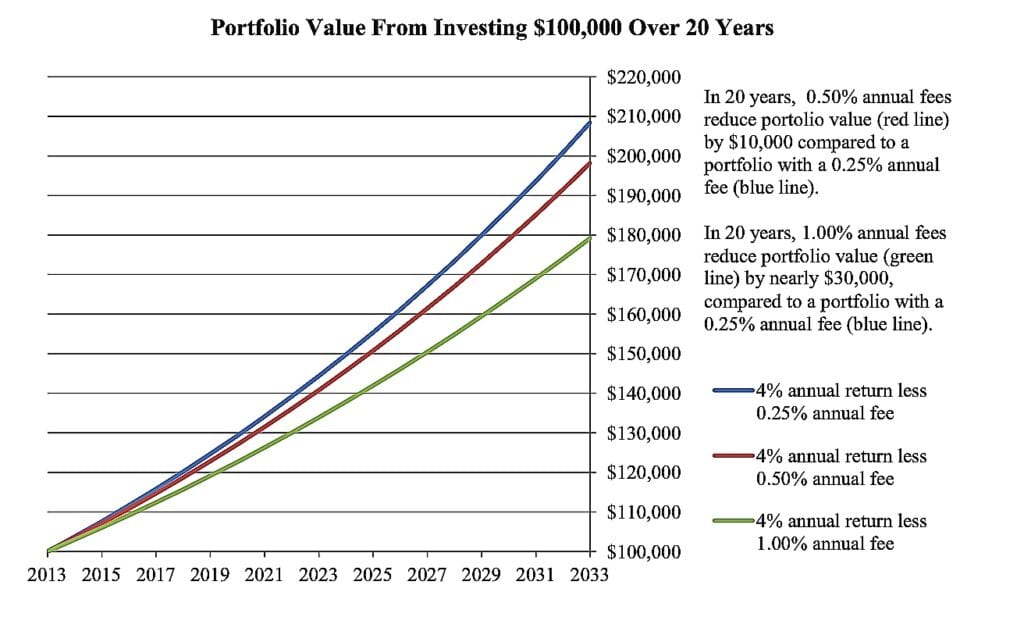
Both mutual funds and ETFs charge a management expense ratio (MER), which covers portfolio management, administration, and operating costs. Industry data shows that actively managed mutual funds often have MERs of about 0.50% to more than 1%, while index mutual funds generally cost less. ETFs tend to have lower MERs on average because many follow broad, rules-based indexes.
Some mutual funds also impose sales loads. A front-end load applies when you buy shares, and a back-end load applies when you sell. These fees compensate financial professionals but reduce overall returns. Many mutual funds today are no-load, though loads remain common in some advisor-sold share classes.
ETF investors usually avoid sales loads, but they face trading costs. You may pay a brokerage commission, although many major brokers now offer commission-free ETF trading, and you will encounter bid-ask spreads, which represent the difference between what buyers will pay and sellers will accept. Narrow spreads signal strong liquidity; wider spreads increase transaction costs.
Additional expenses may apply. Some mutual funds charge 12b-1 fees for marketing and distribution. Certain ETFs, particularly those using derivatives or complex strategies, may carry higher internal costs. Investors can review a fund’s prospectus and annual report to understand its full fee structure. The SEC provides guidance on evaluating costs in its resource on mutual fund fees and expenses.
Source: SEC
How to Purchase
Investors can buy mutual funds directly from fund companies, through financial advisors, or within retirement plans. Because mutual fund orders execute once per day at the closing net asset value, you cannot control the exact purchase price. This pricing structure, outlined in the SEC’s mutual fund guide, appeals to investors who prefer a hands-off investing experience or who rely on automatic contributions.
ETFs must be purchased through a brokerage account. They trade throughout market hours, giving investors more control over timing and price using order types such as market, limit, or stop orders. The SEC’s ETF guide notes that many workplace retirement plans now offer ETFs, though availability depends on the plan provider.
Minimum investments differ. Mutual funds often require an initial minimum investment that may range from a few hundred dollars to more than $1,000. ETFs generally have no minimum beyond the cost of one share, and fractional share trading has made them more accessible to new investors.
Potential Returns
Returns vary widely among mutual funds and ETFs because the underlying investment strategy matters more than the product structure. Actively managed mutual funds seek to outperform market benchmarks, but extensive research shows that many active managers underperform their benchmarks after fees. By contrast, most passive ETFs aim to replicate the performance of their underlying indexes, making fees and tax efficiency key drivers of long-term results.
ETFs are generally more tax efficient than mutual funds because their in-kind creation and redemption process results in fewer taxable events. Mutual funds often need to sell securities to meet shareholder redemptions, which can generate taxable capital gains distributed to investors. You can review how capital-gains distributions work in the IRS guidance on Capital Gains and Losses (Topic 409).
Both mutual funds and ETFs support dividend reinvestment. Mutual funds typically reinvest dividends automatically unless the investor chooses otherwise. For ETFs, brokerages offer automatic dividend-reinvestment plans that allow investors to reinvest distributions and maintain compounding without additional trading costs.
Availability and Selection
Mutual funds and ETFs both provide investors with a wide range of choices across asset classes, sectors, and global markets. Mutual funds are especially common in retirement plans and offer a large mix of actively managed and index-tracking strategies, as detailed in the SEC’s Mutual Fund Investor Guide. ETFs have grown rapidly in recent years and now cover traditional indexes, factor investing strategies, commodities, and fixed income markets, supported by the SEC’s ETF Overview.
When it comes to retail accessibility, ETFs generally offer easier entry because they trade throughout the day through any brokerage account, as described in the SEC’s ETF trading explanation. Mutual funds, on the other hand, may require access through specific fund companies or employer-sponsored retirement plans. Both product types offer diversified exposure across sectors and geographies, but ETFs typically provide more granular and theme-focused options, which is often reflected in modern ETF product disclosures.
This structure makes ETFs attractive for investors seeking low-cost, flexible, and transparent market exposure, while mutual funds remain a strong option for long-term retirement savers who prefer professional management and automatic investment features.
Advantages and Disadvantages
Managed Funds (Mutual Funds)
Pros
- Professional management
- Automatic reinvestment
- Common in retirement plans
- Priced once daily for simplicity
Cons
- Higher average fees
- Possible sales loads
- Less tax efficient
- No intraday trading
ETFs
Pros
- Lower average costs
- Higher tax efficiency
- Intraday trading flexibility
- No minimum investment beyond the share price
Cons
- Bid–ask spreads
- Brokerage account required
- Price may deviate from NAV during volatile markets
Use Cases
Managed funds can be a strong fit for investors who access investments through employer retirement plans, prefer a hands-off approach, or want professional oversight in more complex market segments. They may also suit investors who value automatic contributions and do not need the ability to trade throughout the day, since mutual funds execute at end-of-day pricing.
ETFs can be the better option for investors seeking lower fees, greater tax efficiency, and more control over how and when trades are executed. They work well for investors who build their own portfolios or use systematic, index-based strategies.
A blended approach is also common. Many investors use ETFs for broad, low-cost market exposure while relying on actively managed mutual funds in areas where professional judgment may add value. The right mix depends on an investor’s cost sensitivity, investing style, and the platforms available to them, such as retirement plans or brokerage accounts.