Investment Hubs: New York – The World’s Capital Market Powerhouse


New York City anchors the world’s deepest and most liquid capital markets, connecting global investors to U.S. equities, Treasuries, corporate bonds, REITs, and alternatives under a transparent regulatory system led by the SEC. Its dollar-denominated infrastructure, Fortune 500 concentration, and time-zone advantages make it a preferred destination for international investors seeking stability, liquidity, and long-horizon growth. (Assumes U.S. 2025 regulatory and market norms.)
- Hosts the world’s largest equity markets through the NYSE and Nasdaq, supported by high-volume trading and SEC-regulated price transparency.
- Serves as the core hub of the U.S. Treasury market, which anchors global collateral, repo, and risk-free benchmarks.
- Offers broad access across asset classes, equities, corporate and municipal bonds, REITs, private equity, hedge funds, and fintech.
- Provides regulatory clarity and investor protections, while non-U.S. investors face dividend withholding unless reduced by IRS treaty tables.
- Supports multiple access routes for foreign investors, including global brokerages, ADRs, ETFs, and Irish-domiciled UCITS structures.
New York City remains one of the world’s most influential financial centers, supported by its scale, liquidity, and regulatory structure. Home to the New York Stock Exchange (NYSE) and the Nasdaq Stock Market, the city hosts the world’s largest equity markets by total market capitalization, according to the World Federation of Exchanges. It is also the core hub of the U.S. Treasury market, the world’s most liquid sovereign debt system, documented by the U.S. Department of the Treasury.
New York’s financial identity began in 1792 with the Buttonwood Agreement, which laid the foundation for the NYSE. Since then, industrialization, global trade, regulatory reforms, and technology have shaped its rise into a global capital-markets powerhouse. Today, major banks, asset managers, and professional services in Manhattan connect investors and influence markets worldwide.
This article outlines what makes New York unique, the opportunities across asset classes, and key regulatory considerations for investors.
What Makes New York Unique
New York’s strengths begin with the scale of its equity markets. The New York Stock Exchange (NYSE) remains the world’s largest stock exchange, regularly exceeding $25 trillion in listed value, with the NASDAQ adding another major pool of technology-focused companies. Data from the Securities and Exchange Commission (SEC) shows that U.S. markets represent over 40% of global equity value.
Liquidity is another defining feature. U.S. exchanges support high daily trading volumes across equities, bonds, ETFs, and derivatives under strict federal oversight, helping ensure transparency, execution quality, and dependable price discovery.
New York is also the center of the global U.S. dollar system. The dollar remains the dominant reserve currency according to the International Monetary Fund, and the U.S. Treasury market, largely operated through New York dealers, serves as the world’s primary risk-free benchmark for collateral and repo markets.
Corporate concentration further strengthens New York’s role. Dozens of Fortune 500 companies, major banks, asset managers, and advisory firms maintain headquarters or significant offices in Manhattan, forming one of the world’s most influential financial ecosystems.
Regulation also supports New York’s global position. The SEC enforces strict disclosure, reporting, and governance standards that promote transparency and investor protection, helping ensure price accuracy and trust across markets.
Finally, New York’s time zone connects Europe and Asia. Morning sessions overlap with European markets, while late-day futures and FX flows capture activity linked to Asia, positioning the city as a continuous bridge for global capital.
Investment Opportunities
New York’s financial markets offer access to equities, fixed income, real estate, alternatives and emerging fintech sectors. Equity markets remain the main entry point for global investors, with the New York Stock Exchange and NASDAQ listing many of the world’s largest technology, healthcare, financial and industrial companies. Broad exposure is also available through ETFs that track major U.S. equity indices.
The U.S. corporate-bond market, supported by major New York, based dealers, is one of the deepest globally. According to the Federal Reserve, companies across industries issue corporate debt to fund operations, expansion and acquisitions. Investors can access investment-grade bonds, high-yield bonds, floating-rate notes and sector-specific debt. New York is also a major center for municipal-bond activity, where state and local issuers raise capital for public-infrastructure projects.
Real estate remains a prominent investment category. Many Real Estate Investment Trusts (REITs), covering commercial offices, residential properties, logistics facilities, retail centers and data centers, are headquartered in or traded through New York exchanges. REITs provide real-estate exposure through publicly traded shares rather than direct property ownership.
Alternative investments are deeply established in New York’s financial ecosystem. Private-equity firms deploy capital into buyouts, growth-equity deals and restructurings, while hedge funds operate across long-short equity, macro, quantitative and managed-futures strategies. Venture-capital activity supports early-stage companies in fintech, healthtech and enterprise software, though these vehicles typically require accredited-investor eligibility.
Fintech continues to expand in New York. Digital-payments firms, neobanks, blockchain-infrastructure providers and data-analytics companies benefit from proximity to major banks, payment networks and institutional investors, reinforcing the city’s role as a global financial-technology hub.
Why Investors Want Exposure
Global investors seek exposure to New York for several reasons. First, dollar-denominated assets provide stability. The U.S. dollar remains the world’s dominant reserve currency, as shown in the IMF’s official reserve-currency data. Holding dollar assets helps reduce portfolio risk during periods of currency volatility, especially for investors in emerging-market or commodity-linked currencies.
Second, New York offers access to many of the world’s most innovative companies. Firms listed on U.S. exchanges across technology, healthcare, financial services and communications drive a large share of global market growth.
Third, the depth and liquidity of U.S. markets allow institutions to move capital at scale. High liquidity reduces transaction costs and makes it easier to rebalance portfolios without affecting prices.
Fourth, the U.S. regulatory environment provides strong investor protections. Governance and disclosure standards require companies to report financial results, outline risks and follow defined oversight practices, which helps build investor confidence.
Finally, U.S. economic resilience continues to attract global investors. The country has weathered recessions, financial-market stress and geopolitical shocks while maintaining its position as the world’s largest economy. New York functions as the operational and symbolic core of this system.
Tax and Regulatory Considerations
Global investors must understand U.S. tax rules when investing in New York markets. The U.S. generally imposes a 30 percent withholding tax on dividends paid to non-U.S. investors, unless reduced by an applicable income-tax treaty. The IRS treaty tables provide updated information on reduced rates for qualifying countries.
Capital-gains tax treatment is typically more favourable. Most non-resident investors are not subject to U.S. capital-gains tax on publicly traded securities, provided they do not meet the substantial-presence test and are not engaged in a U.S. trade or business. However, real-estate-related assets are subject to special rules under FIRPTA, which can impose tax and withholding on gains from U.S. real-property interests.
Estate-tax exposure is another key consideration. Non-U.S. investors who hold U.S. securities directly may be subject to U.S. estate tax on assets above US $60,000, far below the exemption available to U.S. citizens. Many investors address this risk by using non-U.S. domiciled funds or international holding structures.
FATCA, the Foreign Account Tax Compliance Act, requires foreign financial institutions to report information about accounts held by U.S. persons. While FATCA does not directly tax foreign investors, it creates compliance obligations that affect account-opening, documentation and ongoing reporting.
State and city taxes may apply to investors with physical presence or business activities in New York. For most passive investors who hold securities through offshore entities or foreign brokerages, New York state-level taxes generally do not apply.
How to Access
Investors can access New York markets through several established channels. The most direct method is using international brokerage accounts that provide access to U.S. exchanges. Many global platforms allow non-U.S. investors to trade U.S. stocks, bonds, ETFs and options directly on the New York Stock Exchange and the NASDAQ Stock Market.
Non-U.S. investors can also gain exposure through American Depositary Receipts (ADRs). ADRs are issued by major depositary banks such as J.P. Morgan, Citi, and BNY Mellon, enabling foreign companies to trade in the U.S. in U.S. dollars.
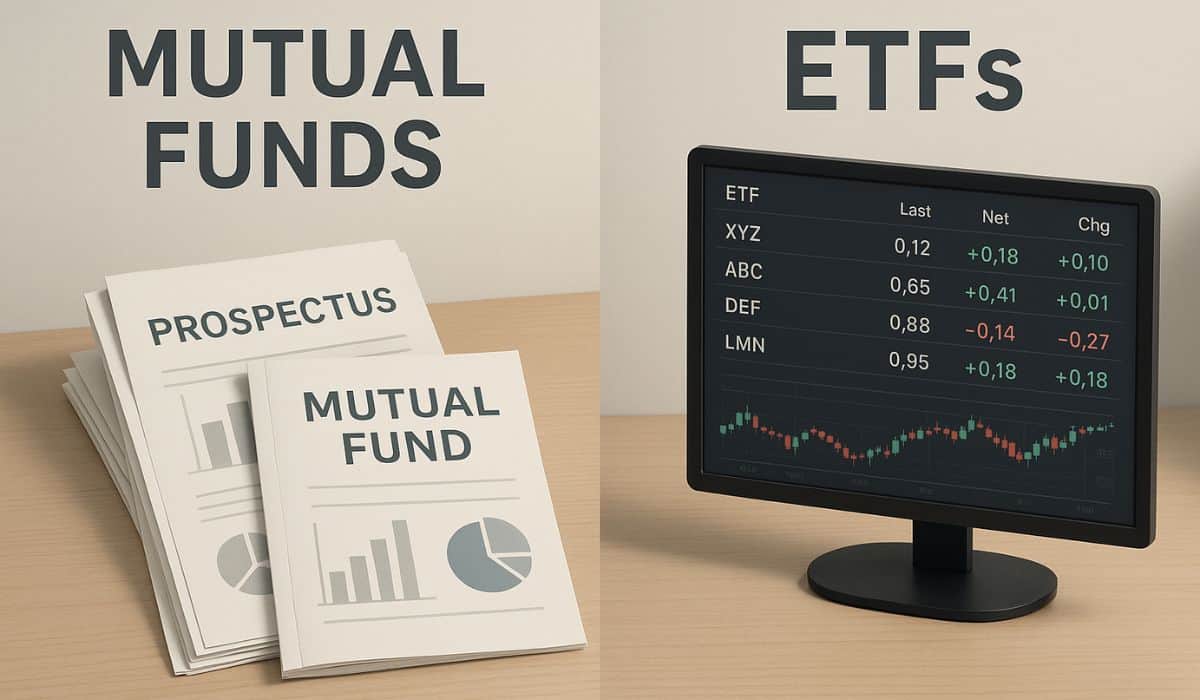
Mutual funds and ETFs that track U.S. equities or fixed-income markets offer another accessible route. Index funds following benchmarks such as the S&P 500, NASDAQ-100, or the Dow Jones Industrial Average are widely available.
For tax-efficient exposure, many international investors use Irish-domiciled UCITS funds, which often benefit from reduced U.S. dividend-withholding rates under the Ireland–U.S. tax treaty.
Institutional investors may access New York through private-equity funds, hedge funds, and separately managed accounts that provide large-scale allocations to U.S. assets.
Conclusion
New York stands apart as a global financial hub because of its deep and highly liquid capital markets, its advanced ecosystem of financial and technological innovation, its dollar-denominated infrastructure, and its robust regulatory framework overseen by agencies such as the U.S. Securities and Exchange Commission (SEC). For international investors seeking stability, liquidity, and long-term opportunity, New York remains the benchmark against which other financial centers are measured.