Beyond Kickstarter: The Specialized Crowdfunding Platforms Dominating Niche Markets


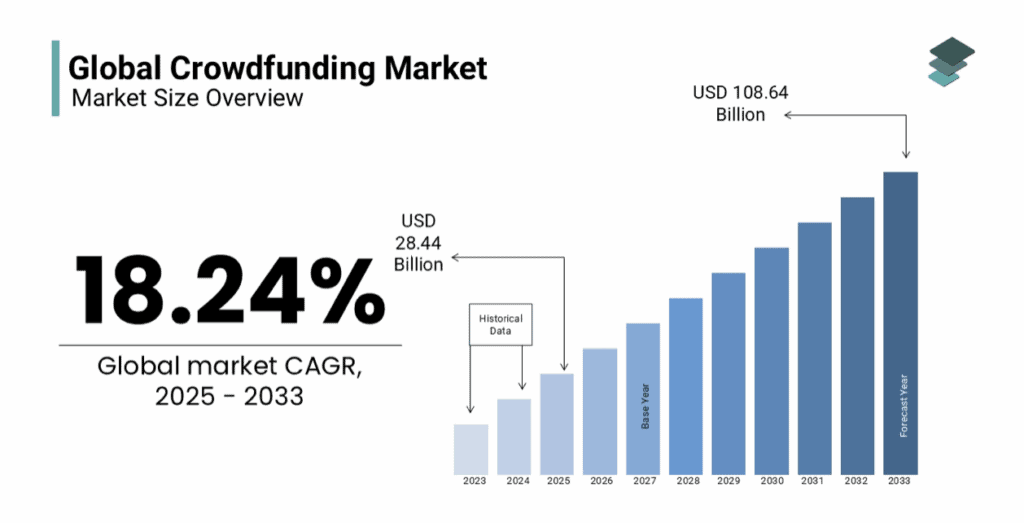
The global crowdfunding market is projected to soar from $28.4 billion in 2025 to $108.6 billion by 2033, but growth is being driven by specialized platforms, not generalists. Platforms like Seed&Spark (film), RedCrow (healthcare), and CrowdStreet (real estate) are outperforming Kickstarter and Indiegogo by focusing deeply on specific industries, regulatory needs, and audience intent. This shift signals the rise of the hyper-specialized crowdfunding ecosystem.
- Specialization drives success: Seed&Spark’s 75–82% film success rate dwarfs Kickstarter’s 38%, proving that niche platforms convert better when aligned with audience intent.
- Built-in expertise and compliance: Equity platforms like StartEngine and Republic integrate SEC/FINRA filings (Form C, A+), turning complex regulation into a frictionless process.
- Smarter tools for creators: Features like Seed&Spark’s WishList and RedCrow’s clinical diligence support industry needs that generalist sites can’t match.
- Cross-border growth and AI integration: EU regulatory harmonization and AI-driven risk analysis are making niche platforms scalable and data-intelligent.
- Action step: Choose a platform purpose-built for your sector, film, healthcare, real estate, or green energy, to double your odds of funding success.
When people think of crowdfunding, platforms like Kickstarter and Indiegogo immediately come to mind. These giants ignited the crowdfunding revolution, creating global recognition for online fundraising. Yet beneath their dominance, a quiet transformation is underway: the rise of specialized crowdfunding platforms built for specific industries. These niche players aren’t just surviving, they’re thriving, and in many cases, they’re dramatically outperforming the generalists.
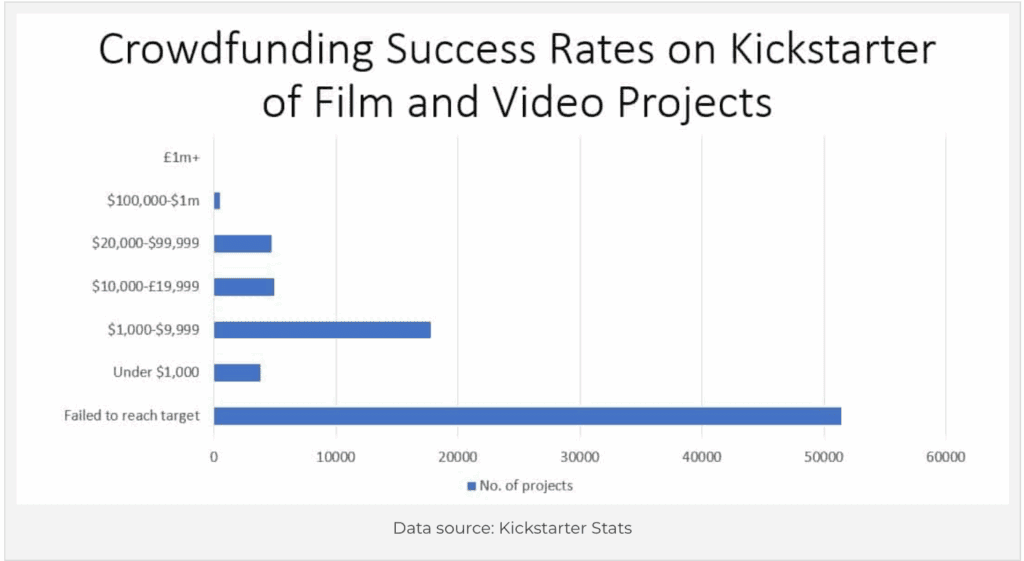
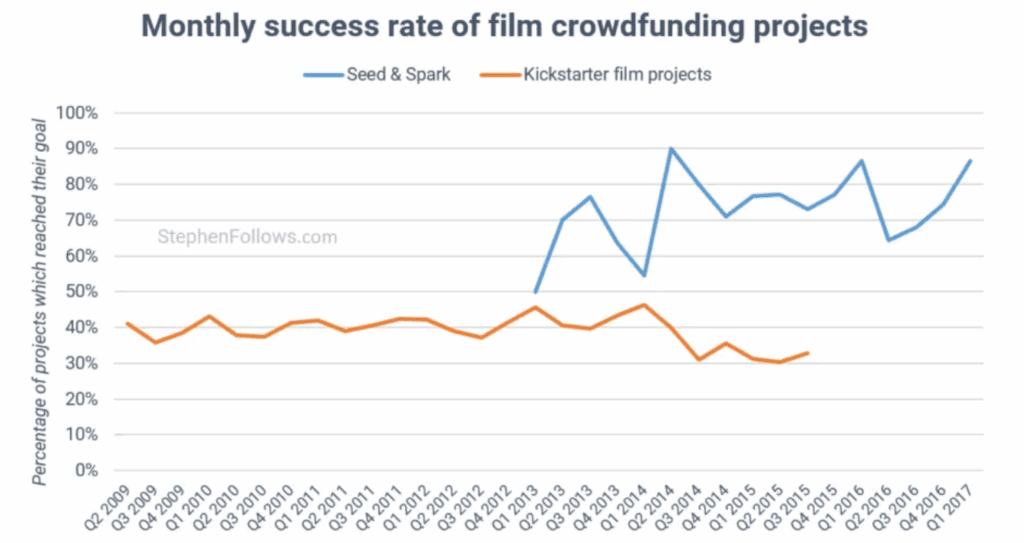
In film and television, Seed&Spark illustrates this shift vividly. The platform reports success rates of up to 82%, while independent research places it closer to 75%, nearly double the average success rate of about 38% for film projects on Kickstarter, according to Crowdsourcing Week. This is not a rounding error, it’s evidence that specialization works.
Source: Crowdsourcing Week.
As the global crowdfunding market grows from $28.44 billion in 2025 to a projected $108.64 billion by 2033 at a CAGR of approximately 18.24%, understanding niche platforms has become critical to campaign success.
Source: MarketDataForecast
The Niche Platform Advantage: Why Specialization Wins
Curated Audiences with Genuine Interest
Generalist platforms cast wide nets, while niche platforms use precision. On a specialized platform, creators reach audiences already motivated by their field. Someone visiting Seed&Spark seeks films; a user on Republic looks for startups; an investor on CrowdStreet hunts for real estate opportunities. These communities arrive with intent, translating into higher conversion rates and stronger engagement.
Industry-Specific Expertise and Support
Unlike generalist sites where support teams juggle every type of campaign, niche platforms employ professionals who understand their specific industry. Seed&Spark’s Crowdfunding Specialists, for example, are active filmmakers who provide personalized guidance throughout the funding process. Their lived experience allows them to coach creators through pre-launch planning, budgeting, and audience building in a way generalist platforms cannot match.
Tailored Tools and Platform Features
Specialization means infrastructure that fits the industry. Seed&Spark’s WishList feature lets creators show backers exactly what they need, whether it’s camera gear, lighting equipment, or post-production software. Backers can contribute cash or loan specific items, aligning campaign needs with tangible support. Similarly, equity crowdfunding platforms such as StartEngine, Wefunder, and Republic integrate SEC and FINRA compliance directly into their systems, handling filings like Form C or A+ and automating investor verification. This built-in compliance turns complex regulation into a seamless process.
Better Success Rates Through Focus
The data is compelling. Seed&Spark reports success rates between 75 % and 82 %, compared to Kickstarter’s 38 % for film and video projects. Meanwhile, RedCrow, a healthcare-focused platform, cites average campaign success near 78 %, substantially higher than the broader crowdfunding average of 47 %. Specialization breeds efficiency, platforms that understand industry challenges can optimize every aspect of fundraising.
Source: StephenFollows
Regulatory Confidence Built In
For campaigns involving equity or revenue sharing, regulatory compliance is non-negotiable. Platforms such as Wefunder, StartEngine, and Republic are registered with the SEC and FINRA, giving founders a safe and transparent fundraising channel. Attempting to manage these requirements independently is a legal and logistical minefield. Niche platforms handle it by design.
The Niche Platform Landscape: Sector by Sector
Film and Television: Seed&Spark
Founded in 2012 by filmmaker Emily Best, Seed&Spark was born from her experience crowdfunding her debut feature Like the Water and the frustration that generic platforms didn’t meet the needs of independent filmmakers. Its distinctive “80% Rule”, projects that raise at least 80% of their goal get funded, helps creators set realistic targets and complete production successfully.
The platform now charges no platform fees, relying instead on voluntary backer tips, and uniquely requires inclusion statements to promote diversity in storytelling. Through its Patrons Circle program, established industry supporters provide mentorship and pledges to emerging creators. Projects on the platform average roughly $12,000 to $15,000 in funding, and Seed&Spark has raised more than $80 million for over 6,600 film and TV projects.
Equity Crowdfunding: Vertical Specialists
While Wefunder, StartEngine, and Republic dominate the general U.S. equity crowdfunding landscape, vertical specialization is expanding rapidly. In Europe, the 2024 ESMA Market Report on Crowdfunding in the EU shows that professional, scientific, and technical services accounted for 33% of overall crowdfunding activity, while construction and real estate represented 21%. Though the report primarily reflects 2023 data and includes all forms of crowdfunding (not just equity), it highlights the growing importance of specialized sectors.
In healthcare and biotech, RedCrow focuses on funding medical innovations and life-science startups. Now part of Alira Health, the platform connects investors to companies navigating early-stage regulatory and clinical development processes, while partnering with Republic to expand access to healthcare-specific deals.
In the sustainability and impact space, the Global Impact Investing Network (GIIN) reports that the impact investing market reached $1.571 trillion globally in 2024, according to its Sizing the Impact Investing Market report. This surge is fueling the rise of ESG-focused crowdfunding platforms dedicated to renewable energy, clean technology, and social innovation.
Real-estate-specific platforms such as CrowdStreet cater primarily to accredited investors, offering access to commercial real estate and private market opportunities. Meanwhile, Patreon, founded in 2013, has redefined creator income through a subscription-based model that provides tiered access, exclusive content, and community engagement, showing how crowdfunding’s principles now extend beyond one-time campaigns into ongoing creator support.
Agriculture and Green Energy
Agriculture-focused platforms like Harvest Returns and FarmFundr provide financing for farms through debt or revenue-sharing models, addressing sector-specific challenges like seasonal cash flow and crop-dependent returns. In the green-energy segment, renewable-energy crowdfunding is rising sharply, fueled by ESG commitments and investor demand for impact transparency. Niche sustainability platforms attract backers who want to align profit with purpose.
Industry Success Rates: Where Projects Thrive
Different sectors perform dramatically differently depending on platform alignment. Seed&Spark reports film campaign success rates between 75% and 82%, significantly above general averages. Independent analysis by Stephen Follows supports this range, confirming that targeted community engagement and industry-specific tools contribute to higher completion rates.
In healthcare, RedCrow specializes in medical and biotech crowdfunding. While some early reports cited internal success figures approaching 78%, no independent data verifies this average, making it more of an indicative benchmark than a confirmed statistic.
According to Kickstarter’s 2024 Games Report, tabletop games maintain success rates near 80%, while film and video projects average only 38%. This contrast underscores a consistent pattern across industries: projects perform best when hosted on platforms purpose-built for their audiences and sectors.
Choosing Between Niche and Generalist Platforms
Niche platforms excel when your project fits a clear vertical, when you value expert mentorship, or when campaign support outweighs audience size. They offer specialized guidance, higher conversion rates, and credibility among targeted backers. However, generalist platforms still have their place. They work best for mass-market products, experimental ideas that don’t fit a vertical, or creators who already have substantial followings that can drive traffic regardless of the platform.
Many successful campaigns now combine both models. Launching first on a specialized platform provides authenticity and early backer traction, while parallel promotion on social media or through generalist channels expands scale. This hybrid strategy leverages niche credibility and mass-market reach simultaneously.
The Future: Hyper-Specialization and Cross-Border Integration
Regulatory Harmonization
The European Securities and Markets Authority (ESMA) reports that cross-border crowdfunding accounts for roughly 15–17% of total EU crowdfunding activity, with the share continuing to grow under the EU Crowdfunding Regulation (ECSPR). As regulatory frameworks align across member states, platforms are scaling internationally, transforming local funding hubs into integrated European capital ecosystems.
Research published in the Strategic Entrepreneurship Journal highlights that cross-border investment often determines campaign success, showing that many equity crowdfunding projects would not have met their goals without foreign participation, underscoring the importance of harmonized markets.
AI and Blockchain Integration
Emerging technologies are reshaping crowdfunding infrastructure. Blockchain-based platforms provide transparent, immutable ownership records and enable secondary markets through tokenized equity, an approach pioneered in pilots by TokenMarket. At the same time, artificial intelligence is being deployed to automate due diligence, detect fraud, and analyze campaign performance data for predictive insights. Expect niche platforms to integrate AI tools tailored to specific industries, offering smarter investor-fit recommendations and real-time risk analysis.
Platform Consolidation
Industry consolidation is accelerating. In May 2023, StartEngine completed its acquisition of SeedInvest, expanding its regulatory footprint and investor network. Earlier, in 2021, Republic acquired Seedrs to create a unified transatlantic crowdfunding marketplace. These mergers reflect a broader trend: platforms combining compliance expertise with vertical specialization to stay competitive as regulatory and technological demands rise.
Emerging Verticals
The next phase of crowdfunding will emphasize hyper-specialization. New platforms are emerging for areas like litigation finance, esports sponsorship, podcast production, comic publishing, and sustainable fashion. Each passionate community with a funding gap presents an opportunity for the next generation of niche platforms, expanding crowdfunding’s reach far beyond its startup origins.
How to Pick the Right Platform
To identify the best fit for your project, follow a structured process:
-
Research Platforms in Your Field: Use queries like “film crowdfunding platform” or “agriculture crowdfunding platform,” and cross-reference results using directories such as CrowdSpace.
-
Verify Success Rates and Credibility: Compare platform-published data with independent analyses, investor blogs, and user testimonials.
-
Review Cost Structures: Include platform and transaction fees, optional add-ons, and post-campaign expenses such as administrative maintenance fees.
-
Assess Audience Engagement: A smaller but deeply engaged user base often outperforms a vast, unfiltered one. Request engagement metrics where possible.
-
Understand Requirements: Review eligibility criteria, vetting standards, and content policies before applying.
-
Talk to Experienced Creators: Reach out to past users and ask how responsive support was, how transparent reporting felt, and whether they would use the platform again.
The Bottom Line: Specialization Defines the Future
Crowdfunding has evolved from a novelty into a vital component of modern finance. The one-size-fits-all model that dominated the early 2010s is fading fast. Across every vertical, specialized platforms are delivering superior results: Seed&Spark’s 82% success rate vs Kickstarter’s 38% is just one example of a broader trend.
As the global market heads toward $108 billion by 2033, the clear winners will be those platforms that go deep rather than wide, understanding their industries, their regulations, and their audiences intimately. For creators and entrepreneurs, the lesson is simple: stop defaulting to the biggest names. Find the platform built for your world, and your odds of success may double.
The age of the generalist platform is ending. The era of the hyper-specialized crowdfunding ecosystem has arrived.