
The College Degrees That Pay $80,000 Right After Graduation (And the Ones That Don’t)


Choosing a college major isn’t just about passion, it’s one of the biggest financial decisions students face. Recent NACE projections show a nearly $40,000 gap in starting salaries between top-paying majors like computer engineering (~$80K) and lower-paying fields such as foreign languages (~$40K). Over a decade, that gap compounds into more than $180,000 in earnings difference. Students weighing majors should factor in both financial return and long-term career satisfaction.
- High-paying majors: Engineering, computer science, and chemical engineering average $76K–$90K starting, with long-term wages exceeding $120K.
- Lower-paying majors: Liberal arts, education, and communications often start under $60K, reflecting slower wage growth.
- Compounded gap: An $18K annual pay difference between engineering and communications majors can exceed $180K over 10 years before raises or advanced degrees.
- Strategy matters: Lower-paying majors benefit from certifications, graduate school, or niche expertise (e.g., digital marketing, AI-driven translation tools).
- Bottom line: STEM majors dominate salary rankings, but aligning financial goals with personal interests helps students build both stability and satisfaction.
Choosing a college major is one of the most significant financial and personal decisions students make. While passion and interest are important, the economic realities of starting salaries and long-term earning potential can shape financial stability for years after graduation. Recent projections highlight striking differences in what new graduates can expect, with some majors leading to salaries around $80,000 right after graduation while others hover closer to $40,000.
Why Some Degrees Pay More Than Others
The salary differences across majors largely come down to market demand, required skills, and industry growth. Fields like engineering, computer science, and related technical disciplines are closely tied to industries that are expanding rapidly and require specialized expertise. Employers are often willing to pay a premium to secure talent in the ‘STEM’ sectors (Science, Technology, Engineering, and Mathematics), particularly as technology and infrastructure investments accelerate globally.

Source: NACE salary survey
On the other hand, majors in liberal arts, education, and social sciences prepare students for careers that, while rewarding in purpose, are not as directly tied to sectors with high wage competition. These degrees may offer opportunities for long-term career development, especially for those who pursue graduate education, but their immediate return in salary is usually lower.
College Degrees With ~$80K Starting Salaries
Computer Engineering
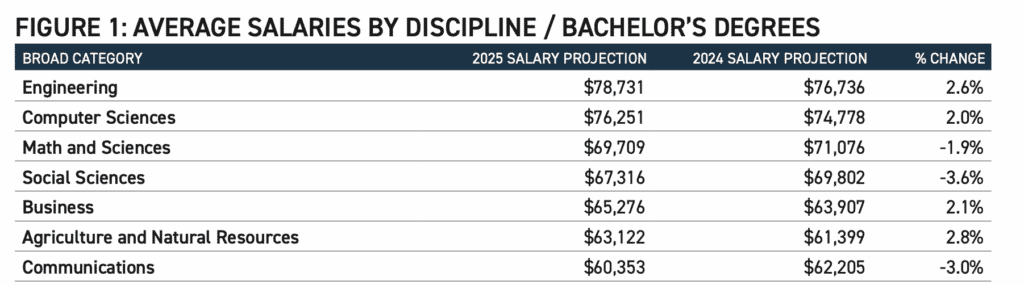
Graduates in computer engineering consistently rank among the top in early career earnings. The National Association of Colleges and Employers (NACE) projects engineering majors in the Class of 2025 will average $78,731, with computer science majors close behind at $76,251. At Penn State, computer engineering graduates reported average starting salaries of $90,400.
Chemical Engineering
Graduates in chemical engineering enjoy similar outcomes. The Bureau of Labor Statistics (BLS) reports a median wage of $121,860 for chemical engineers overall, underscoring strong demand and pay potential that extends well beyond entry-level roles.
Engineering Overall
Engineering graduates dominate the top of salary projections. Overall starting salaries for the Class of 2025 are expected to average nearly $78,731. At Penn State, engineering graduates reported an overall average of $79,800.
Degrees That Fall Well Below $80K
Foreign Languages
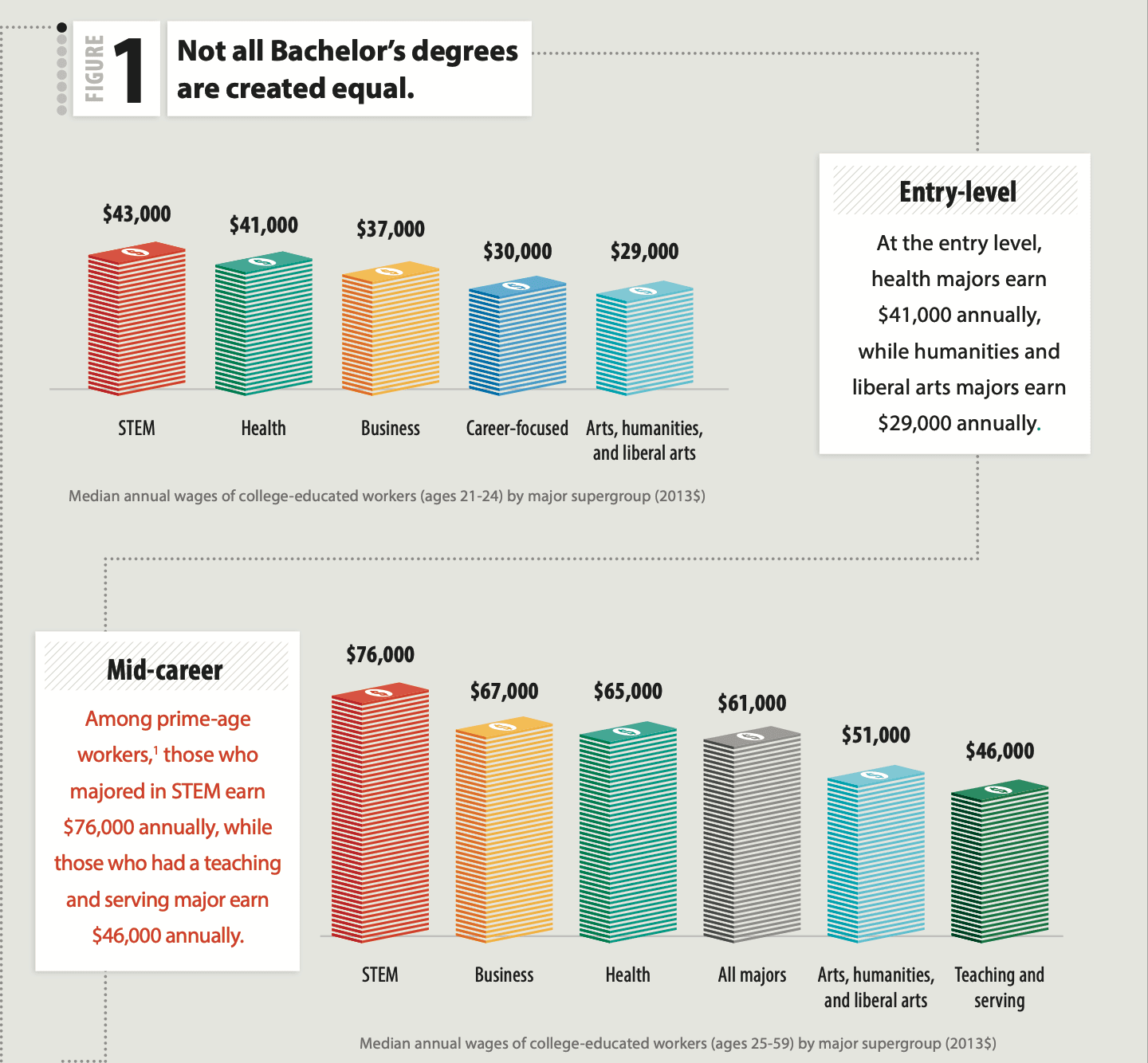
At the opposite end of the spectrum, foreign language majors earn some of the lowest entry-level salaries, averaging around $40,000. While these graduates may thrive in education, translation, or international relations, their fields often require advanced degrees or specialized certifications before salaries rise significantly.
Source: Georgetown CEW
Communications
Communications graduates face a notable wage gap compared to their engineering peers. Their starting salaries are projected to trail by more than $18,000 annually. Although communications roles are vital in fields such as public relations, media, and marketing, initial pay tends to be modest until professionals build experience or move into managerial roles.
Education and Social Sciences
Graduates in education and social sciences often begin with salaries under $60,000, reflecting systemic budget constraints in public education and nonprofit sectors. While many pursue careers with strong personal impact, such as teaching, counseling, or social work, the financial return is typically lower, requiring either advanced degrees or career shifts for substantial income growth.
The Salary Gap Between Majors
The disparity between high-paying and low-paying majors is not just immediate but also long-term. For instance, the $18,000 annual difference between engineering and communications majors quickly compounds. Over a decade, that translates into more than $180,000 in cumulative income difference before considering raises, promotions, or advanced degrees. When factoring in retirement savings, investments, or student loan repayment schedules, the financial gap widens even further.
What This Means for Students
Students must weigh more than just starting salaries. High-paying degrees often demand rigorous coursework in mathematics, sciences, and technical fields. Many graduates secure their earning potential through internships, research experience, or certifications, making their degrees more labor-intensive but ultimately lucrative.
Conversely, graduates in lower-paying majors should approach their careers strategically, leveraging graduate studies, certifications, or niche specializations to boost long-term earning power. For example, a communications graduate with digital marketing expertise or a language major who gains proficiency in AI-driven translation tools can significantly raise their income potential.
Bottom Line
The financial outcomes of college majors are deeply uneven, but the patterns are clear. Engineering and computer-related fields dominate the top of the earnings chart, with starting salaries close to $80,000. Liberal arts, education, and social sciences start much lower, around $40,000–$60,000, requiring additional planning for long-term financial stability. Ultimately, the best choice balances passion with realistic income expectations. Students who consider both career satisfaction and financial security are better equipped to navigate the transition from college to career successfully.