Gemini Supports Zcash Unified Addresses: What It Means for Privacy-Conscious Investors


On August 6, 2025, Gemini became the first exchange to support Zcash unified addresses, a major step for crypto privacy. This upgrade simplifies ZEC transactions by combining all address types into one, eliminating past usability barriers. Yet, users weighing Gemini against larger competitors must balance its unique privacy features with higher fees, limited token selection, and lower liquidity. As regulatory scrutiny on privacy coins continues, Gemini’s move underscores both the promise and the challenges of mainstream adoption.
- First-mover advantage: Gemini is the first exchange worldwide to enable Zcash unified addresses and shielded withdrawals, simplifying privacy adoption.
- Privacy vs. usability: Unified addresses remove the need for multiple ZEC addresses, but ZEC’s market cap ($614.55M, Aug 2025) limits liquidity.
- Cost tradeoffs: Gemini charges higher trading and staking fees compared to Binance, Kraken, and Coinbase, making it less cost-efficient for active traders.
- Regulatory edge: Licensed by the NYDFS, Gemini offers stronger compliance and security than most competitors, important for custodial trust.
- Market reality: ZEC trades at $38.12 (Aug 8, 2025), far below its 2016 high of $5,941.80, with forecasts capped below $72, reflecting limited growth potential.
Gemini’s integration of Zcash unified addresses marks a breakthrough in crypto privacy, but users must balance the appeal of advanced anonymity tools with the platform’s higher fees, smaller crypto selection, and lower liquidity compared to market leaders.
A First in Exchange Privacy Technology
On August 6, 2025, Gemini announced support for Zcash unified addresses, becoming the first cryptocurrency exchange in the world to enable both unified addresses and sending ZEC to shielded receivers. This advancement solves a long-standing usability problem for privacy coins, which have historically struggled with mainstream adoption due to technical complexity.
Unified addresses work like a universal travel adapter for the Zcash network, combining compatibility across all address types, transparent, sapling, and orchard, into a single format. Before this upgrade, users had to manage separate addresses for different privacy levels, a process that has always discouraged casual adoption.
The launch aligns with rising public awareness around privacy. According to Gemini’s 2025 Global State of Crypto Report, 24% of surveyed individuals own cryptocurrency, up from 21% the year before. As digital surveillance concerns grow, privacy-focused innovations are gaining momentum in the crypto sector.
Regulatory Pressure on Privacy Coins
While Zcash’s zero-knowledge proof technology allows transaction validation without revealing sender, receiver, or amount, the privacy coin sector remains niche and heavily scrutinized. In 2018, for example, Japan banned all privacy coins, a move soon mirrored by South Korea and Australia. Major exchanges followed suit, with Bittrex removing Monero, Dash, and Zcash in January 2021, and Kraken delisting Monero for UK customers that same year.
Despite these headwinds, adoption persists. ChangeNOW has reported rising transaction volumes for both ZEC and XMR in 2025, suggesting steady accumulation by privacy-conscious investors.
Benefits and Limitations of Unified Addresses
For end users, unified address withdrawals on Gemini offer the highest level of privacy available on the Zcash network without juggling multiple address types. This feature maintains backward compatibility, making it easier for existing ZEC wallet users to transition.
Yet the broader market dynamics present challenges. As of February 21, 2025, blockchain data revealed that one wallet controls 6.75% of ZEC’s circulating supply, raising concerns over asset concentration. Meanwhile, ZEC’s price was $38.12 on August 8, 2025, far below its $5,941.80 all-time high reached on October 29, 2016 .
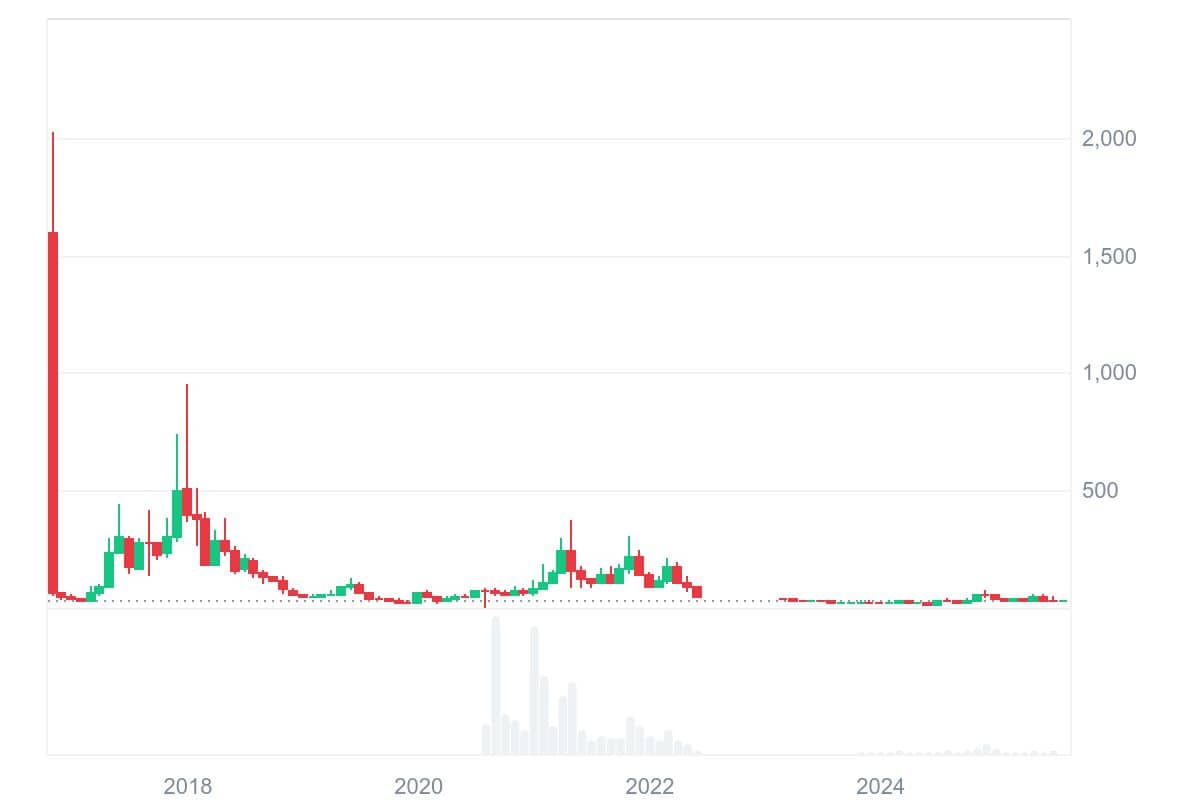
Source: CoinMarketcap
Price predictions for 2025 vary. Some analysts project a minimum of $51.47 and a maximum of $59.83, while others forecast a potential peak of $72, still significantly under its historical highs.
Gemini’s Position in a Competitive Market
Gemini has a history of pioneering Zcash support. In May 2018, it became the first licensed exchange to offer ZEC trading and custody. This early adoption paved the way for the unified address rollout.
The exchange also ranks highly in independent evaluations. CryptoCompare’s Exchange Benchmark placed Gemini second among more than 165 platforms for security and regulatory compliance. Gemini is also the first exchange to earn SOC 1 Type 2 and SOC 2 Type 2 certifications, important standards for custodial trust.
However, these strengths are offset by market realities. On August 8, 2025, Gemini’s 24-hour trading volume stood at $399 million, a fraction of Binance’s $21 billion over the same period. Gemini lists just over 80 cryptocurrencies, charges comparatively higher trading fees, and lacks advanced order types like stop-loss and take-profit, features offered by Coinbase, Kraken, and Binance.
The User Decision Matrix
When evaluating Gemini, potential users should weigh four main factors:
-
Privacy benefits: Unified addresses make Zcash’s privacy features easier to use than ever, especially on a regulated platform.
-
Cost efficiency: Higher trading fees and a 15% staking reward fee make Gemini more expensive than most competitors.
-
Regulatory protections: As a New York State Department of Financial Services (NYDFS) licensee, Gemini maintains capital reserves exceeding customer deposits, providing strong financial safeguards.
-
Market access: With a limited token list and fewer order types, Gemini appeals more to casual traders than to high-frequency or advanced market participants.
Broader Market Reality for Privacy Coins
Privacy coins highlight the gap between public perception and reality in cryptocurrency. While many assume all digital assets are anonymous, most, including Bitcoin, are only pseudonymous. This allows blockchain analytics to link transactions to real identities, making privacy coins like Zcash valuable for those who require stronger protections.
As of August 2025, Zcash had a market capitalization of $614.55 million, ranking 106th among all cryptocurrencies. This relatively modest size limits liquidity and institutional interest, further hindering adoption.
Conclusion: Innovation Meets Practical Barriers
Gemini’s unified address integration is a meaningful step forward for cryptocurrency privacy, simplifying complex features into a user-friendly format on a fully regulated platform. For a niche audience prioritizing privacy above cost and convenience, this is a valuable development.
However, the feature does little to address Gemini’s competitive disadvantages in trading volume, fee structure, and market coverage. Nor does it shield Zcash from ongoing regulatory challenges that continue to suppress mainstream adoption of privacy coins.
The bigger industry question remains: in a market increasingly shaped by regulation, efficiency, and convenience, can privacy alone drive meaningful exchange growth? For now, Gemini has given privacy-focused users a powerful new tool, but whether it shifts the market share needle remains uncertain.