IS USDT Safe: Which Stablecoin Survives New US Laws?


With the signing into law of the Genius Act, the $140+ billion stablecoin market stands at a regulatory crossroads that will now fundamentally reshape how Americans access digital dollars. The new US stablecoin legislation creates a clear divide is emerging between domestically-regulated issuers and their offshore counterparts, forcing millions of users to think about USDC vs USDT – and reconsider their stablecoin strategies as a result.
Is USDT Safe – The Great Regulatory Divide
The regulatory landscape for stablecoins has now shifted dramatically with increased US government scrutiny. The Genius act mandates that stablecoins operating in the US must meet strict reserve requirements and regulatory oversight standards.
Circle, the issuer of USDC, has long been a player in this game and is very well positioned itself as the compliance-first stablecoin provider. The company maintains full reserves in short-dated US government securities and cash](https://www.centre.io/usdc-transparency), with monthly attestations from Grant Thornton LLP. This regulatory-friendly approach has earned USDC recognition as one of the most transparent major stablecoins in the market.
In contrast, Tether’s USDT, despite being the world’s largest stablecoin by market capitalization, faces ongoing regulatory scrutiny. Tether was fined $41 million by the CFTC in 2021 for misrepresenting the backing of USDT tokens and was required to provide regular attestations of its reserves.
Market Dominance vs Regulatory Risk
The numbers tell a compelling story of market preference versus regulatory alignment. USDT maintains a market cap of approximately $70 billion compared to USDC’s $25 billion, reflecting USDT’s continued dominance in trading pairs and cross-border transactions. USDT processes significantly more daily trading volume, particularly on international exchanges where it serves as the primary base pair for cryptocurrency trading.
However, this market leadership comes with increasing regulatory risk. Major US exchanges like Coinbase have favored USDC integration, while Tether has faced challenges maintaining banking relationships in key jurisdictions. The geographic distribution of usage shows USDT’s strength in Asia and emerging markets, while USDC dominates in US-regulated environments, with the passage of the Genius Act, this divide will only become more stark
Transparency and Reserve Backing: A Critical Analysis
The reserve composition of these stablecoins reveals fundamental differences in risk management and regulatory compliance. Circle publishes monthly reserve reports (prepared by Deloitte) showing USDC backed by US Treasury bills and cash equivalents, providing clear visibility into asset backing.
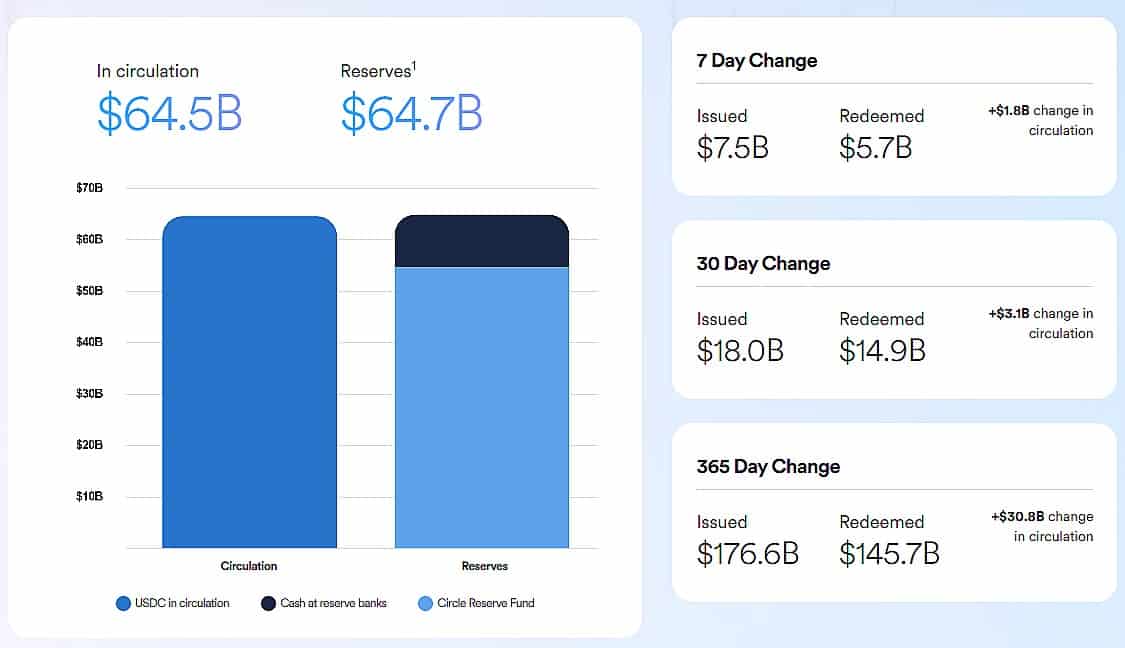
Circle says its ‘Reserve Fund’ is made up of a portfolio of short-dated US Treasuries, overnight US Treasury repurchase agreements, and cash. Source: Circle Reserve Fund
Tether’s reserve composition has evolved significantly following regulatory pressure, but only after being court ordered to do so. It’s quarterly attestations are prepared by
accounting firm BDO Italia and show approximately 85% of reserves in cash and cash equivalents. This is a substantial improvement from earlier years when commercial paper represented a larger portion of backing. However, critics continue to point to the difference between attestations and full audits as a transparency gap.
Paolo Ardoino, Tether’s CTO and newly appointed CEO, has consistently defended the company’s reserve practices, stating that Tether maintains “more than adequate” backing for all tokens in circulation. Meanwhile, Circle’s Jeremy Allaire has positioned USDC as the “most regulated stablecoin available to US users. It’s an accurate appraisal.
Banking Relationships and Market Access
The banking infrastructure supporting these stablecoins highlights another crucial difference. Circle maintains relationships with regulated US banks including Silvergate Bank and Signature Bank for USDC reserves, though the recent challenges facing crypto-focused banks have required adaptation.
Tether’s banking relationships have faced more turbulence over the years, with the company moving through various banking partners globally. These challenges have not prevented USDT from maintaining market leadership but do present ongoing operational risks that users should consider.
Risk Mitigation Strategies for Stablecoin Users
Given the regulatory uncertainty, users should consider several protective strategies:
Diversification remains paramount: Rather than concentrating holdings in a single stablecoin, spreading exposure between USDC and USDT can provide hedge against regulatory actions targeting either issuer. While USDC appears safer at first glance, the US government and even US exchanges can freeze accounts for a multitude of reasons.
Monitor regulatory developments closely: The SEC, Treasury Department, and Federal Reserve continue developing stablecoin frameworks that could impact market access and usability.
Consider use case alignment: For US-based activities requiring regulatory compliance, USDC now offers much clearer regulatory standing. For international trading and DeFi activities, USDT’s liquidity advantages may outweigh regulatory concerns. Certainly USDT has a much greater market presence outside the United States.
Evaluate exit strategies: Users should understand how to quickly convert between stablecoins or exit to fiat currencies if regulatory changes impact their preferred stablecoin. Be cautious about holding assets on platforms with no fiat offramp.
The Path Forward for Digital Dollars
The stablecoin landscape faces an inflection point where regulatory compliance increasingly determines long-term viability in major markets. While USDT’s market dominance reflects genuine utility and liquidity advantages, USDC’s regulatory-first approach positions it favorably for institutional adoption and US market expansion.
The ultimate survivors in this regulatory reshaping will likely be those that successfully balance compliance requirements with market utility. For users, the choice between USDC and USDT increasingly represents a decision between regulatory safety and maximum liquidity – a trade-off that will define stablecoin strategy in the coming years. At this stage it appears that the stablecoin world will be split between the US and ‘all others’.
Crypto users must prepare for a future where regulatory compliance becomes the primary determinant of stablecoin success, potentially ending the era where market adoption alone could overcome regulatory headwinds.